
bowel
bowel is a mihomo client for macOS.
Download for macOS · Website · 简体中文

The interface is built in Go and rendered directly via the GPU, with no WebView.
Features
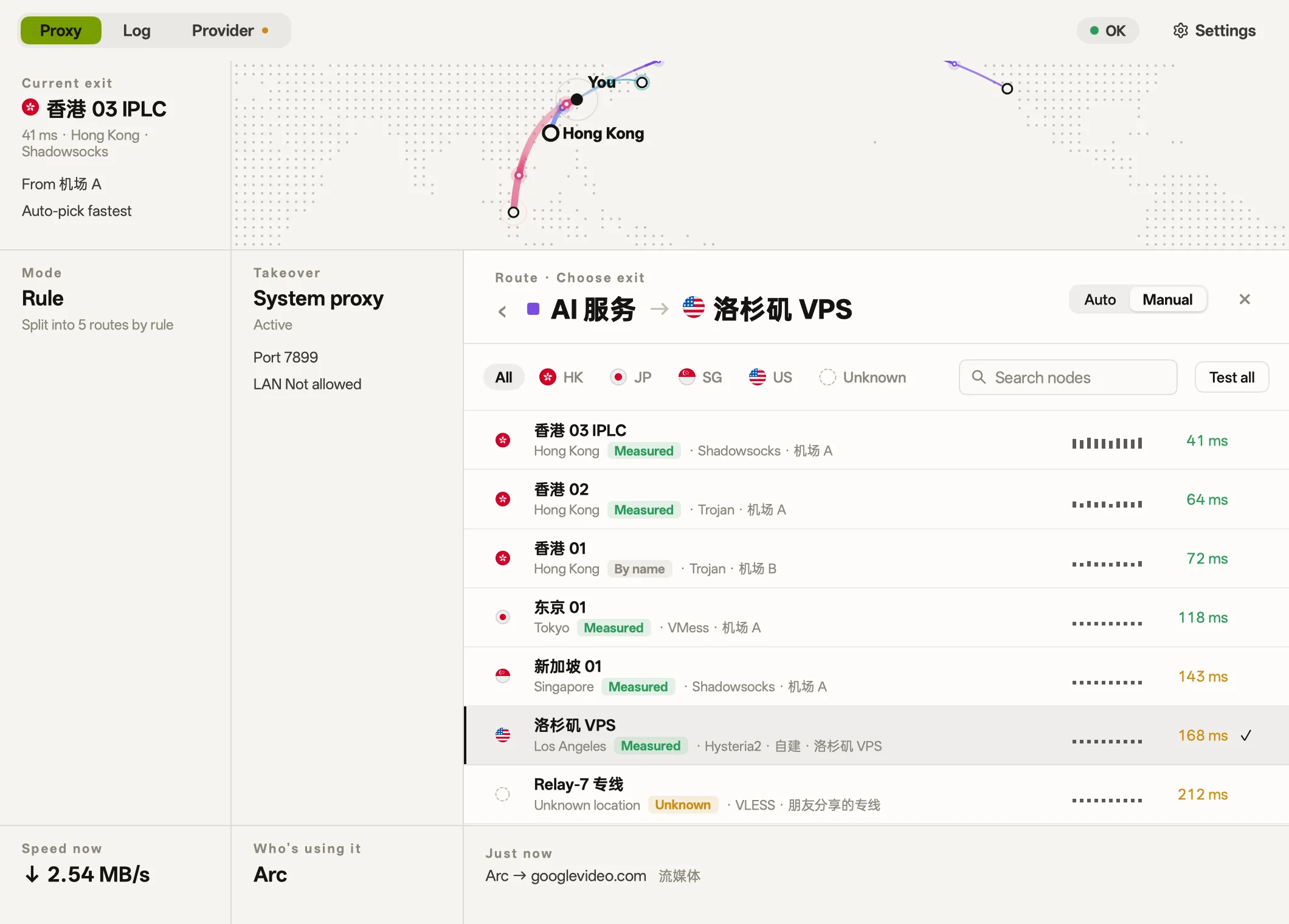
Routes
Route traffic by purpose, and select exit nodes manually or automatically by speed.
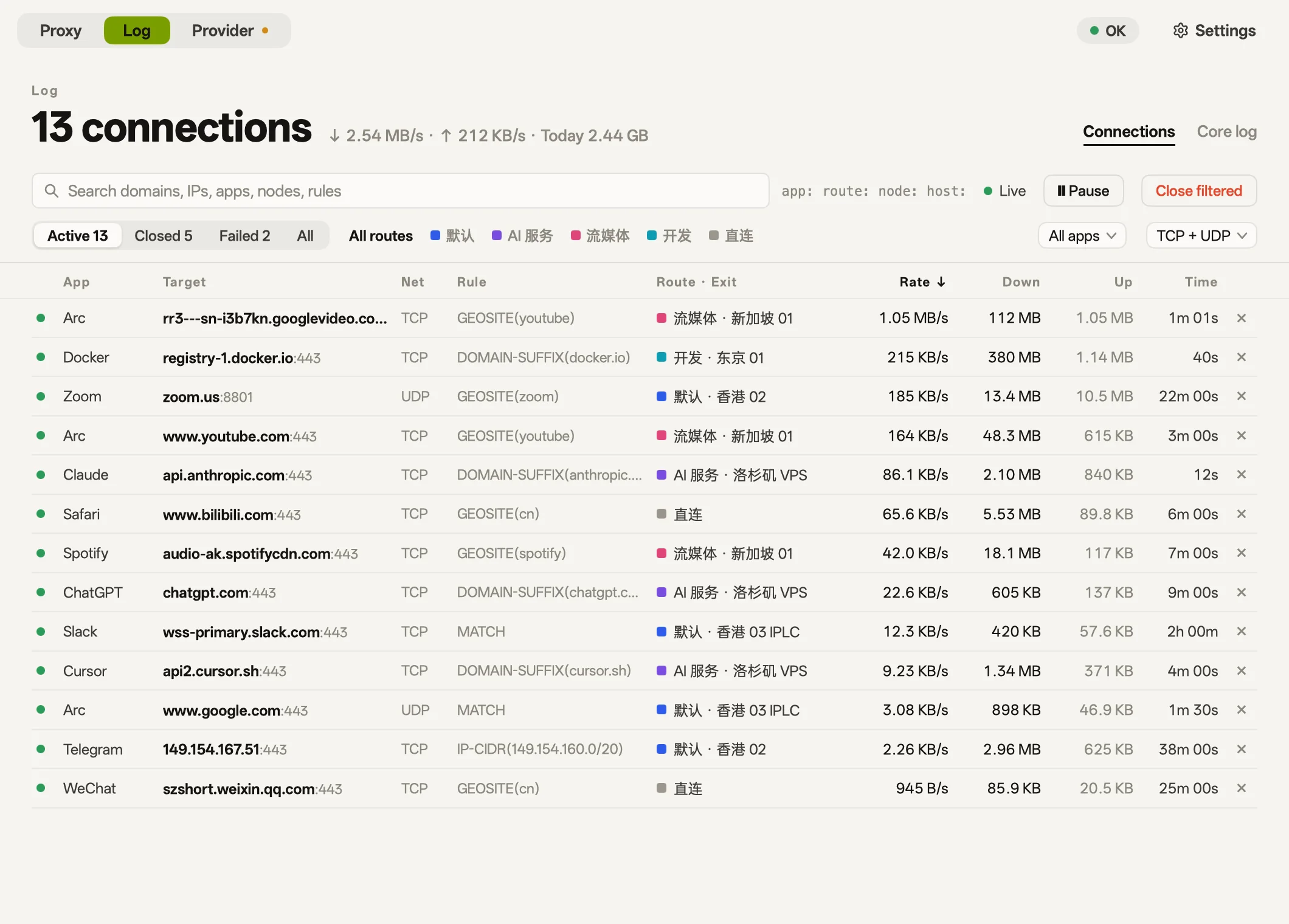
Connections
Inspect the app, destination, rule, exit, and speed for each connection, or reroute domains on the fly.
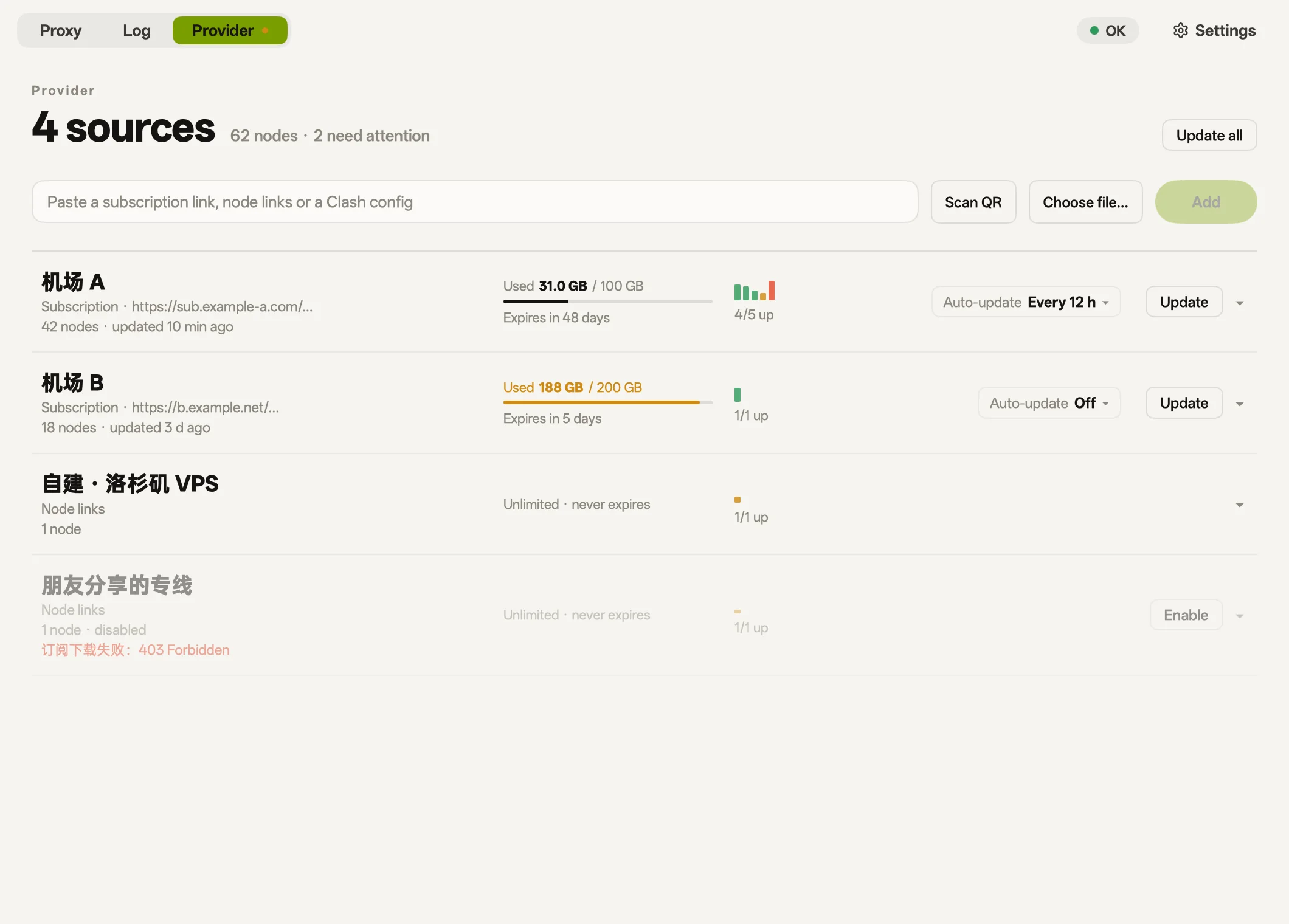
Providers
Import subscription links, node URLs, YAML configs, or QR codes, with data usage and expiry shown for each source.
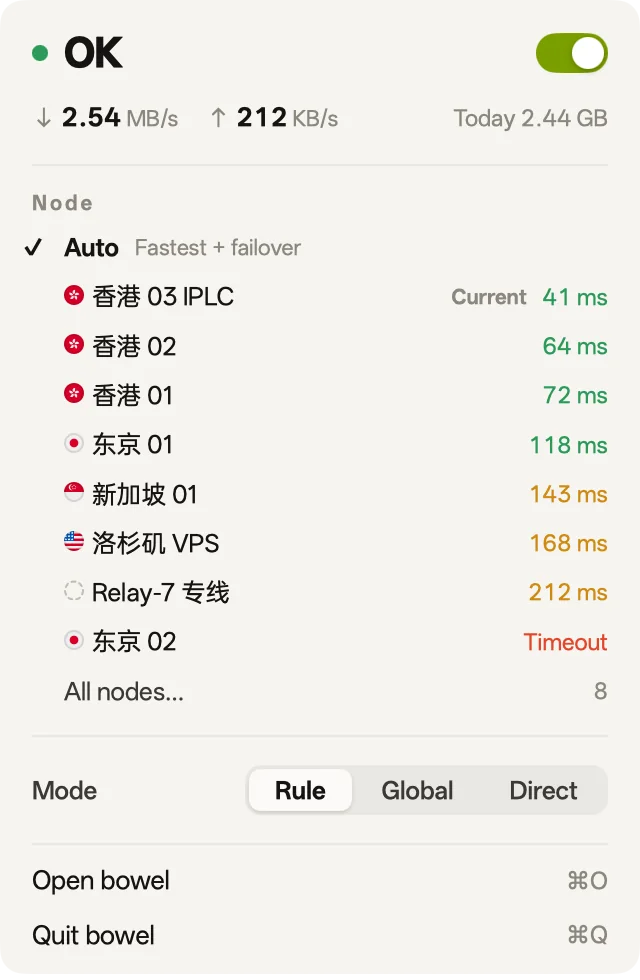
Menu bar
Toggle system proxy takeover, switch proxy modes, and select default nodes from the menu bar.
Skins
Six skins that change the look of the whole interface.
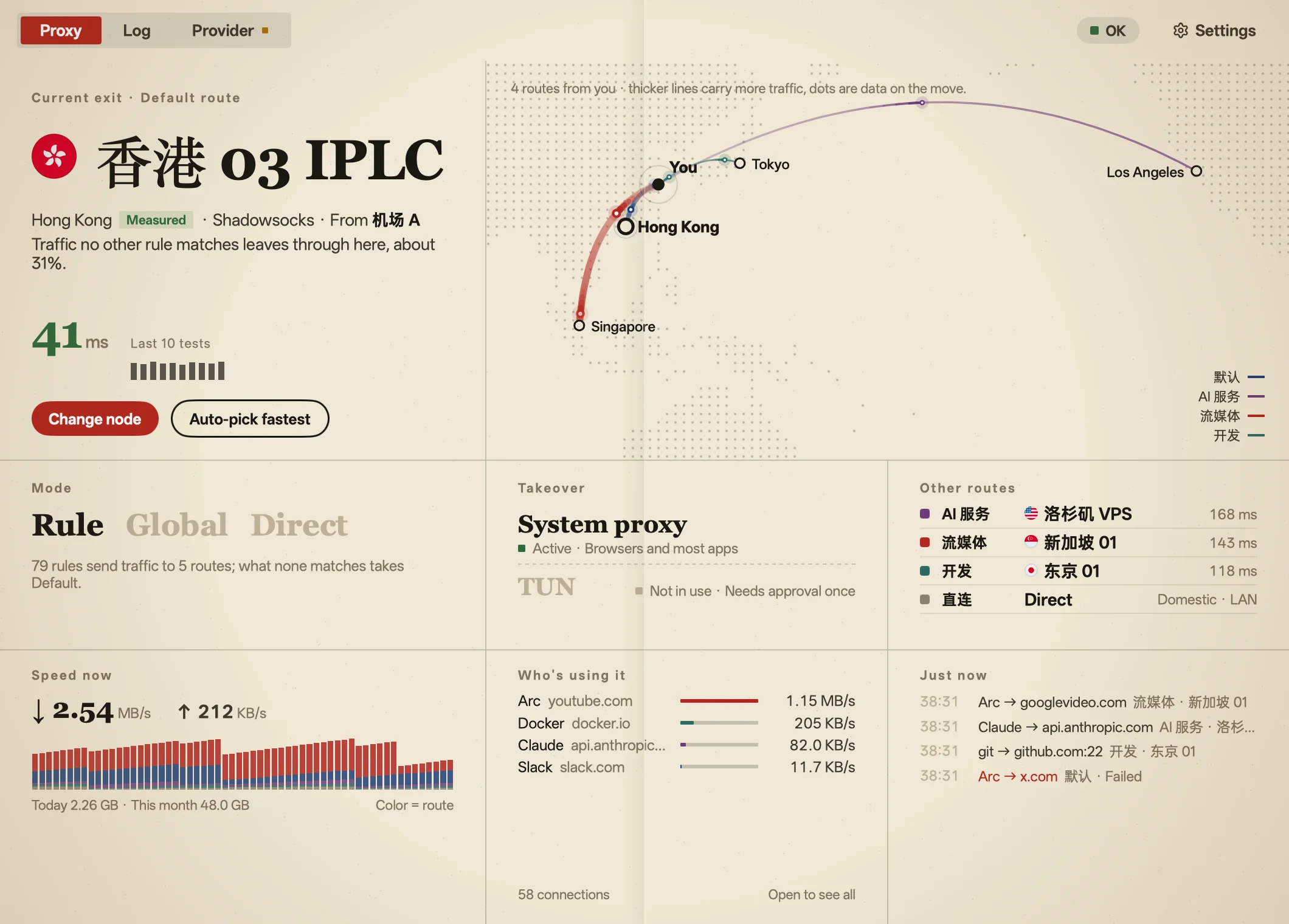 Broadsheet | 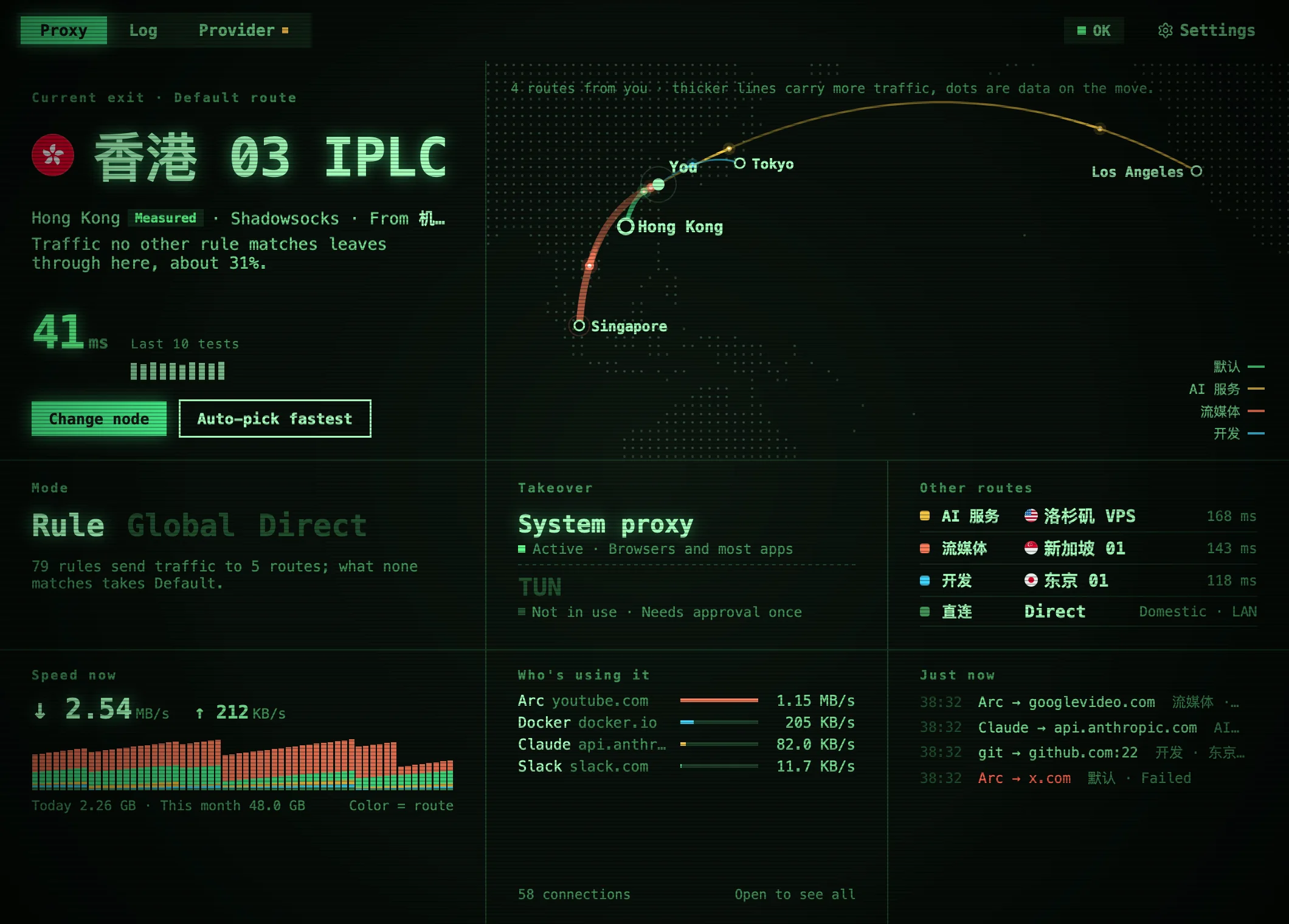 Phosphor | 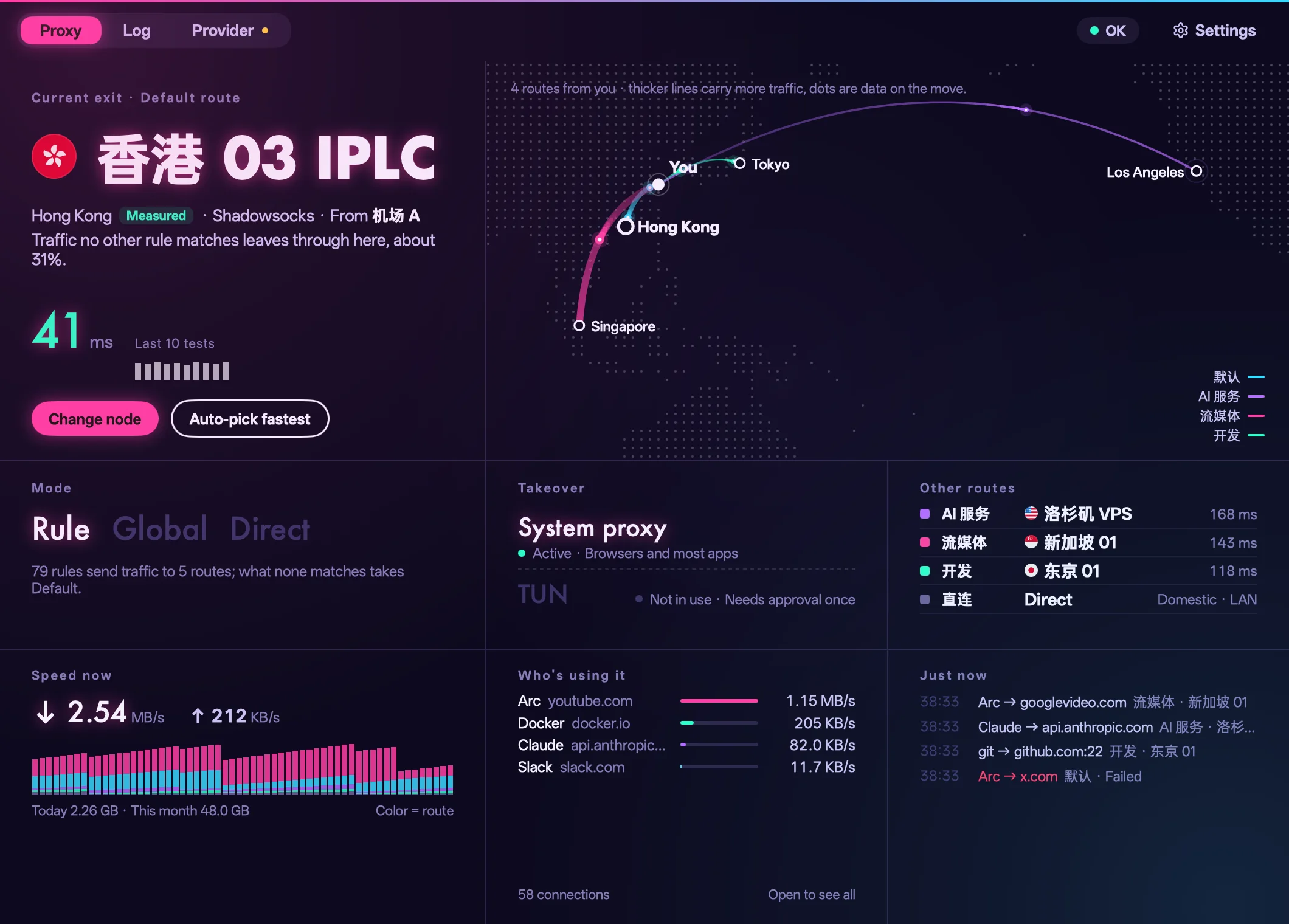 Neon |
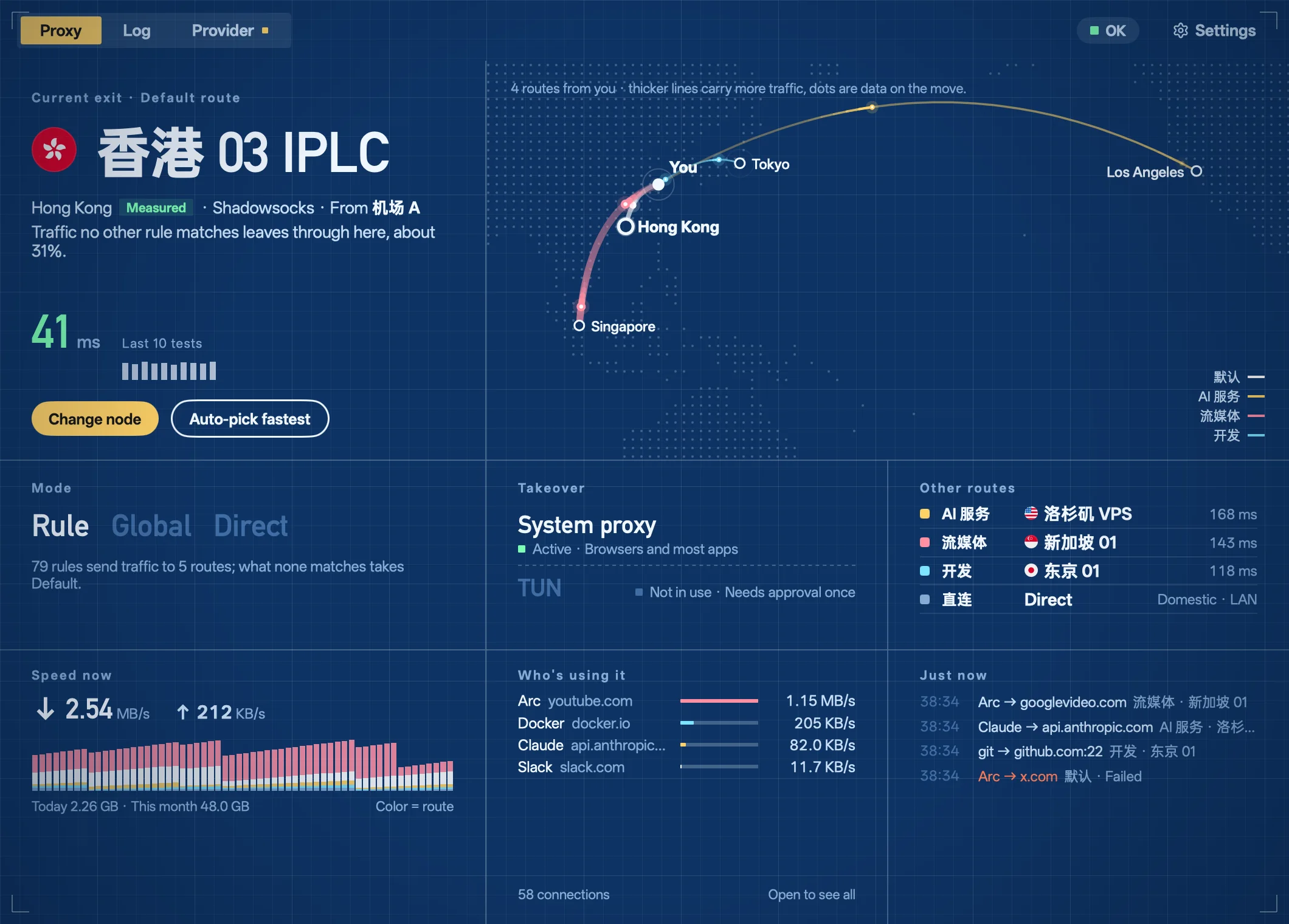 Blueprint | 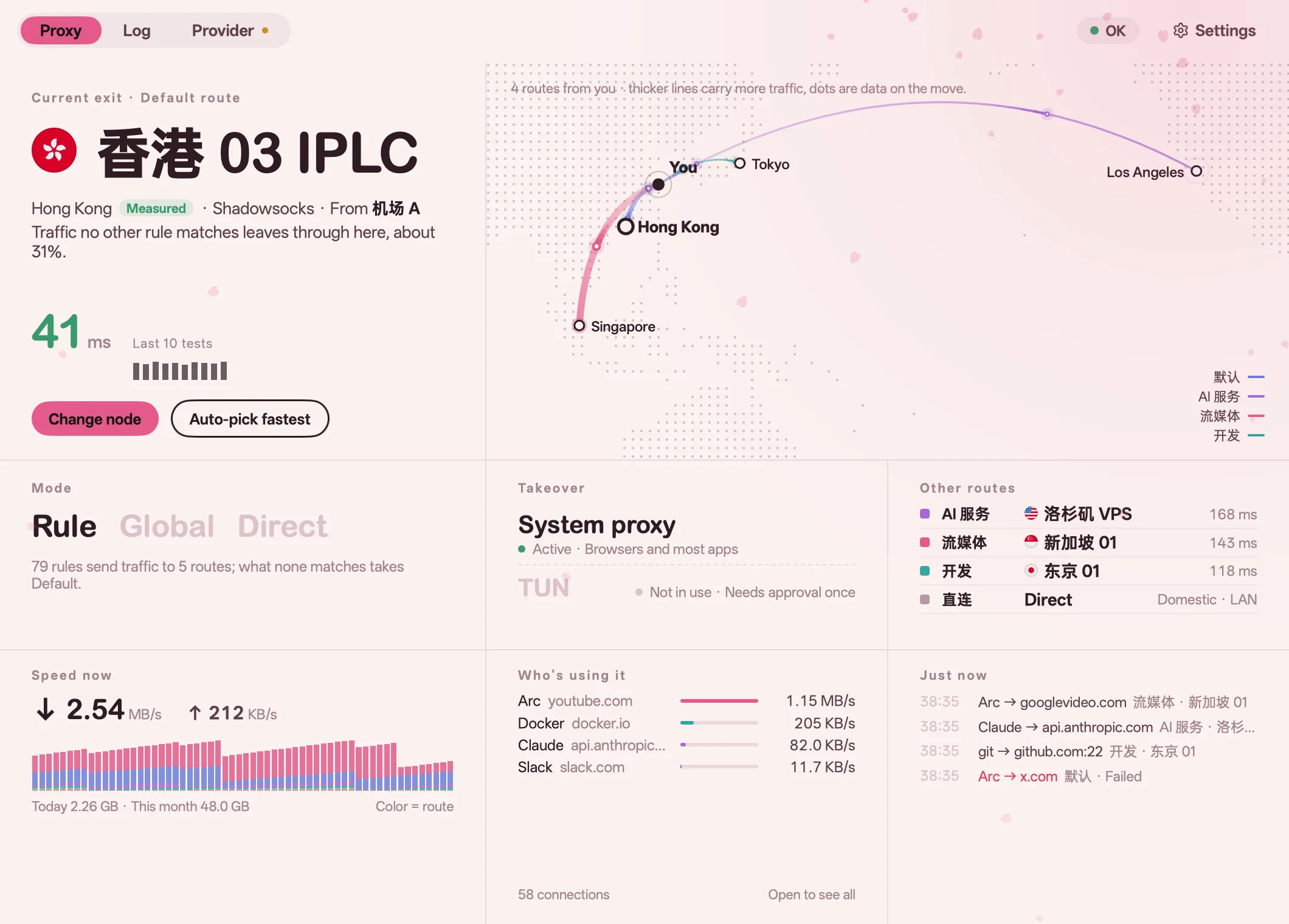 Sakura | 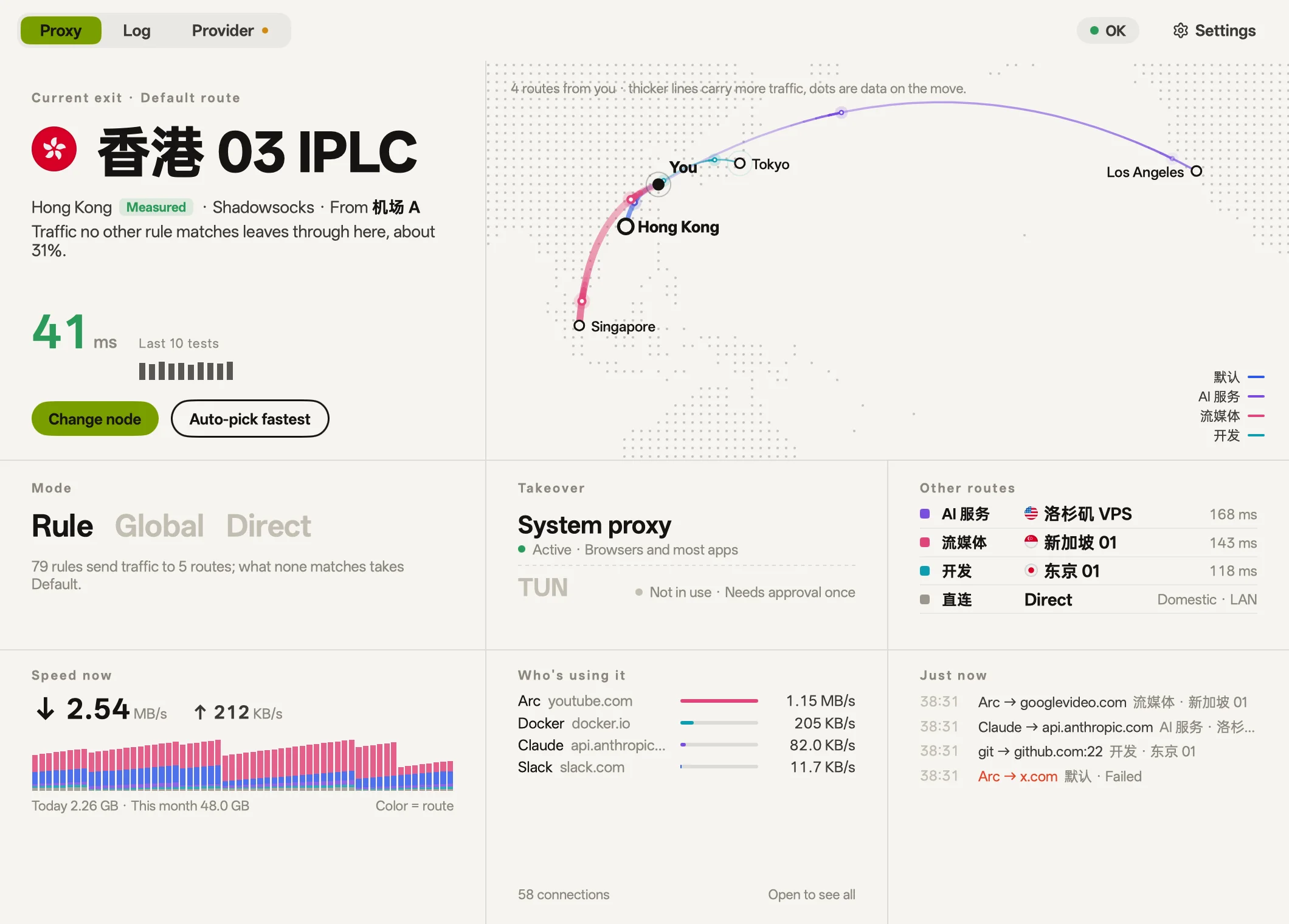 Paper (default) |
Other
- Custom rules: Route specific domains, keywords, or IP ranges, and test where addresses go.
- Measured exit locations: Verify true exit locations through Cloudflare trace.
- Gateway mode: Turn this Mac into a LAN gateway for devices like TVs and consoles.
- TUN: Intercept traffic from applications that ignore system proxy settings.
- MCP: Built-in MCP server for Claude Code and other agents to read status and troubleshoot connections. It asks you before changing settings by default.
claude mcp add --scope user bowel -- /Applications/bowel.app/Contents/MacOS/bowel mcp - Settings and languages: Searchable settings (⌘F); English, Simplified Chinese, Traditional Chinese and Japanese; light and dark.
Install
- Download
bowel-<version>-arm64.dmgfrom Releases and drag bowel into Applications. - Add a provider (a subscription URL, node links or a QR code) and turn on takeover.
Needs macOS 12 or later. Released builds are for Apple silicon, signed with a Developer ID and notarized by Apple.
Develop
Needs Go 1.27.3+ (GOTOOLCHAIN=auto fetches it). No Node or Bun.
./scripts/fetch-core.sh     # mihomo + GeoSite/GeoIP data into resources/
go tool mygo dev            # the app, rebuilt on every change
go tool mygo build          # bowel.app and a .dmg, signed but not notarized
./scripts/release.sh        # build, notarize and staple: use this for releases
CGO_ENABLED=0 go test ./... # includes tests that start the real core
./scripts/site-shots.sh # re-render the README's and the website's screenshots (needs cwebp)- How it works and where the code is: docs/architecture.md
- The product's information architecture: docs/product-ia.md
- The website is static, in
site/; opensite/index.htmlto preview it. Changes to it go live when they reachmain. - To release, set the version in
mygo.jsonand push a matching tag, such asv0.1.0. GitHub Actions builds, signs and notarizes the disk image and attaches it to a new release.
bowel was called Moho. The Go module is still github.com/oboo/moho and the bundle identifier dev.moho.app, which keeps macOS's camera and screen-recording permissions. On first launch the data in ~/Library/Application Support/Moho moves to …/bowel.
Credits
- mihomo: the proxy core, GPL-3.0. bowel runs it as a separate program and does not link it.
- MyGo: the native Go UI toolkit.
- OPPO Sans: the interface's typeface.
License
bowel is licensed under the PolyForm Noncommercial License 1.0.0, which allows noncommercial use only. For a commercial license, open an issue.
The bundled mihomo core stays under GPL-3.0. The app carries its license in Contents/Resources/licenses/mihomo/, and each release attaches the matching source. The flag images in assets/flags/ and the fonts in resources/fonts/ are third-party files and keep their own licenses.