CodexHost
Run Pi and other Harnesses inside Codex Desktop
We believe Codex Desktop offers the best desktop development experience today.
But Codex isn't the only great Agent Harness — Claude Code and Pi are great too.
CodexHost lets you run other Harnesses natively inside Codex Desktop and have them work together.
⭐ If CodexHost is useful to you, please give it a star! ⭐


Download · Cross-Agent Collaboration · Remote · Community · 简体中文 · 한국어
Interface Preview
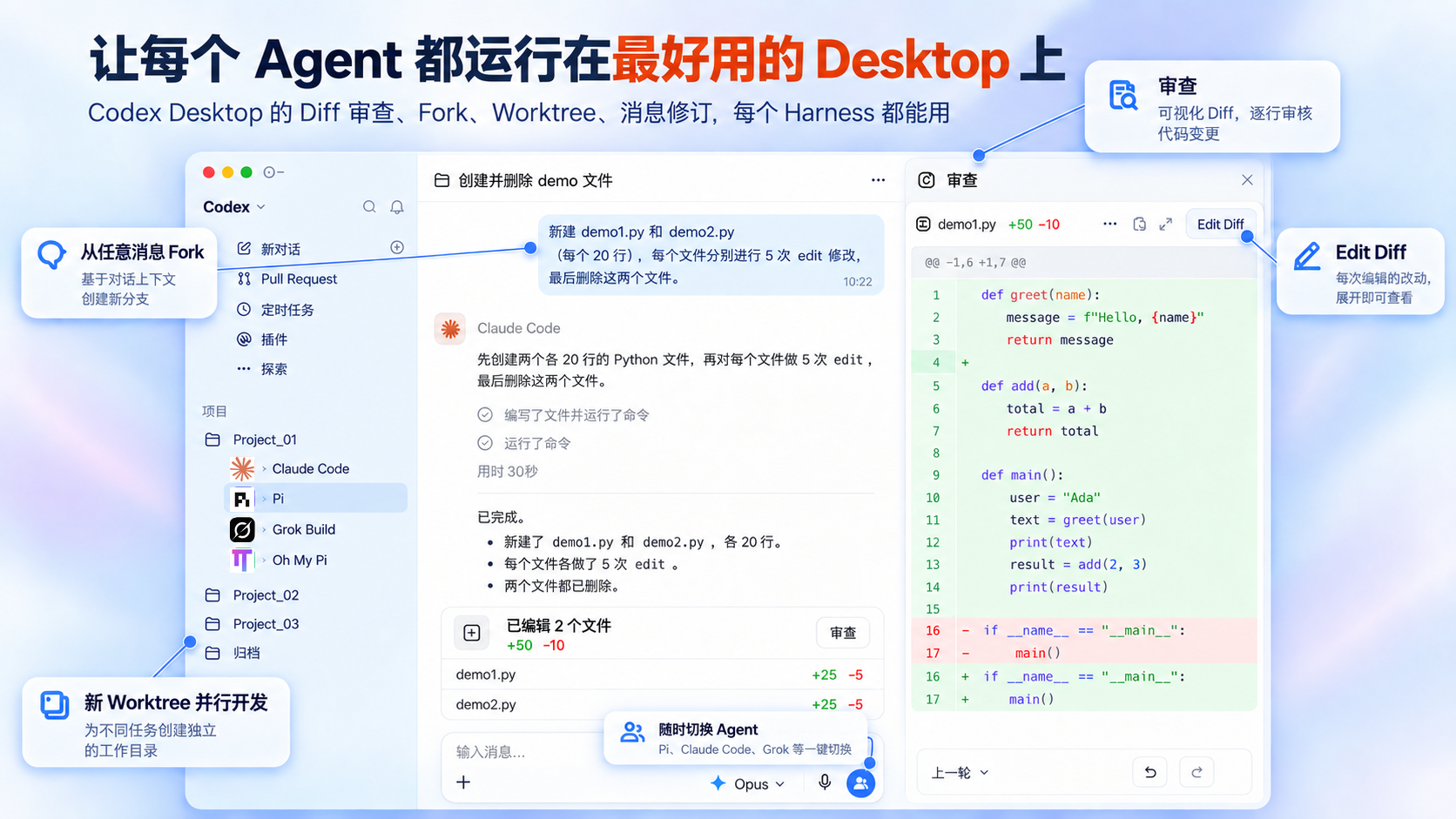
No more switching apps: Pi, Claude Code, Grok Build, and ten-plus other Harnesses all run right inside the same Codex Desktop window.
https://github.com/user-attachments/assets/c48192d7-23ff-4f6e-b61a-6345a655bb76
Interface
Quick Start
Option 1: npm (macOS / Windows / Linux)
npm install -g @codexhost/cli
codexhost
Option 2: Installer (macOS / Windows)
Grab the installer for your platform from Releases.
Linux is supported on x64 and ARM64. See the Linux guide.
Installation troubleshooting
macOS: "App can't be verified" on first launch
xattr -dr com.apple.quarantine /Applications/codexhost.appWindows: using a portable Codex Desktop
-
Point
CODEXHOST_INSTALL_ROOTat the folder where you extracted Codex Desktop:[Environment]::SetEnvironmentVariable("CODEXHOST_INSTALL_ROOT", "D:\CodexPortable", "User") -
Quit Codex Desktop completely, open a new terminal, and run
codexhost.
Highlights
|
Full workspace 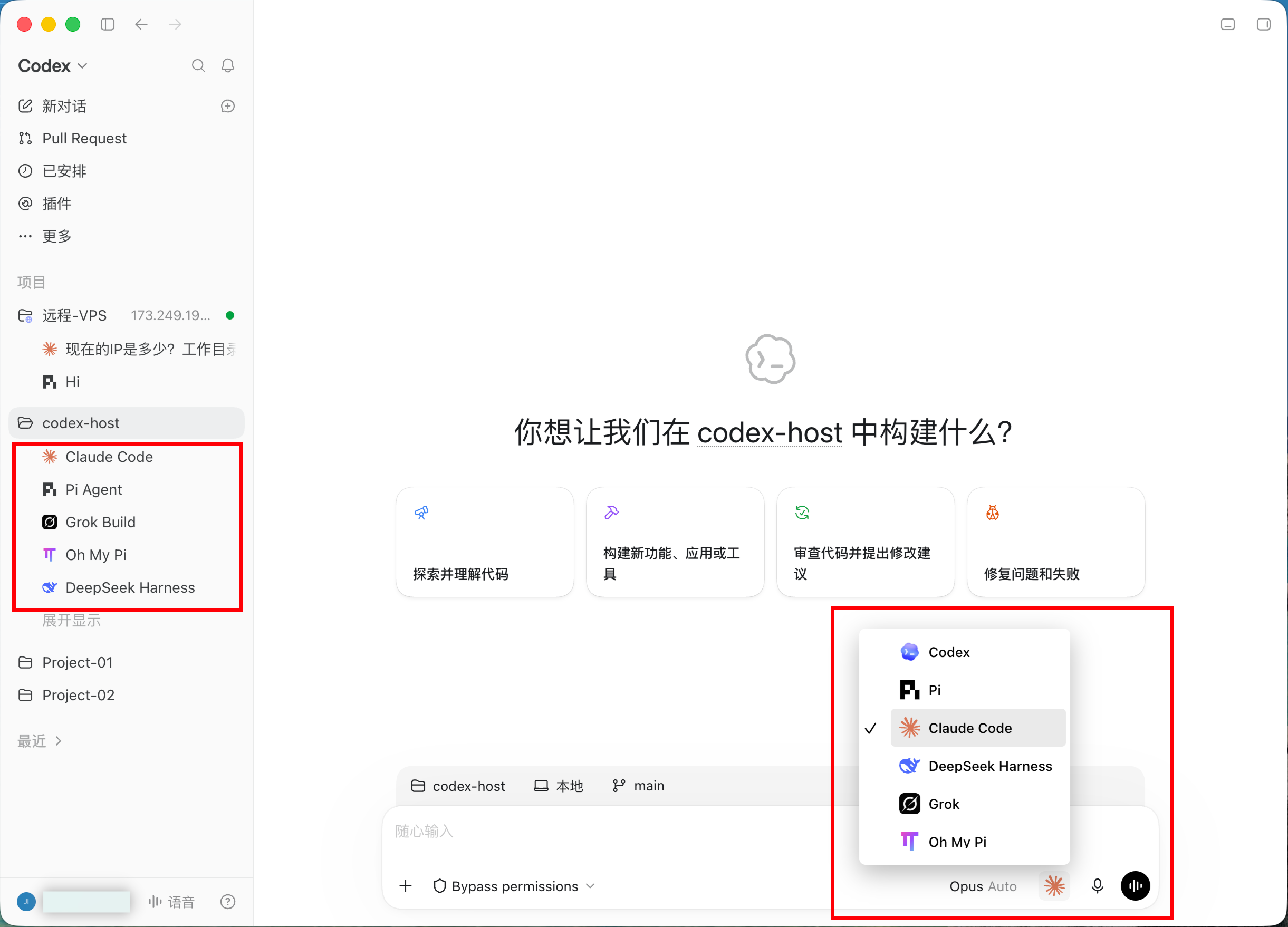
| |
|
Diff review panel 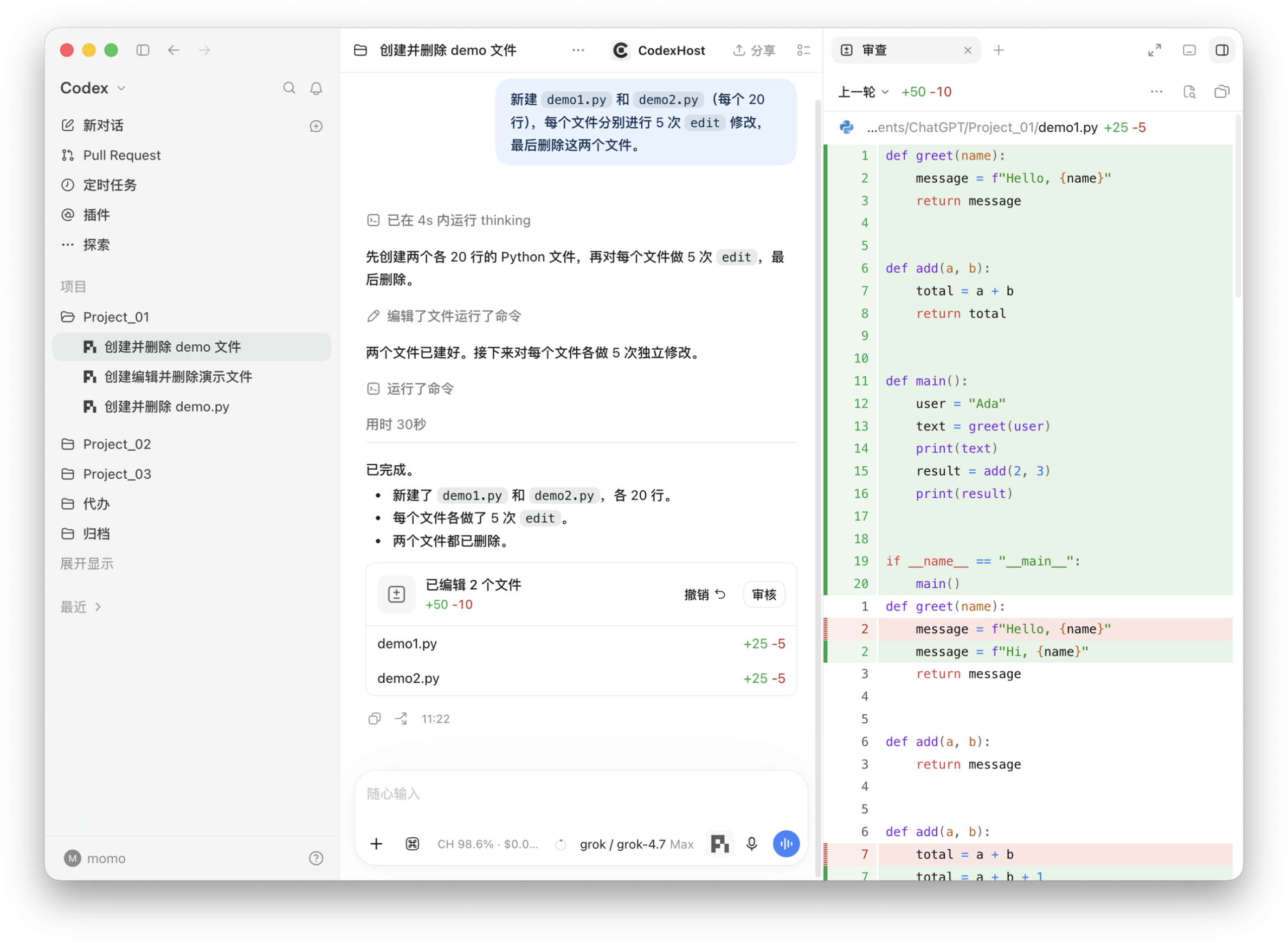
|
Fork from any message 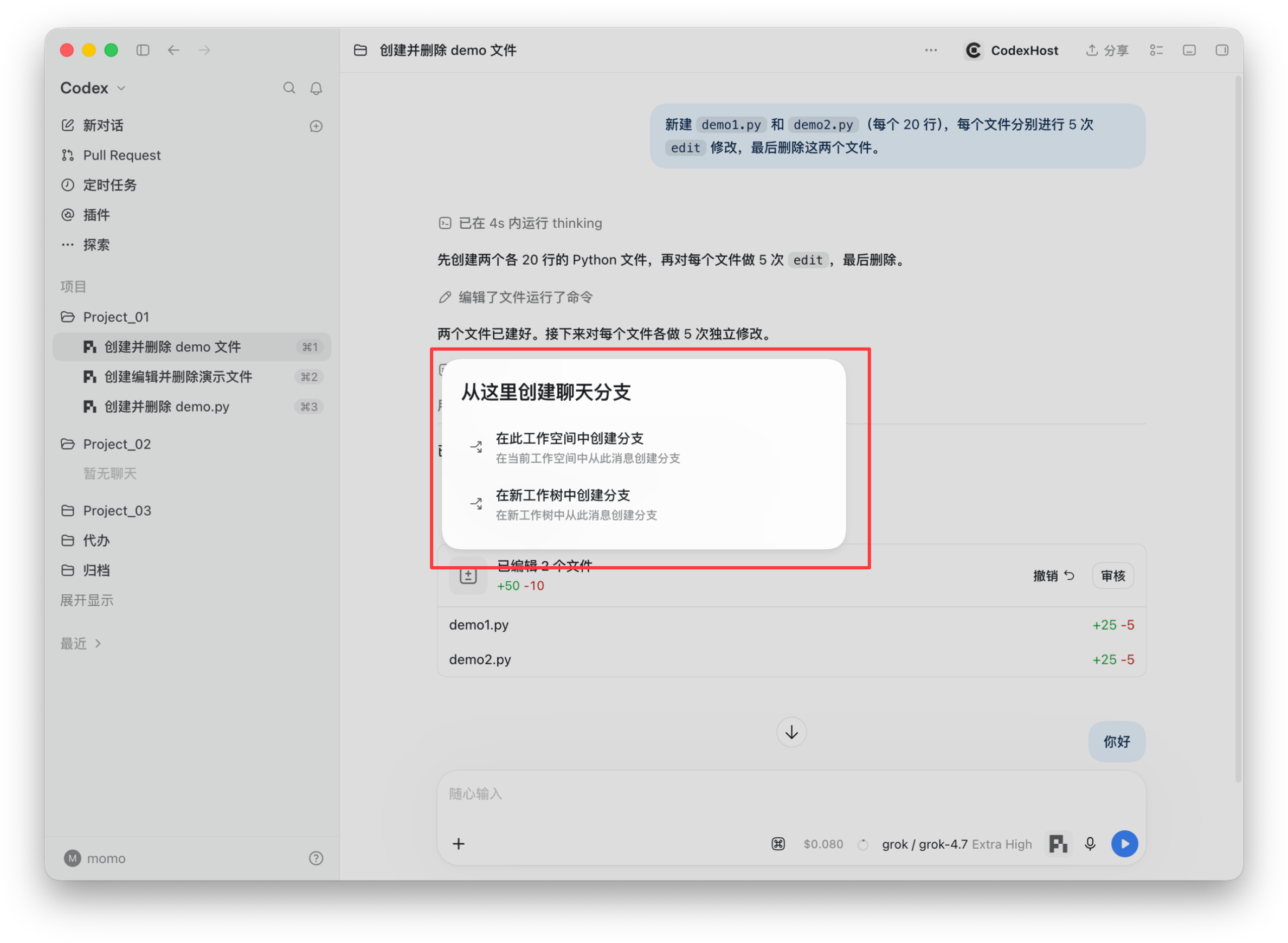
|
|
Delegate to other Agents with # 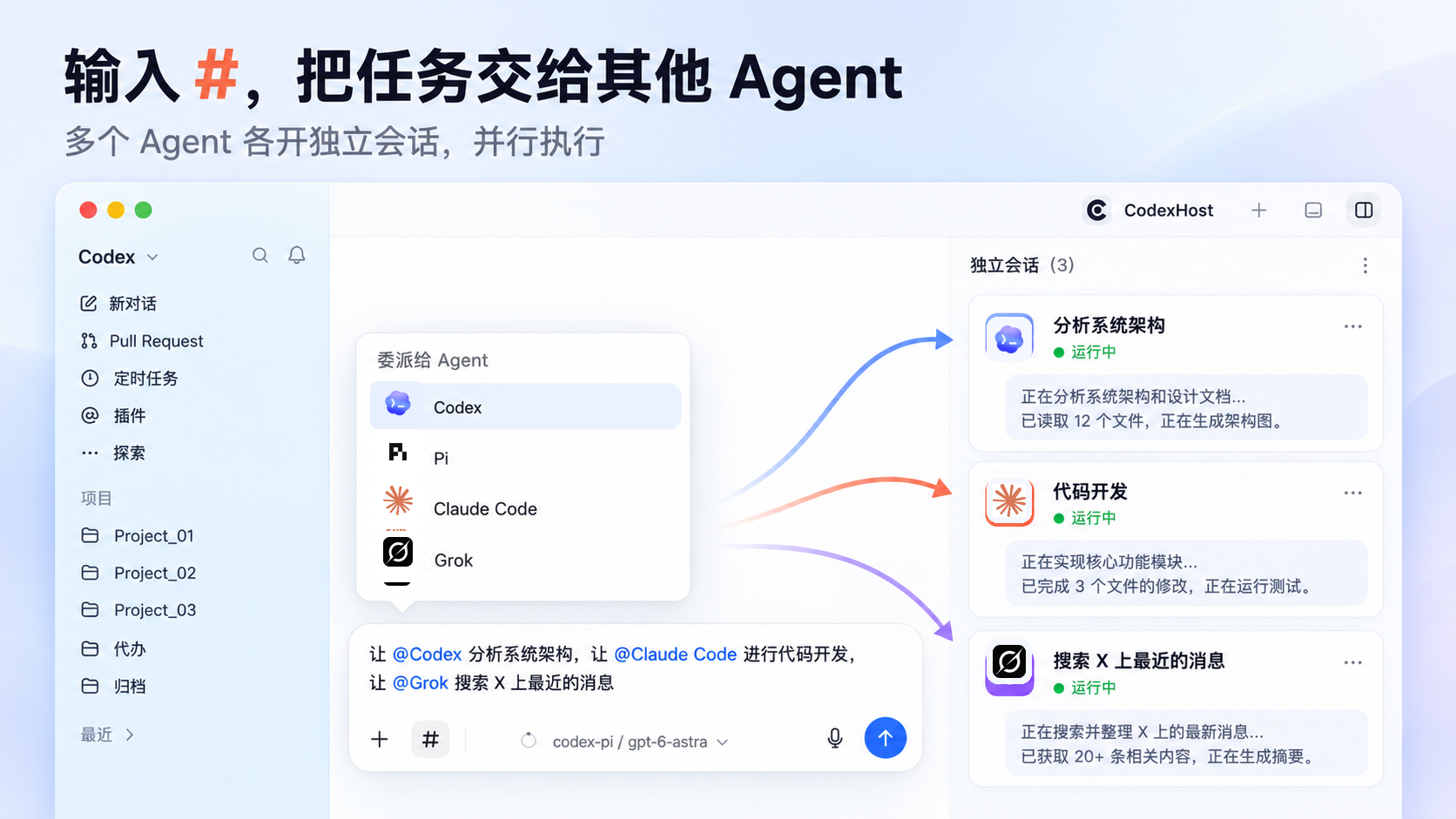
|
Tool calls and thinking 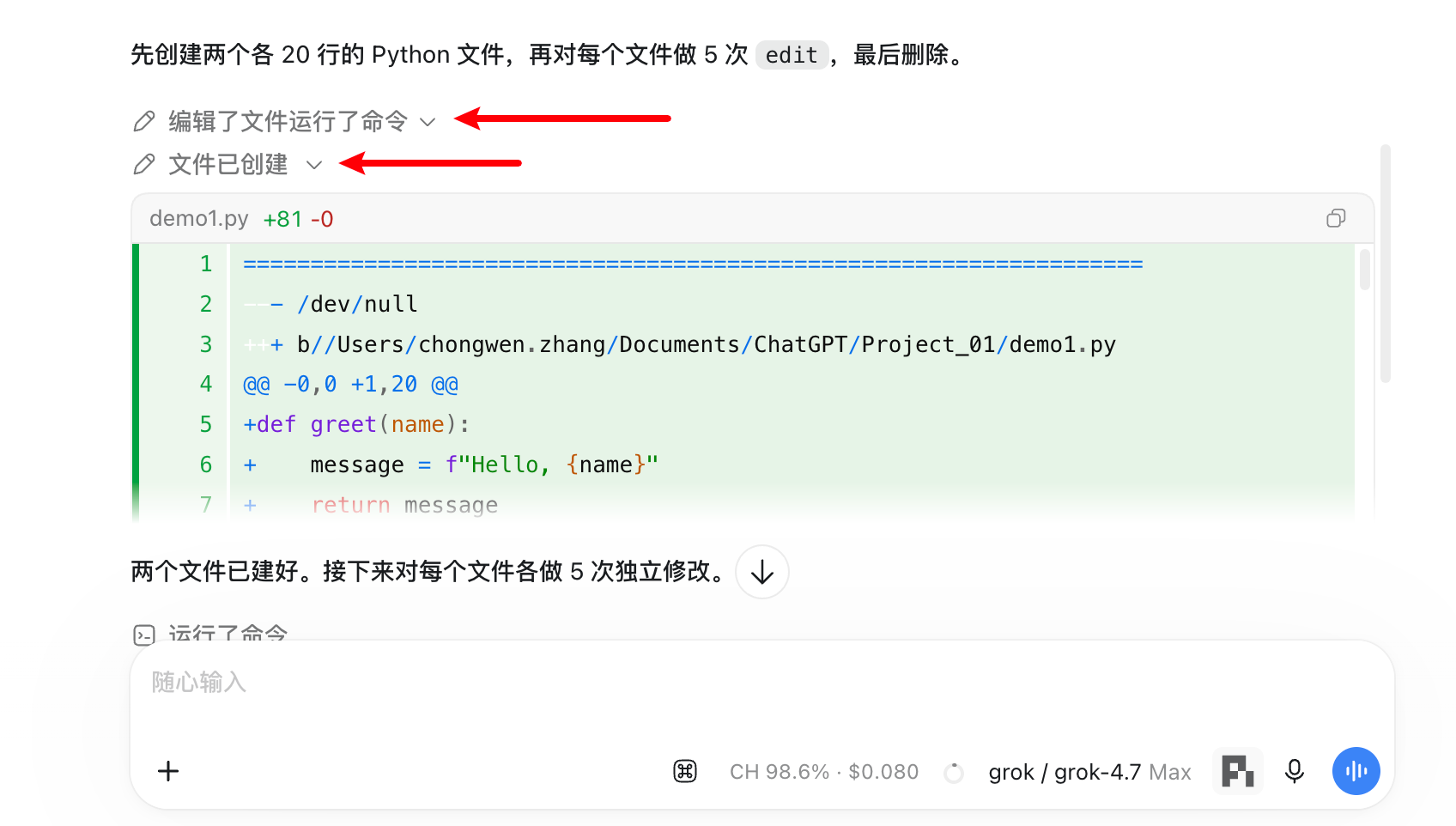
|
|
Visible Subagents 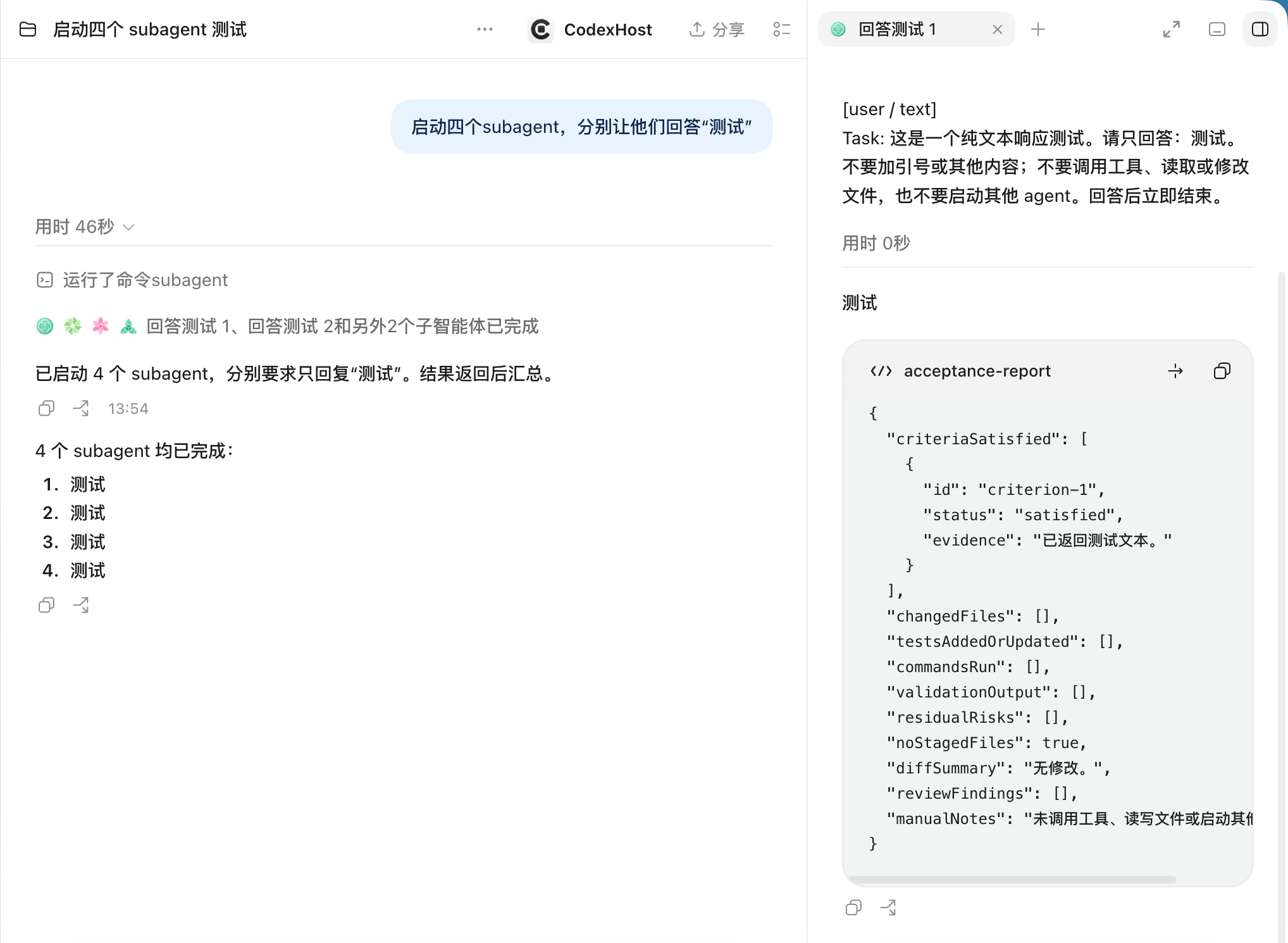
|
Remote development 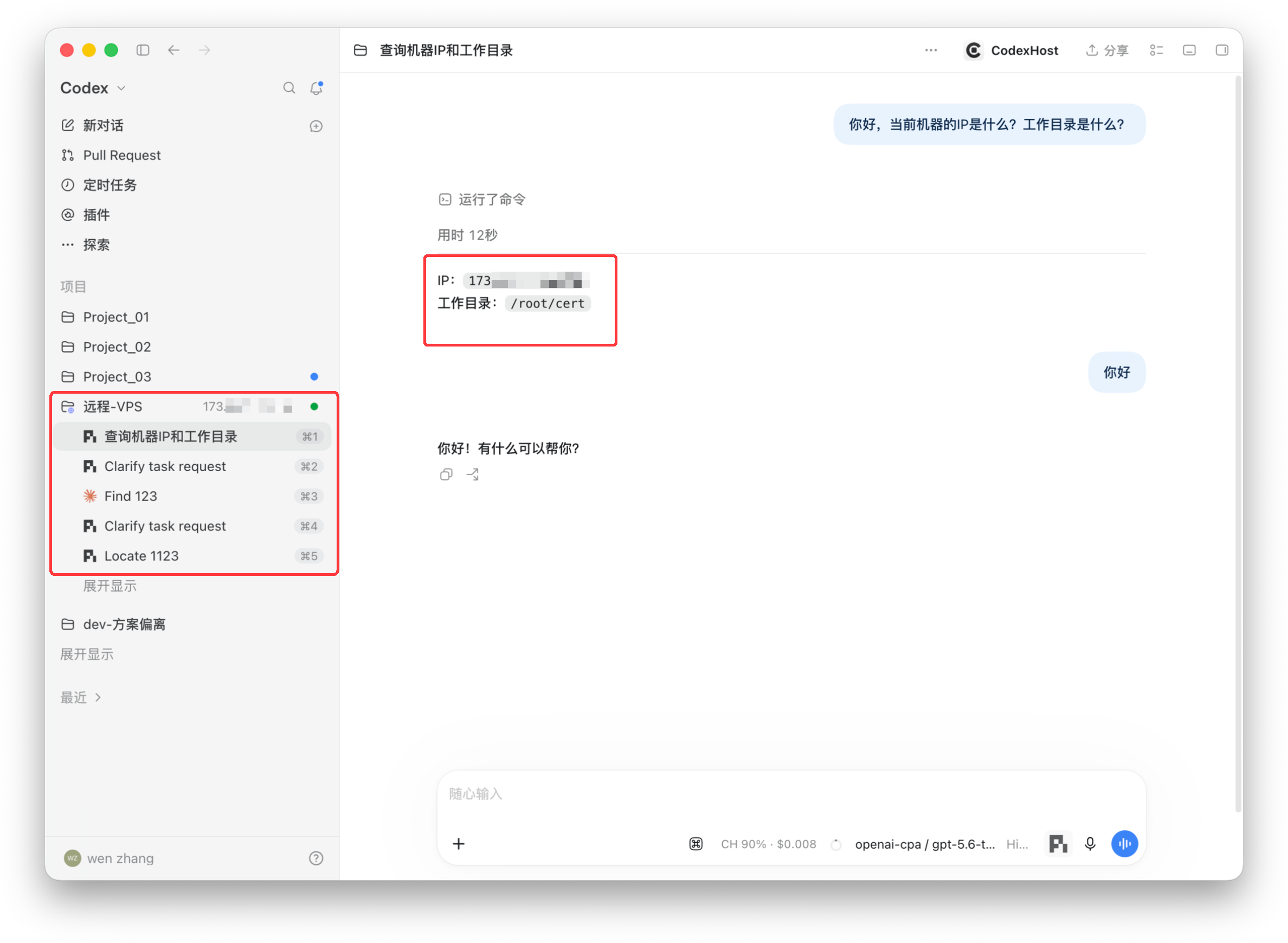
|
|
Usage at a glance 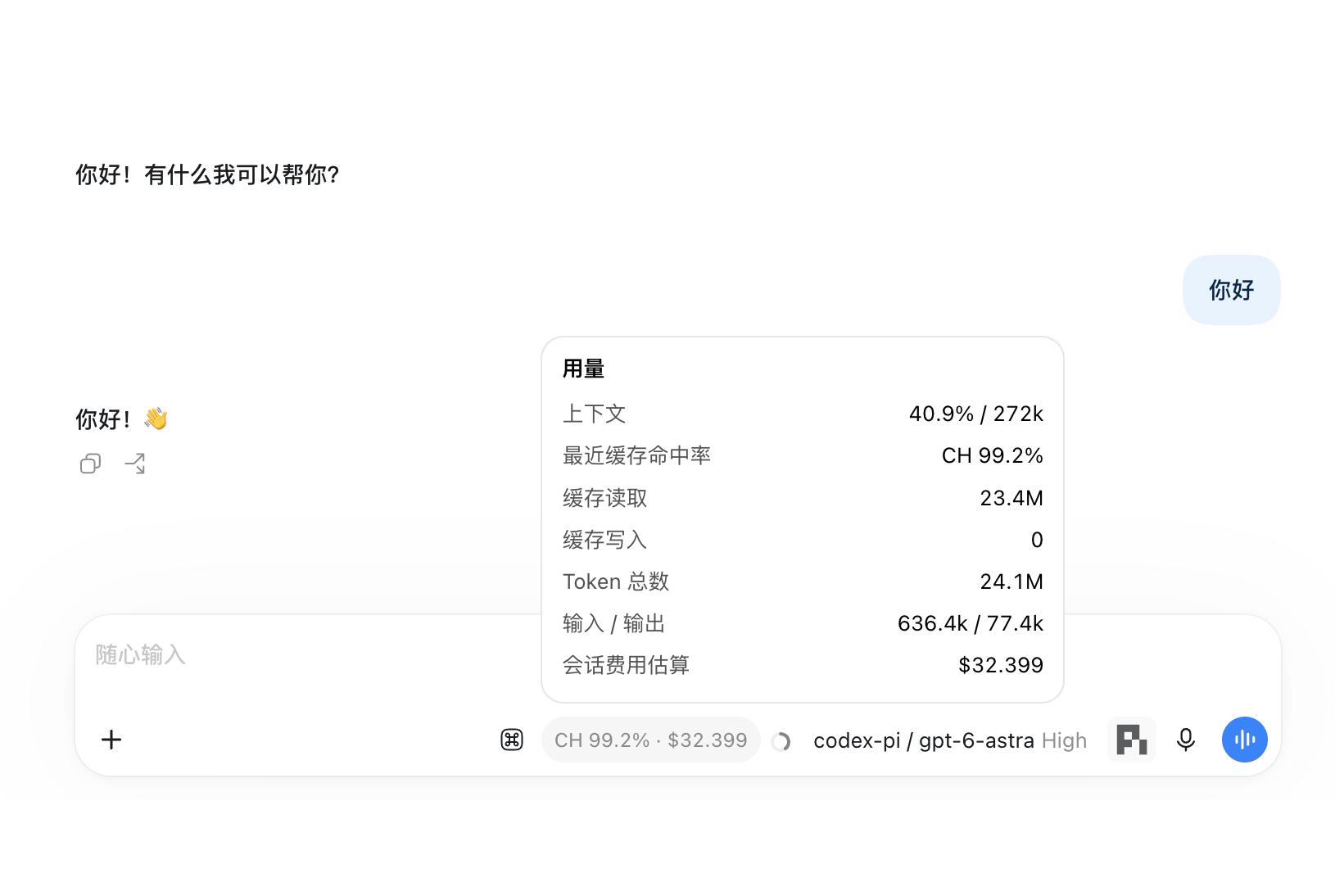
|
One-click account import 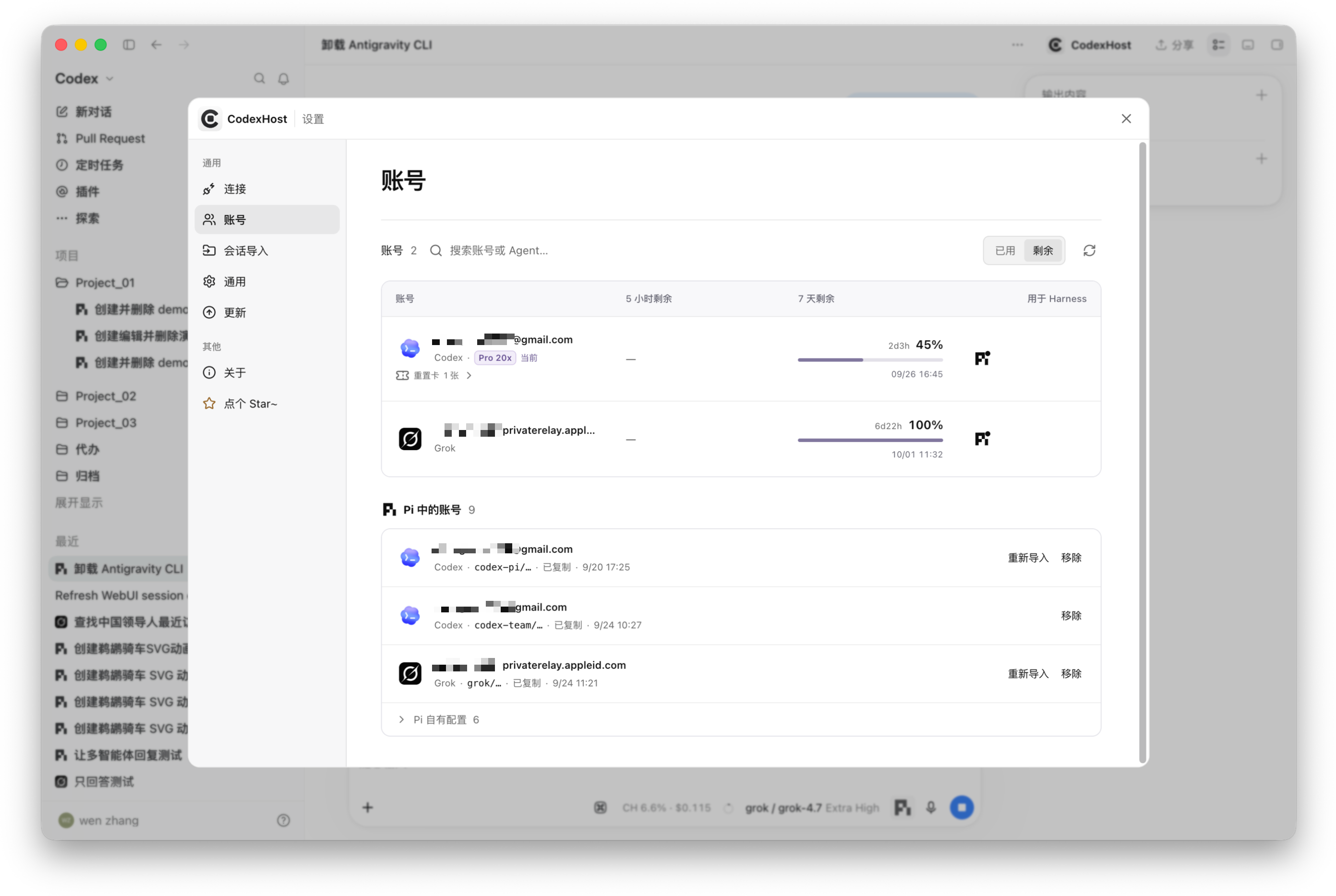
|
|
Mermaid diagram rendering 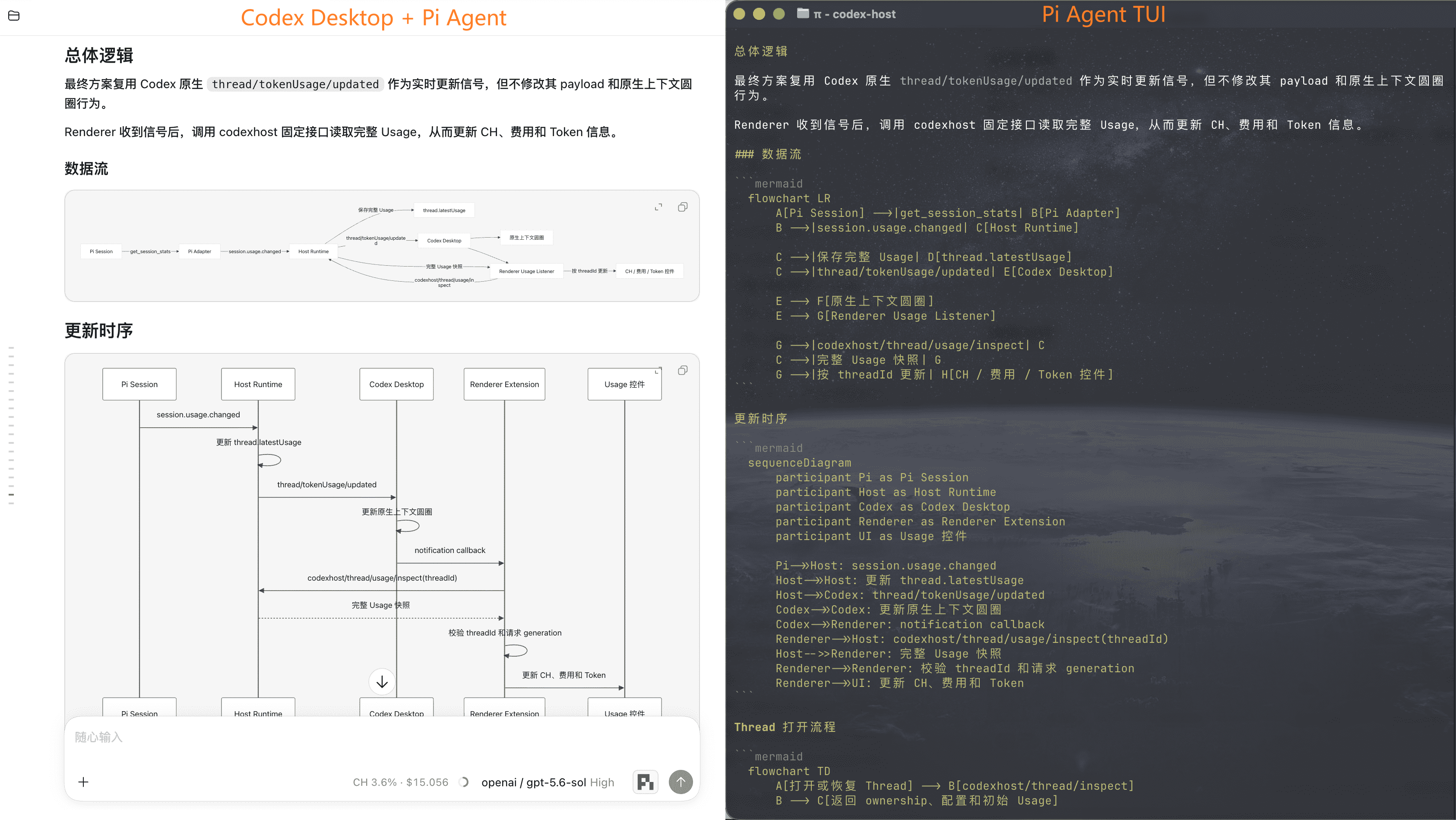
| |
Feature Status
Every Harness gets Codex Desktop's native Edit Diff, Fork, message editing, and slash commands.
Show full feature matrix
| Capability |  |  |  |  |  |  |  |  |  |  |  |  |  |
|---|---|---|---|---|---|---|---|---|---|---|---|---|---|
| Streaming responses | ✅ | ✅ | ✅ | ✅ | ✅ | ✅ | ✅ | ✅ | ✅ | ✅ | ✅ | ✅ | ✅ |
| Tool status | ✅ | ✅ | ✅ | ✅ | ✅ | ✅ | ✅ | ✅ | ✅ | ✅ | ✅ | ✅ | ✅ |
| Edit Diff | ✅ | ✅ | ✅ | ✅ | ✅ | ✅ | ✅ | ✅ | ✅ | ✅ | ✅ | ✅ | ✅ |
| Questions / cancellation | ✅ | ✅ | ✅ | ✅ | ✅ | ✅ | ✅ | ✅ | ✅ | ✅ | ✅ | ✅ | ✅ |
| Model / Thinking selection | ✅ | ✅ | ✅ | ✅ | ✅ | ✅ | ✅ | ✅ | ✅ | ✅ | ✅ | ✅ | ✅ |
| Tool approvals | ✅ | ✅ | ✅ | ✅ | ✅ | ✅ | — | ✅ | ✅ | ✅ | ✅ | ✅ | ✅ |
| Permission modes | — | ✅ | ✅ | ✅ | ✅ | ✅ | ✅ | ✅ | ✅ | ✅ | ✅ | ✅ | ✅ |
| Cross-Agent task collaboration | ✅ | ✅ | ✅ | ✅ | ✅ | ✅ | ✅ | ✅ | — | ✅ | ✅ | ✅ | ✅ |
| Usage | ✅ | ✅ | ✅ | ✅ | ✅ | ✅ | ✅ | ✅ | ✅ | — | ✅ | ✅ | ✅ |
| Fork | ✅ | ✅ | ✅ | ✅ | ✅ | ✅ | ✅ | ✅ | ✅ | ✅ | ✅ | ✅ | ◐ |
| Context compaction | ✅ | ✅ | ✅ | ✅ | ✅ | ✅ | — | ✅ | ✅ | — | ✅ | ✅ | ✅ |
| Slash commands | ✅ | ✅ | ✅ | ✅ | ✅ | ✅ | ✅ | ✅ | ✅ | ✅ | ✅ | ✅ | ✅ |
| Edit previous message | ✅ | ✅ | ✅ | ✅ | ✅ | ✅ | ✅ | ✅ | ✅ | ✅ | ✅ | ✅ | ✅ |
Cross-Agent Collaboration
Type # in the chat input to choose an Agent to delegate a task to, or to find commands and skills available for the selected Harness.
Ask the current Agent to hand off a self-contained task to another Harness. For example:
Have
#claude-codereview this change on its own and flag any compatibility risks.Have
#pifigure out why this test is flaky.Have
#ompimplement this feature while I keep working on the docs.Have
#opencodeverify this fix in a separate Thread and run the related tests.
CodexHost spins up a separate Native Session in the target Harness. It shows up in the Codex Desktop conversation list, so you can open it anytime to check progress or pick up the conversation.
Remote Harness
Drive Harnesses on another machine from your local Codex Desktop: tasks run remotely, the UI stays local. Both machines need the same codexhost version.
| Remote machine | How to connect |
|---|---|
| macOS / Linux | SSH |
| Windows | Remote Control (experimental) |
SSH
Before you start, add the remote machine in Codex Desktop under Settings → Connections → SSH. Your local machine can run macOS, Linux, or Windows.
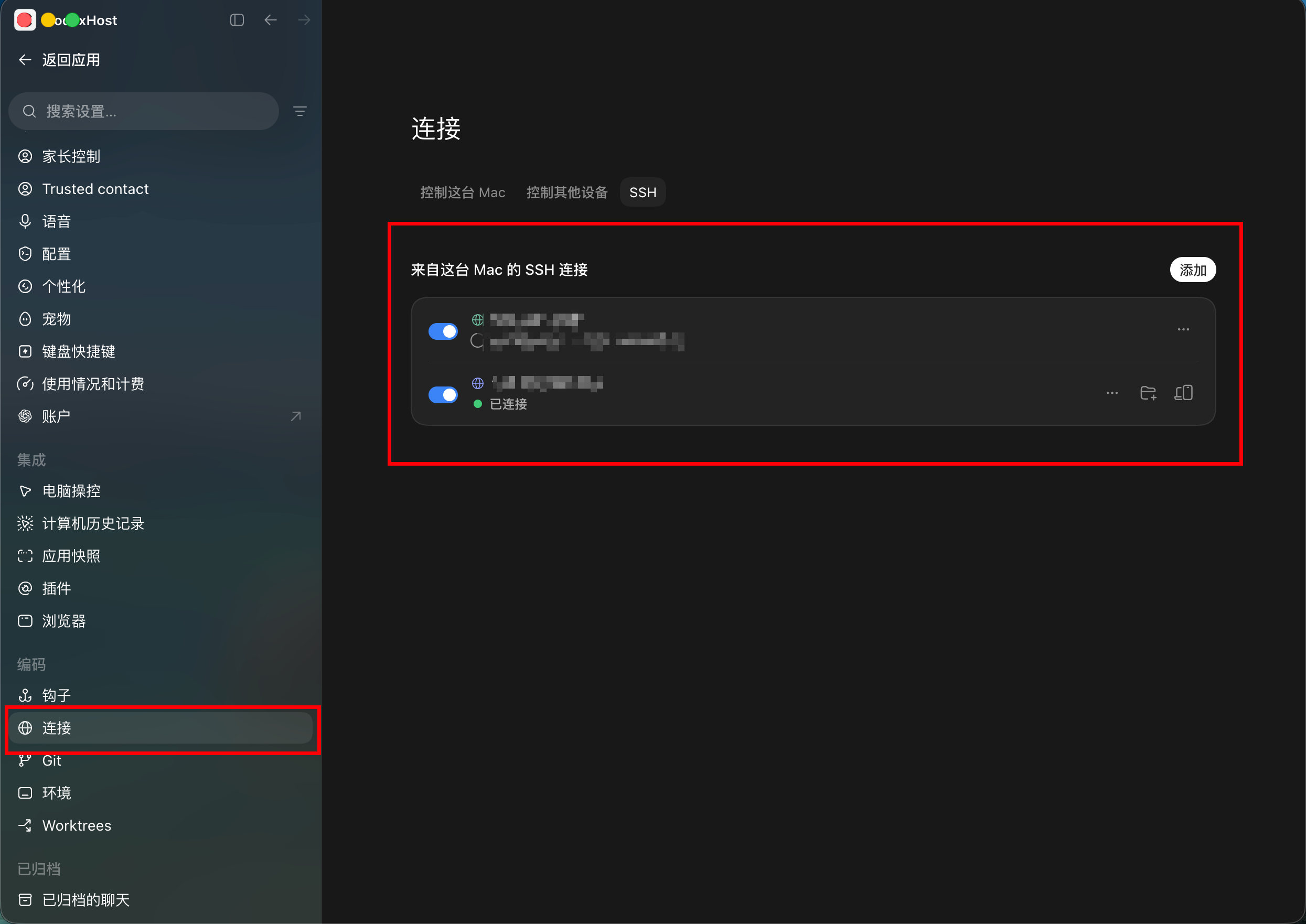
-
Install and start codexhost on the remote machine:
npm install -g @codexhost/cli codexhost remote install codexhost remote start codexhost remote status -
On your local machine, launch Codex Desktop through codexhost and open the SSH workspace.
-
Pick a Harness from the composer's Agent / Model selector.
SSH setup, diagnostics, and uninstall →
Remote Control (Experimental)
Use Harnesses on a Windows machine from another computer, built on the pairing and sign-in of Codex Desktop's official Remote Control.
Before you start, make sure official Remote Control can already run Codex tasks. No public services or ports are opened, and Harness credentials never leave the Windows machine.
How it works
Most multi-agent clients build their own chat UI and plug Harnesses in through a common protocol.
CodexHost does it differently:
- Desktop: extends the official Codex Desktop via CDP / Electron Inspector — no rebuilt chat UI, no patched installer.
- Protocol: a CLI Shim sits in front of the official app-server and passes native Codex requests through untouched.
- Harnesses: each Harness is integrated through its own native interface where one exists (Pi over RPC, Claude Code via the Agent SDK), falling back to ACP otherwise. Streaming, tool status, diffs, approvals, and questions all render in Codex Desktop's native UI.
- Orchestration: delegated tasks run as independent native sessions in the target Harness; the caller can wait for the result or let it run in the background.
Join the Community
|
Join the Community Scan the QR code to join our WeChat group and chat about CodexHost.
|

|
Development
Please read the contributing guide before opening an issue or PR. See repository maintenance automation for PR title labels, CI summaries, and pre-release checks.
Requirements: the official Codex Desktop, Node.js 22.19+ or 24, and Rust.
git clone https://github.com/BytePioneer-AI/codex-host
cd codex-host
npm ci
npm start
Runtime Architecture
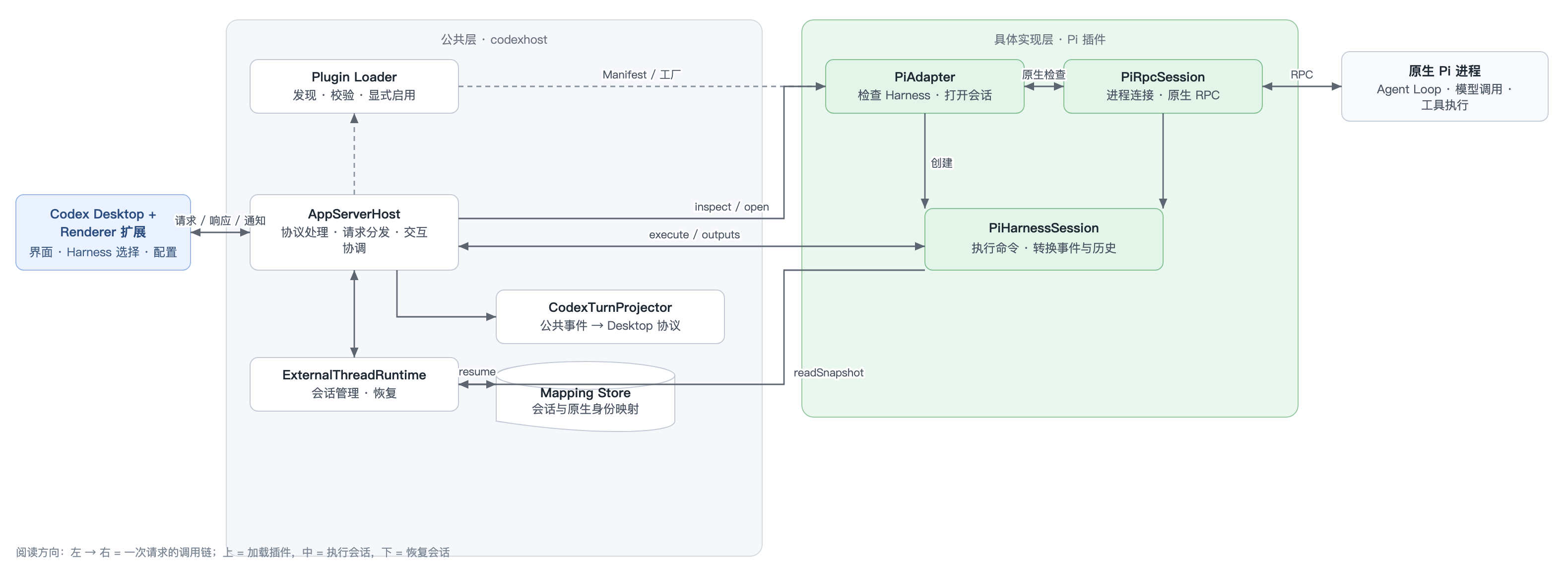
Using Pi as an example, here is how a single request flows from left to right: Desktop → shared layer → Pi plugin → native process.
Adding a Harness
Most of the work is implementing the plugin's Manifest, factory, Adapter, and Session, plus the native communication and translation logic. The Renderer still has some hard-coded wiring, so full Desktop integration takes extra work.
Tip: point your coding Agent at the in-repo codexhost-add-harness Skill. It covers plugin structure, the shared Adapter interface, capability implementation, and testing requirements.
Acknowledgements
- Thanks to the LINUX DO community for their ongoing support.
- Thanks to Paseo, whose approach to multi-Harness integration and architecture inspired ours.