luxy-aisre






AgenticOps for Kubernetes and cloud infrastructure.
luxy-aisre turns alerts, events, logs, topology, runbooks, model calls, and human approvals into one SRE workflow: discover, diagnose, preview, approve, execute, verify, and learn.
Created by 陆宣宇.
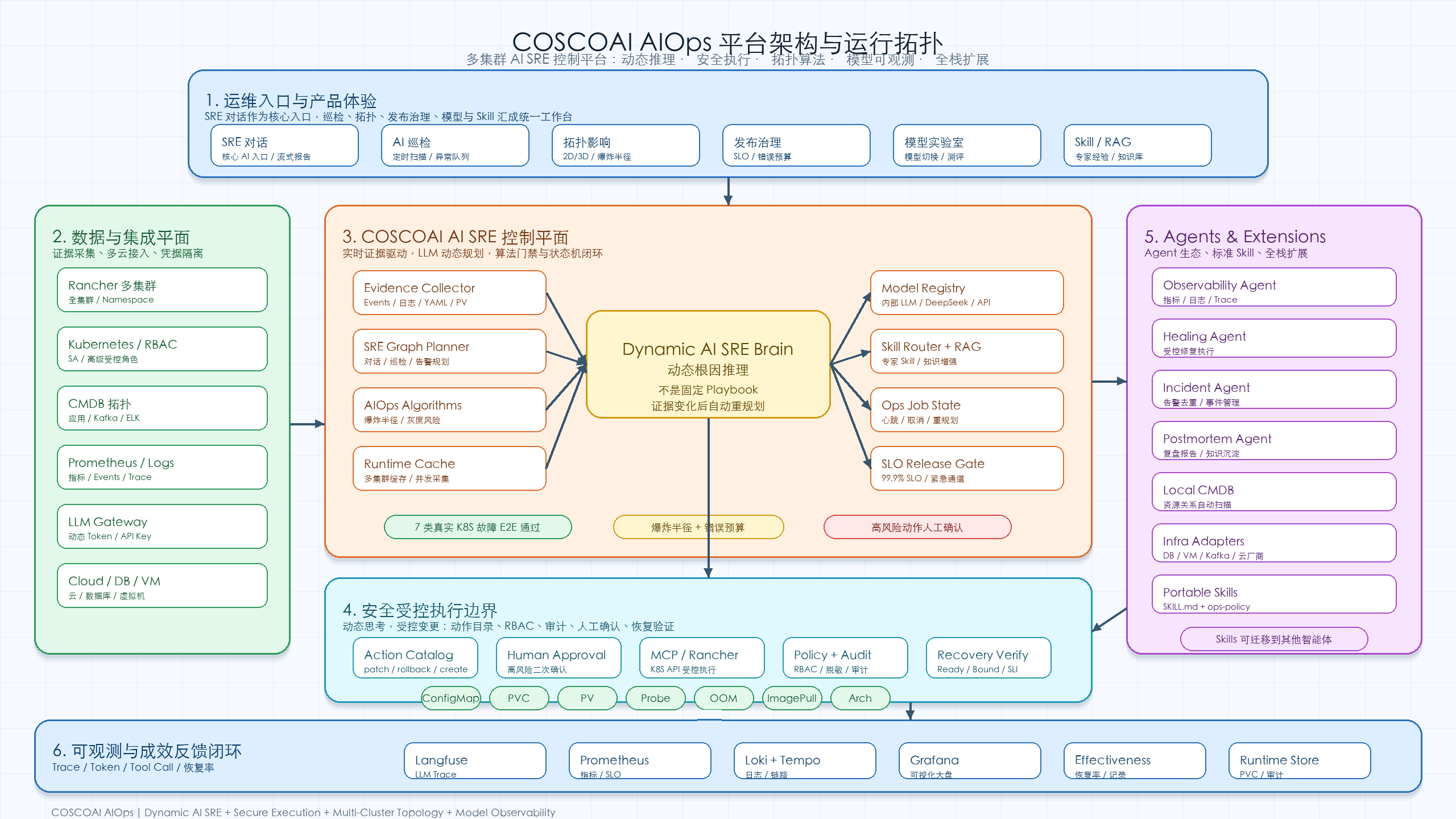
Product Preview
The screenshots below are captured from the actual console.
SRE Chat: problems find the operator
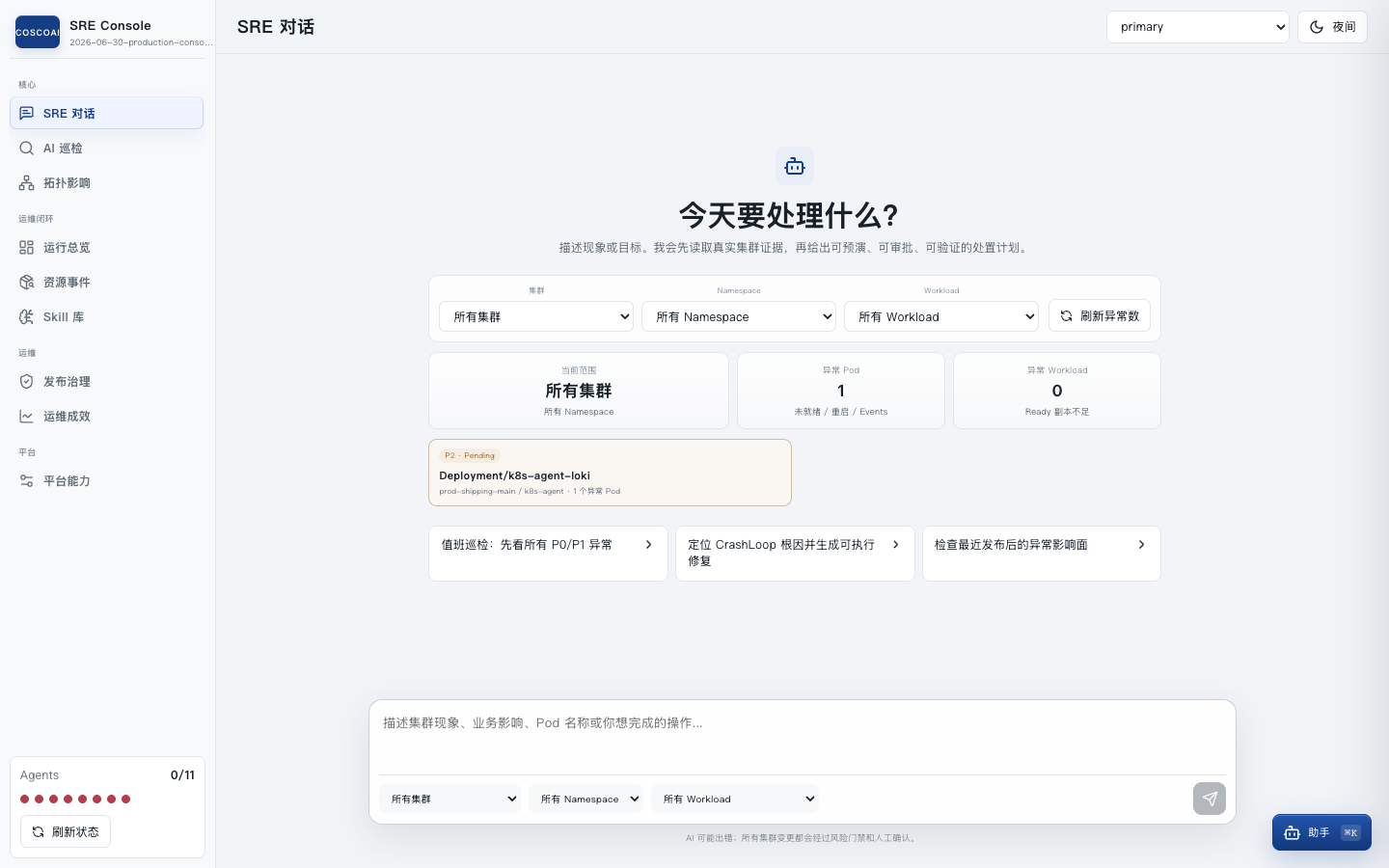
Evidence-driven remediation plan
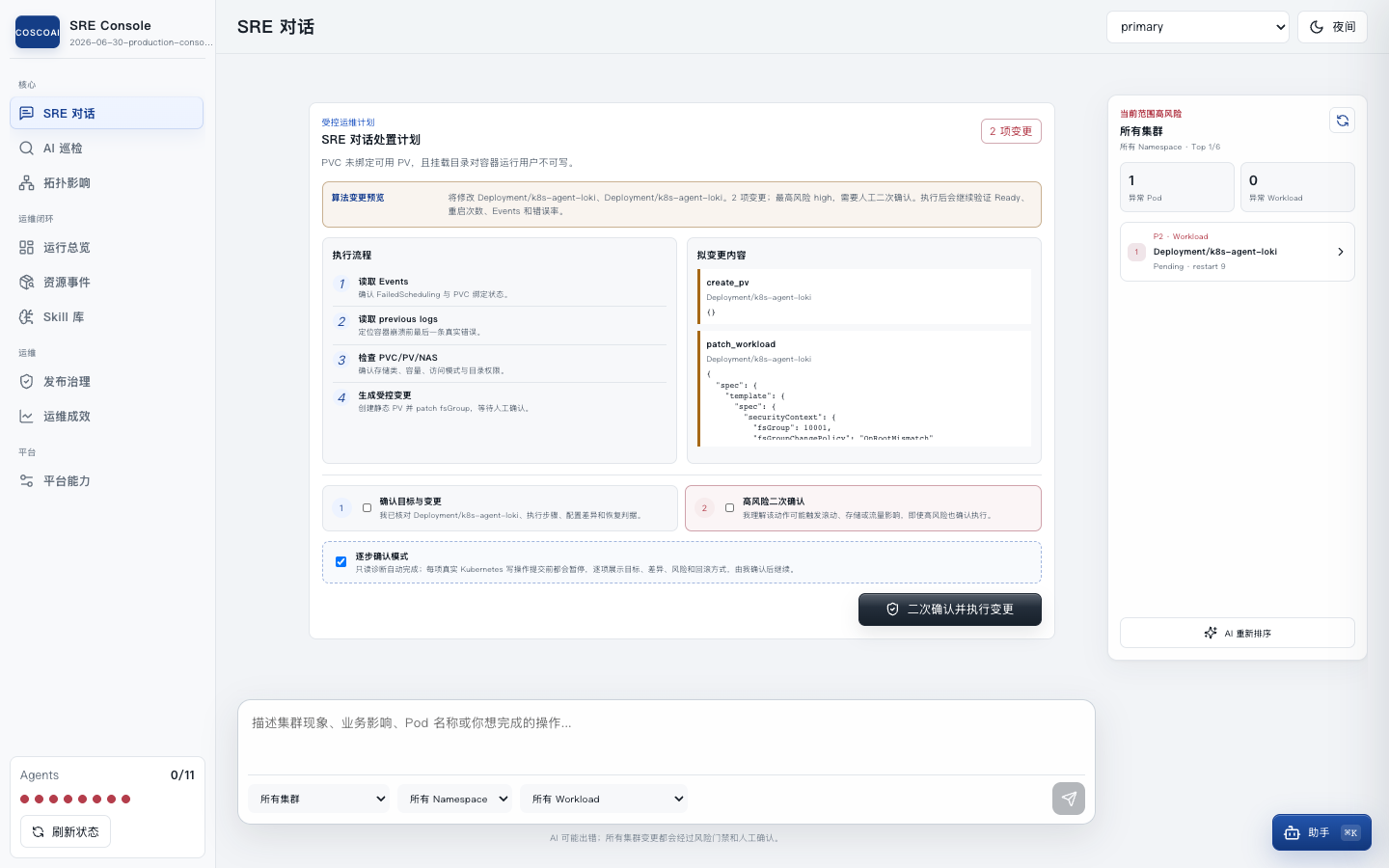
Human-approved execution and recovery verification
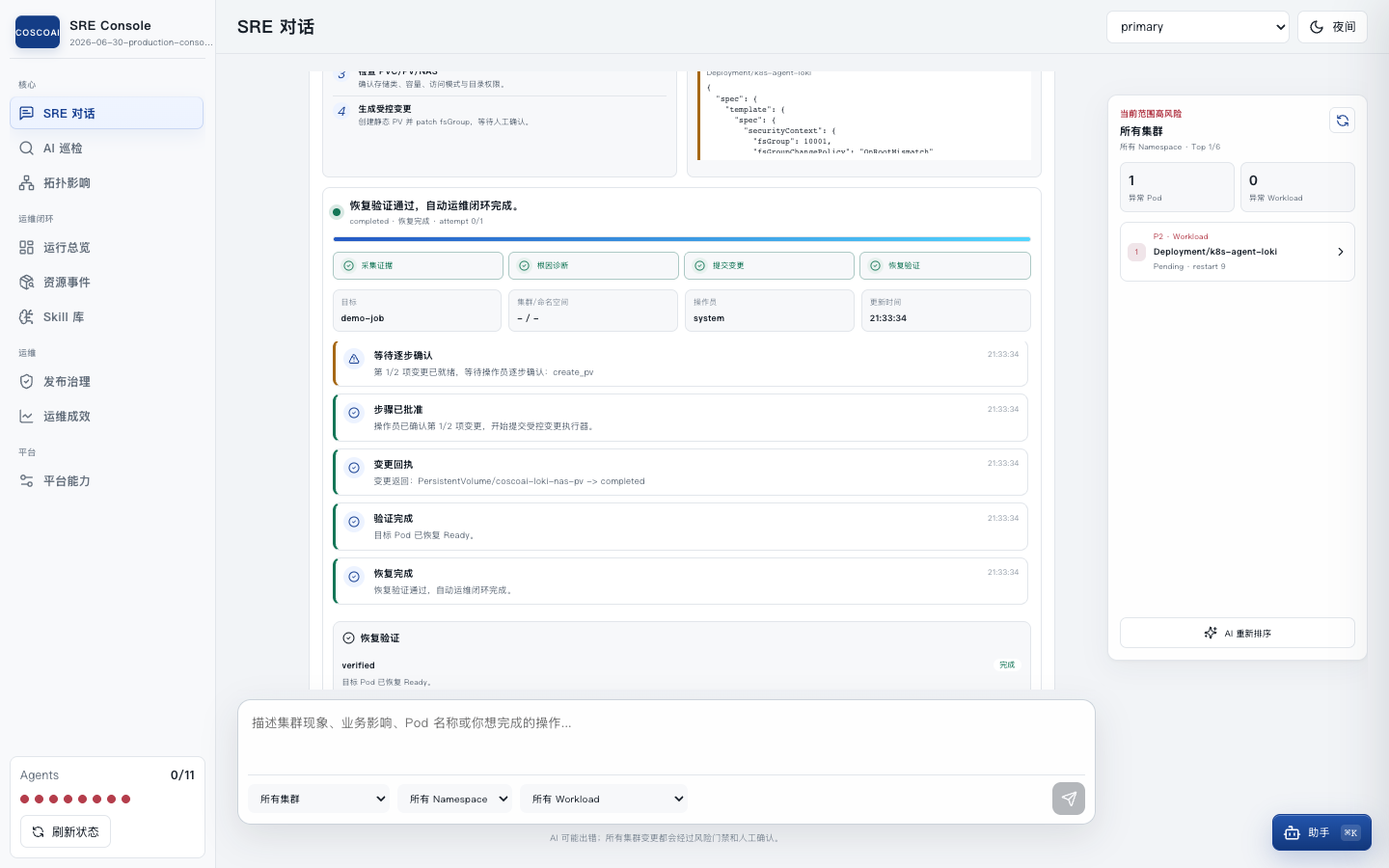
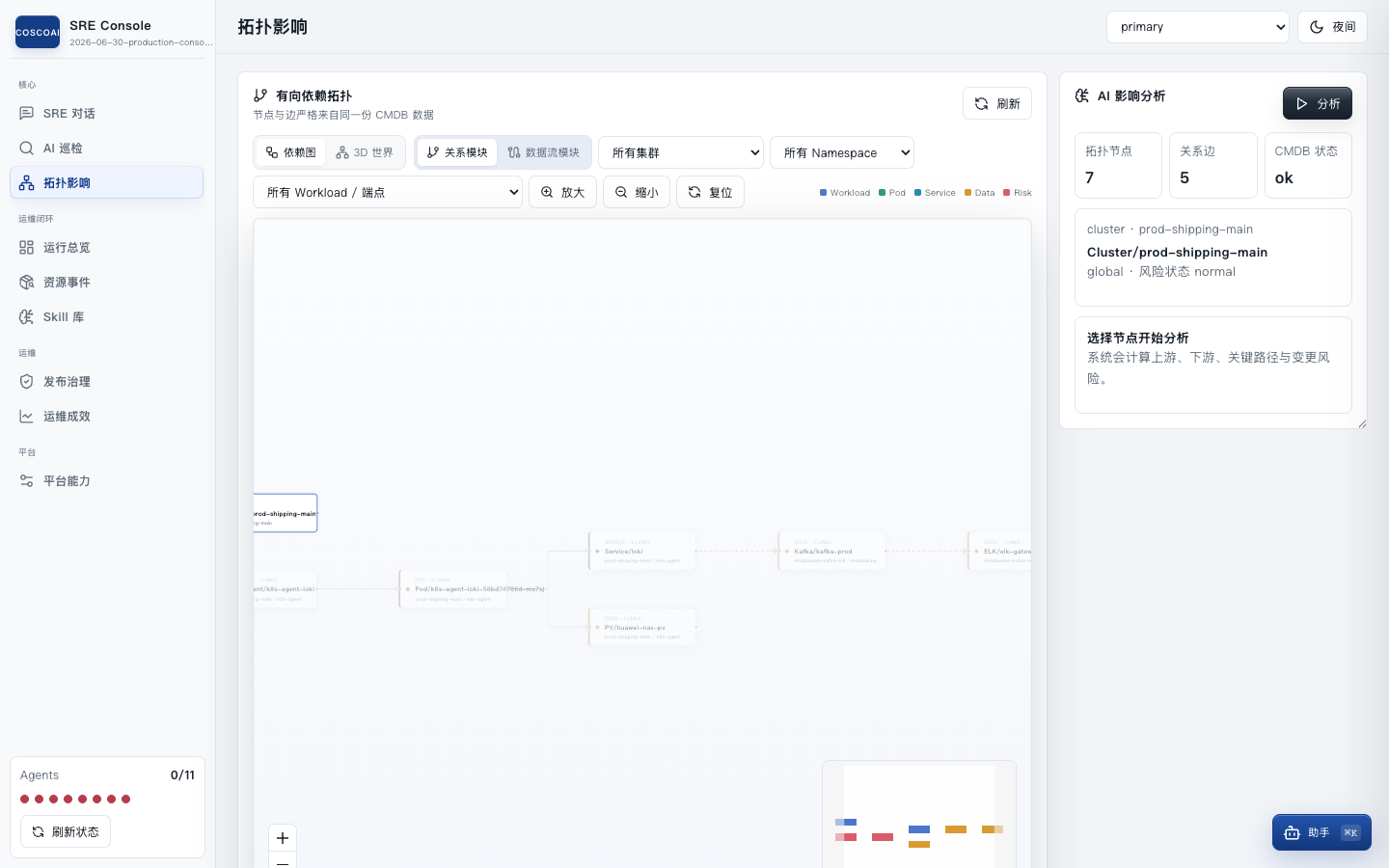
Topology impact and blast-radius analysis
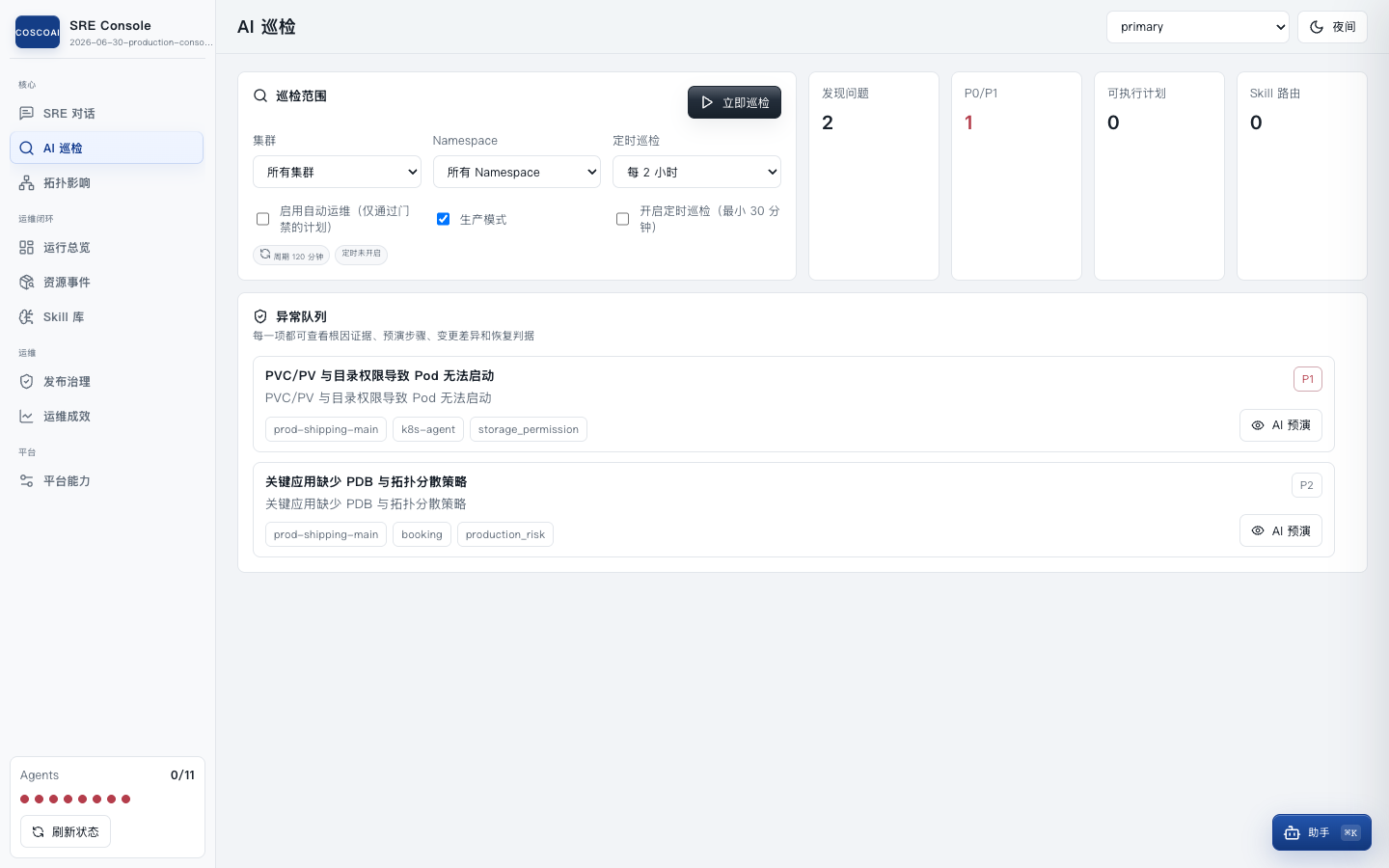
Scheduled inspection and risk queue
Why This Exists
Modern cloud systems fail in ways that are hard to reason about from a single log line:
- a Pod restart can hide a PVC, image, scheduling, network, quota, or rollout issue;
- a small workload change can affect services, data pipelines, middleware, and downstream users;
- repeated human firefighting leaves valuable operational knowledge outside the platform;
- model output is useful only when it is constrained by evidence, policy, permissions, and rollback.
luxy-aisre is built as an SRE control plane. It uses a model as a planner and explainer, but the platform keeps the execution boundary: RBAC, action catalog, dry-run, approval, audit, and recovery verification.
Core Features
- SRE Chat: ChatGPT-style operations console with cluster, namespace, workload, and risk context.
- Inspection Queue: scheduled or manual scans across Rancher/Kubernetes scopes with severity ranking.
- Controlled Remediation: evidence collection, change preview, human approval, execution, and post-change verification.
- Topology Impact: 2D/3D topology, CMDB-style dependencies, eBPF/data-flow adapters, blast-radius analysis.
- Release Governance: SLO, error budget, canary/risk gate, emergency fix path, and release audit chain.
- Skills Library: portable operation skills that encode expert knowledge and can be reused by other agents.
- Knowledge Base: upload text, Markdown, PDF, Word, Excel, logs, YAML, and runbooks for operations RAG.
- Model Lab: configure multiple OpenAI-compatible or OAuth-protected model gateways and compare outcomes.
- Observability: Prometheus metrics, Loki logs, Tempo traces, Grafana links, and optional Langfuse traces.
- Extensible Infrastructure: adapters for Kubernetes, Rancher, databases, virtual machines, storage, and middleware.
Architecture
Frontend Console
  ├─ SRE Chat / Inspection / Topology / Release / Skills / Models
  │
  ▼
Control Plane API
  ├─ Evidence pipeline
  ├─ Remediation job state machine
  ├─ Release gate and SLO budget
  ├─ Knowledge and model registries
  ├─ Observability store
  └─ Integration health checks
  │
  ├─ MCP Kubernetes tools
  ├─ A2A healing / incident / postmortem agents
  ├─ Rancher / Prometheus / CMDB / eBPF flow adapters
  ├─ Langfuse / Loki / Tempo / Grafana adapters
  └─ Optional private algorithm extension
Quick Start
1. Clone
git clone https://github.com/CoscoAI/luxy-aisre.git
cd luxy-aisre
2. Configure
cp .env.example .envFor a simple local OpenAI-compatible endpoint:
LLM_API_BASE=http://localhost:11434/v1
LLM_API_KEY=ollama
LLM_MODEL=qwen2.5:7b
LLM_AUTH_TYPE=api_key
For an OAuth client-credentials gateway:
LLM_AUTH_TYPE=oauth_client_credentials
OAUTH_TOKEN_URL=https://your-iam/realms/main/protocol/openid-connect/token
OAUTH_CLIENT_ID=your-client
OAUTH_CLIENT_SECRET=your-secret
LLM_API_BASE=https://your-llm-gateway/engines/default
LLM_MODEL=your-model
LLM_VERIFY_SSL=true
3. Build the Console
cd frontend/modern
npm install
npm run build
cd ../..
The build outputs to frontend/dist, which is served by the Python control plane.
4. Run Locally
python -m venv .venv
source .venv/bin/activate
pip install -r requirements.txt

uvicorn backend.app.main:app --host 0.0.0.0 --port 8080
Open http://localhost:8080.
For local agent compatibility ports:
uvicorn agents.observability_agent:app --host 0.0.0.0 --port 8100 &
uvicorn agents.healing_agent:app --host 0.0.0.0 --port 8101 &
uvicorn agents.incident_agent:app --host 0.0.0.0 --port 8102 &
uvicorn agents.postmortem_agent:app --host 0.0.0.0 --port 8103 &
uvicorn mcp_servers.mcp_http_server:app --host 0.0.0.0 --port 8105 &
uvicorn openwebui.openwebui_adapter:app --host 0.0.0.0 --port 8200 &
Docker
Build the all-in-one backend image:
docker build --target backend-runtime -t luxy-aisre:latest .Run it locally:
docker run --rm \
  --env-file .env \
  -p 8080:8080 \
  luxy-aisre:latest \
  python -m uvicorn backend.app.main:app --host 0.0.0.0 --port 8080
Push to GHCR or an internal registry:
IMAGE=ghcr.io/coscoai/luxy-aisre:latest ./scripts/build-push.shFor air-gapped or China mainland networks, the Dockerfile and scripts/build-push.sh already expose mirror build args:
NODE_IMAGE=docker.m.daocloud.io/library/node:24-slim \
PYTHON_IMAGE=docker.m.daocloud.io/library/python:3.14.6-slim \
NPM_REGISTRY=https://registry.npmmirror.com \
PIP_INDEX_URL=https://mirrors.aliyun.com/pypi/simple \
IMAGE=your-registry/luxy-aisre:latest \
./scripts/build-push.sh
Kubernetes Deployment
1. Create Namespace
kubectl create namespace k8s-agent2. Create Secrets
Do not commit real secrets. Create them from your terminal or secret manager:
kubectl -n k8s-agent create secret generic k8s-agent-oauth \
  --from-literal=OAUTH_CLIENT_ID='<client-id>' \
  --from-literal=OAUTH_CLIENT_SECRET='<client-secret>' \
  --from-literal=RANCHER_TOKEN='<optional-rancher-token>'
For Langfuse:
kubectl -n k8s-agent create secret generic k8s-agent-langfuse \
  --from-literal=public-key='<pk-lf-...>' \
  --from-literal=secret-key='<sk-lf-...>'
3. Configure Runtime
Edit manifests/deployment.yaml:
LLM_AUTH_TYPEOAUTH_TOKEN_URLLLM_API_BASE/LLM_GATEWAY_BASELLM_MODELPROMETHEUS_URLCMDB_URLRANCHER_URLRANCHER_CLUSTER_IDSALLOWED_NAMESPACESOPS_MUTATION_ENABLEDAUTO_HEALING_ENABLED
4. Apply Manifests
kubectl apply -f manifests/rbac.yaml
kubectl apply -f manifests/deployment.yaml
kubectl apply -f manifests/frontend.yaml
The default service exposes the console through NodePort 30080:
kubectl get svc -n k8s-agentFor production, use your company Ingress/Gateway with TLS and identity middleware instead of exposing an unauthenticated public NodePort.
Model Configuration
luxy-aisre supports two common model access patterns.
OAuth Token URL + Base URL
Use this when your gateway requires a dynamic bearer token:
[
  {
    "id": "primary",
    "provider": "oauth-gateway",
    "model": "your-model",
    "base_url": "https://your-gateway/engines/default",
    "auth_type": "oauth_client_credentials",
    "token_url": "https://your-iam/token",
    "client_id": "your-client",
    "client_secret": "from-secret",
    "role": "primary",
    "max_tokens": 4096,
    "verify_ssl": true
  }
]
Base URL + API Key
Use this for OpenAI-compatible providers:
[
  {
    "id": "openai-compatible",
    "provider": "openai-compatible",
    "model": "your-model",
    "base_url": "https://api.example.com/v1",
    "auth_type": "api_key",
    "api_key": "from-secret",
    "role": "candidate",
    "max_tokens": 4096
  }
]
Set the JSON in MODEL_PROFILES_JSON or add models from the Model Lab page. Secrets should come from Kubernetes Secret or your enterprise secret platform.
Langfuse
Langfuse is optional. When configured, the platform records model calls, latency, token usage, cost estimates, tool spans, quality scores, and trace IDs.
Environment variables:
LANGFUSE_ENABLED=true
LANGFUSE_HOST=http://langfuse-web.langfuse.svc.cluster.local:3000
LANGFUSE_PUBLIC_KEY=pk-lf-...
LANGFUSE_SECRET_KEY=sk-lf-...
Deployment references:
- Docker Compose: https://langfuse.com/self-hosting/deployment/docker-compose
- Kubernetes Helm: https://langfuse.com/self-hosting/deployment/kubernetes-helm
This repository also contains manifests/langfuse-local.yaml as a local reference manifest. It is ignored by Git by default because production Langfuse credentials and storage settings should be managed separately.
Private Algorithm Extension
The public repository includes a runnable baseline algorithm module at agents/aiops_algorithms.py.
If you have a private scoring implementation, keep it outside the repository and load it at runtime:
export COSCOAI_PRIVATE_ALGORITHM_PATH=.local/private_algorithms/aiops_algorithms_private.py
uvicorn backend.app.main:app --host 0.0.0.0 --port 8080
Docker:
docker run --rm \
  --env-file .env \
  -e COSCOAI_PRIVATE_ALGORITHM_PATH=/var/lib/coscoai-private/aiops_algorithms_private.py \
  -v "$PWD/.local/private_algorithms:/var/lib/coscoai-private:ro" \
  -p 8080:8080 \
  luxy-aisre:latest \
  python -m uvicorn backend.app.main:app --host 0.0.0.0 --port 8080
Kubernetes:
kubectl -n k8s-agent create secret generic luxy-aisre-private-algorithms \
  --from-file=aiops_algorithms_private.py=.local/private_algorithms/aiops_algorithms_private.py
kubectl rollout restart deploy/luxy-aisre -n k8s-agent
kubectl rollout restart deploy/k8s-agent-api -n k8s-agent
If the secret is absent, the platform still runs with the open baseline.
To explicitly test the open baseline path:
COSCOAI_DISABLE_PRIVATE_ALGORITHMS=1 uvicorn backend.app.main:app --host 0.0.0.0 --port 8080Skills
Skills are portable operational knowledge packages. They describe:
- symptoms and trigger conditions;
- required evidence;
- allowed objects;
- allowed actions;
- recovery criteria;
- rollback guidance;
- optional references and runbooks.
Skills are stored under OPS_SKILL_ROOT and can be created from the console. They are intentionally portable so they can be reused by other agents or moved between environments.
Safety Model
The platform is designed around least privilege:
- no browser-side shell or arbitrary command execution;
- no mutation unless server switches allow it;
- high-risk actions require explicit operator confirmation;
- action catalog limits what the model can request;
- namespace/workload scope is controlled by RBAC and allowlists;
- every change records preview, actor, diff, result, and verification status;
- secrets are never committed and should be supplied through Kubernetes Secret or a secret manager.
Repository Layout
luxy-aisre/
├── agents/                  # SRE workflow agents and execution engines
├── backend/app/             # Control plane API, schemas, services, domain logic
├── mcp_servers/             # Kubernetes MCP tools
├── cmdb/                    # Local CMDB/topology service
├── cloud/                   # Cloud and infrastructure adapter contracts
├── frontend/modern/         # React + TypeScript + Vite console
├── manifests/               # Kubernetes manifests
├── scripts/                 # Build and image helper scripts
├── docs/                    # Architecture and maintainer documentation
├── examples/                # Sample alerts
└── tests/                   # Backend and workflow tests
Development
python -m compileall -q backend agents mcp_servers cmdb cloud a2a openwebui
python -m pytest tests
cd frontend/modern && npm run build
Run the security gate locally:
python -m pip install pip-audit
pip-audit -r requirements.lock --no-deps --disable-pip
Publishing to GitHub
Create the CoscoAI GitHub account or organization manually, then create a repository named luxy-aisre.
git init -b main
git add .
git commit -m "Initial open-source release"
git remote add origin https://github.com/CoscoAI/luxy-aisre.git
git push -u origin main
GitHub account creation requires email verification and may require CAPTCHA or 2FA, so it must be completed interactively by the account owner.
Roadmap
luxy-aisre is designed to grow from a Kubernetes SRE console into an AgenticOps operating system for modern infrastructure.
- Kubernetes Autopilot: cover the full lifecycle from alert, evidence, root-cause analysis, remediation preview, approval, execution, rollback, and recovery verification.
- Rancher Multi-Cluster Fleet: make every cluster, namespace, workload, event, metric, and operation record searchable and governable from one control plane.
- Full-Stack Infrastructure Operations: extend the same evidence-to-action loop to databases, virtual machines, storage, middleware, ingress, service mesh, and hybrid-cloud resources.
- Runtime Data-Flow Intelligence: fuse Kubernetes inventory, CMDB, Prometheus, Loki, Tempo, and eBPF flow data into a living dependency graph that explains impact, blast radius, and traffic direction.
- Release Governance Control Plane: turn SLO, error budget, canary scope, image risk, YAML policy, topology risk, and emergency repair paths into a programmable release gate.
- Operations Skills Network: let engineers package hard-won troubleshooting experience as portable Skills, so the platform becomes stronger every time an incident is solved.
- Model Benchmark Arena: evaluate different models by remediation success rate, MTTR reduction, safety score, evidence quality, token cost, and rollback correctness.
- Digital Twin for Change Risk: simulate changes against topology, historical incidents, dependency paths, and SLO budgets before production is touched.
- 100k-Node Scale Architecture: move heavy discovery to event-driven collectors, sharded caches, async job queues, streaming evidence pipelines, and pluggable stores.
- Enterprise Trust Layer: ship production Helm charts, air-gapped packages, OIDC/SSO, RBAC presets, audit retention, policy-as-code, secret-manager integration, and compliance reports.
- Cloud & Edge Expansion: add first-class adapters for Alibaba Cloud, Huawei Cloud, Tencent Cloud, AWS, Azure, private cloud, edge clusters, and cross-region disaster recovery.
- Self-Healing Platform Runtime: let the platform inspect and repair its own agents, collectors, queues, stores, and integrations under strict approval and audit boundaries.
License
This project is released under the Luxy AISRE Non-Commercial Source License.
You may use, study, modify, and redistribute the source code for non-commercial purposes. Commercial use, hosted commercial services, resale, enterprise product bundling, paid support services, and removal of author attribution require prior written authorization from 陆宣宇.
This is a source-available non-commercial license, not an OSI-approved open-source license. If your organization needs a different license model, obtain written permission before use.