Neuro-Entropic Extraction Simulator
Disclaimer
This repository contains the raw research code for the manuscript "Quantifying Cognitive Collapse". The scripts were developed for academic simulation and data analysis purposes. As an initial formulation, the code is optimized for mathematical experimentation rather than production efficiency.
Project Description
This project simulates the cognitive dynamics of human attention under algorithmic influence using a multi-layered mathematical model. We combine stochastic differential equations (SDEs), stability analysis, and empirical data validation to quantify how recommendation algorithms extract cognitive bandwidth and reshape neural pathways.
Key Findings
-
Entropy Gap: Social media text (Twitter) exhibits higher unigram entropy than classical literature when measured at fixed word-length windows, suggesting algorithmic media creates a "chaotic" rather than "structured" cognitive environment.
-
Optimal Exploitation Threshold: Parameter sensitivity analysis reveals that algorithms have an incentive to maintain users in a "semi-stupid" state—maximizing capital extraction without triggering complete cognitive collapse.
-
Intervention Efficacy: Simulated interventions (noise reduction + structured resonance) can reverse cognitive collapse trajectories, demonstrating the potential for engineered countermeasures.
Visual Results
Stochastic Paths (SDE Simulation)
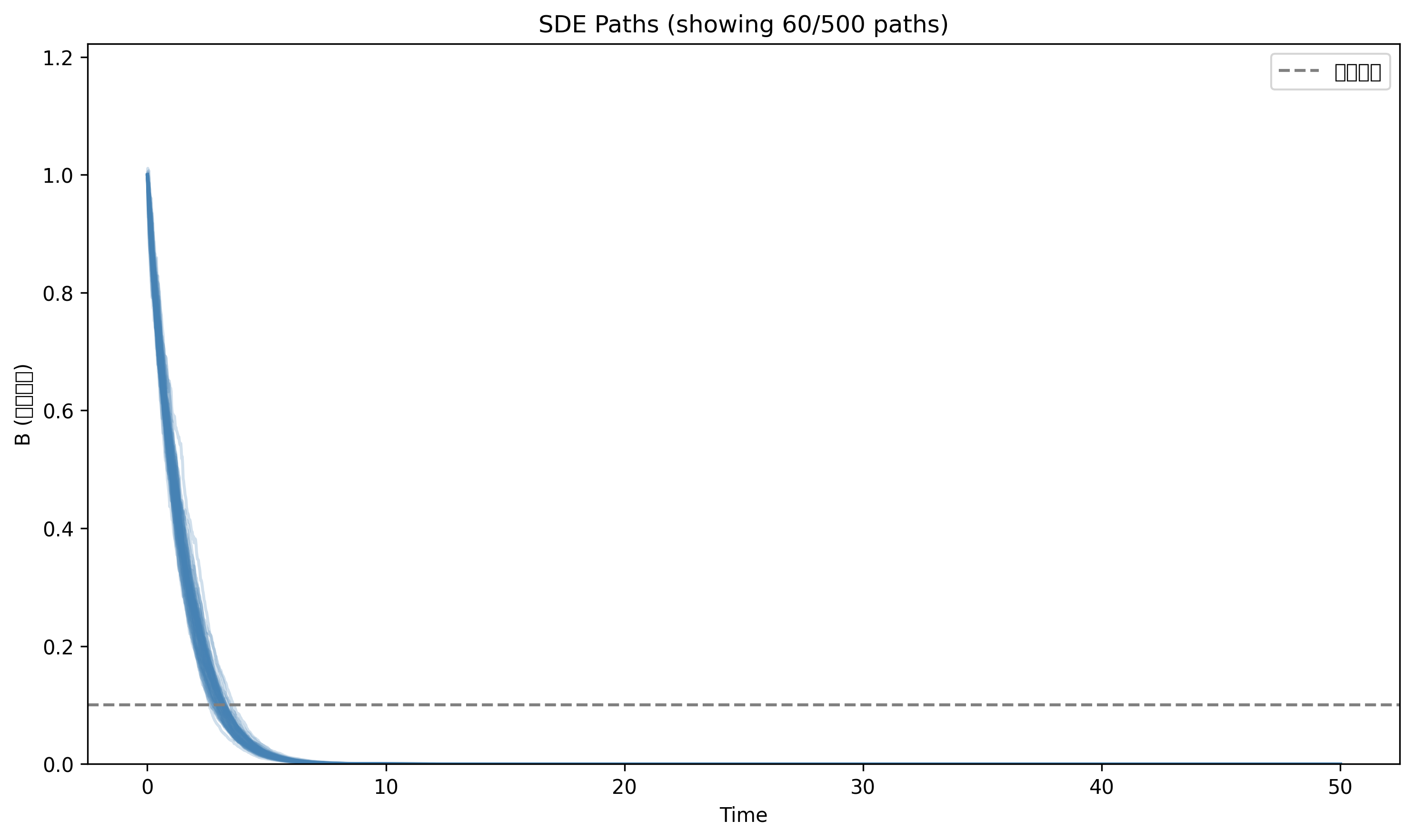 Multiple Monte Carlo paths showing cognitive state trajectories under noise. Each path represents an individual's cognitive bandwidth evolution.
Entropy Distribution Comparison
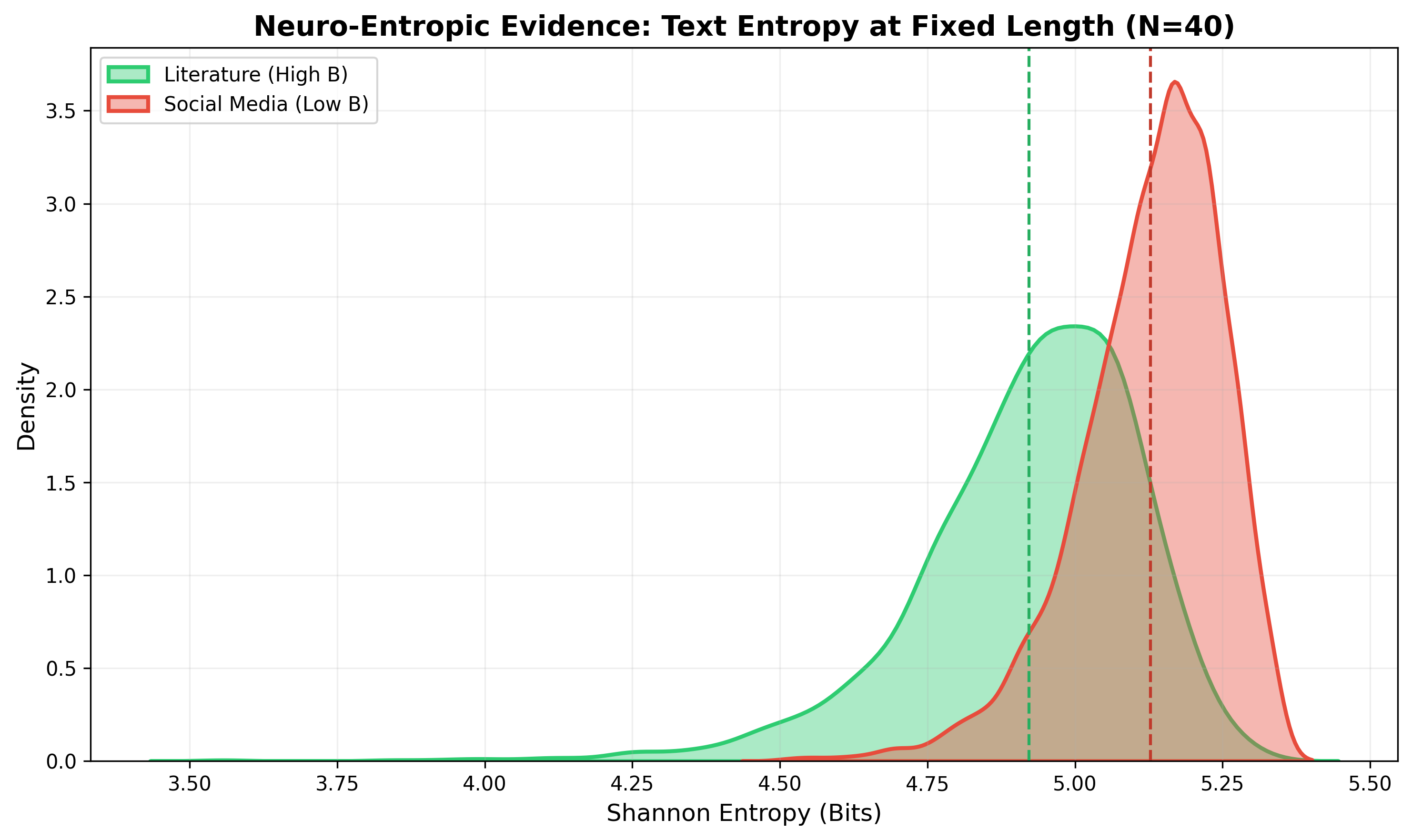 Shannon entropy distributions for Twitter vs. Literature at fixed 40-word windows. The counter-intuitive result (Twitter > Literature) suggests unigram entropy alone is insufficient to capture structural complexity.
Potential Landscape
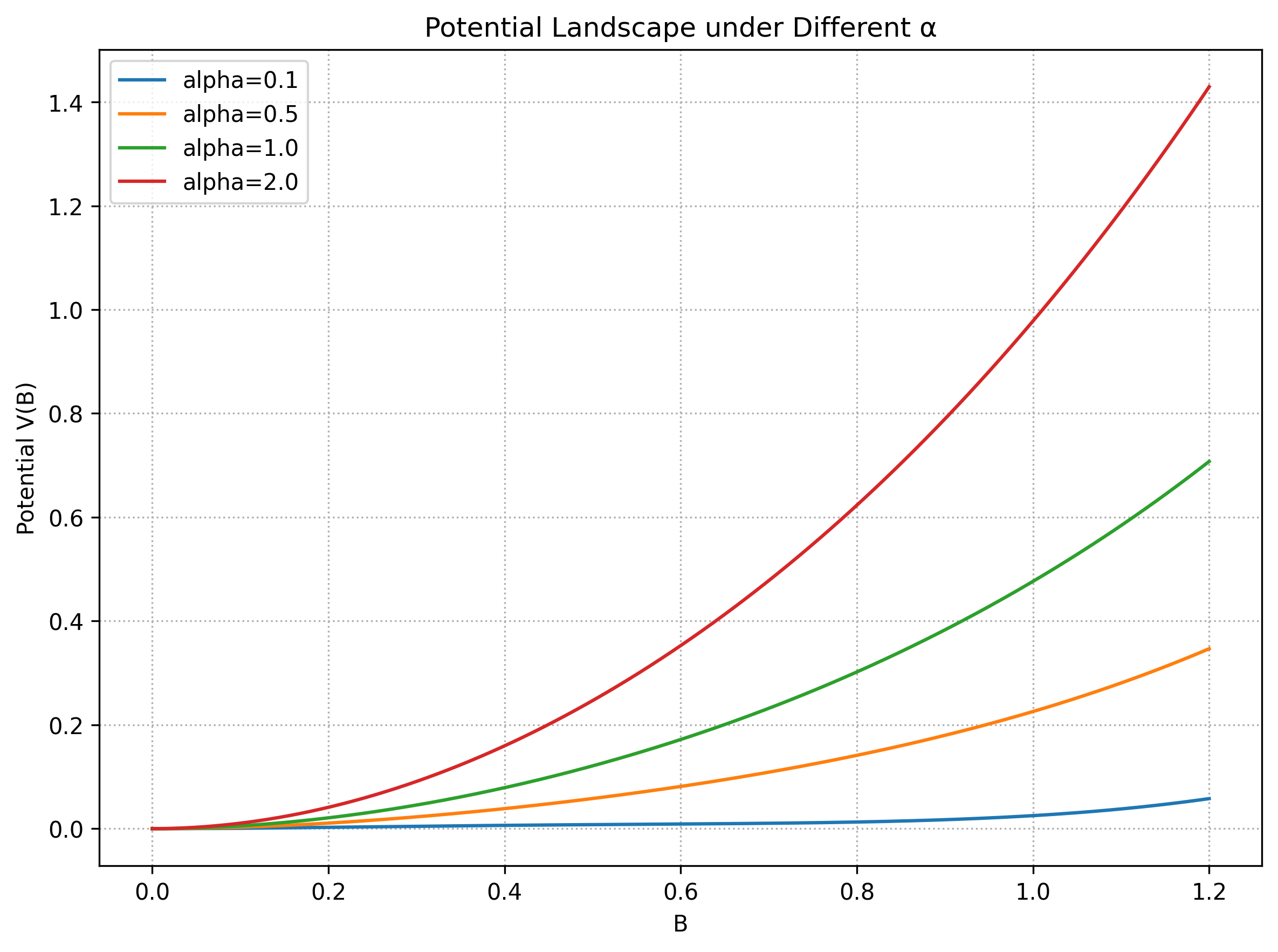 Potential energy landscape V(B) under different algorithm intensities (α). As α increases, the stable "well" disappears, indicating system collapse.
Lyapunov Exponent
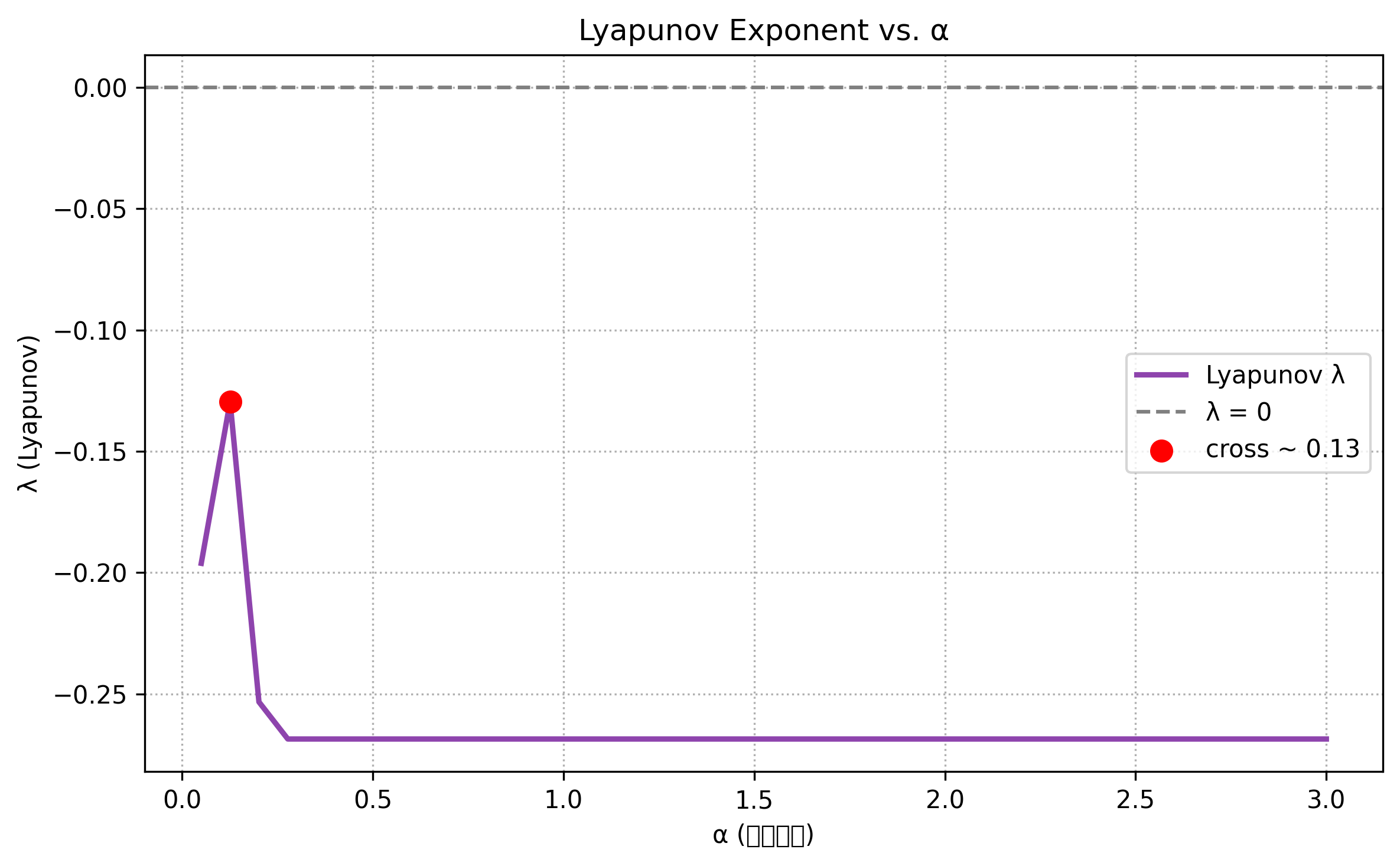 Lyapunov exponent λ vs. algorithm intensity α. The crossing point (λ ≈ 0) marks the cognitive collapse threshold.
Zipf's Law Analysis
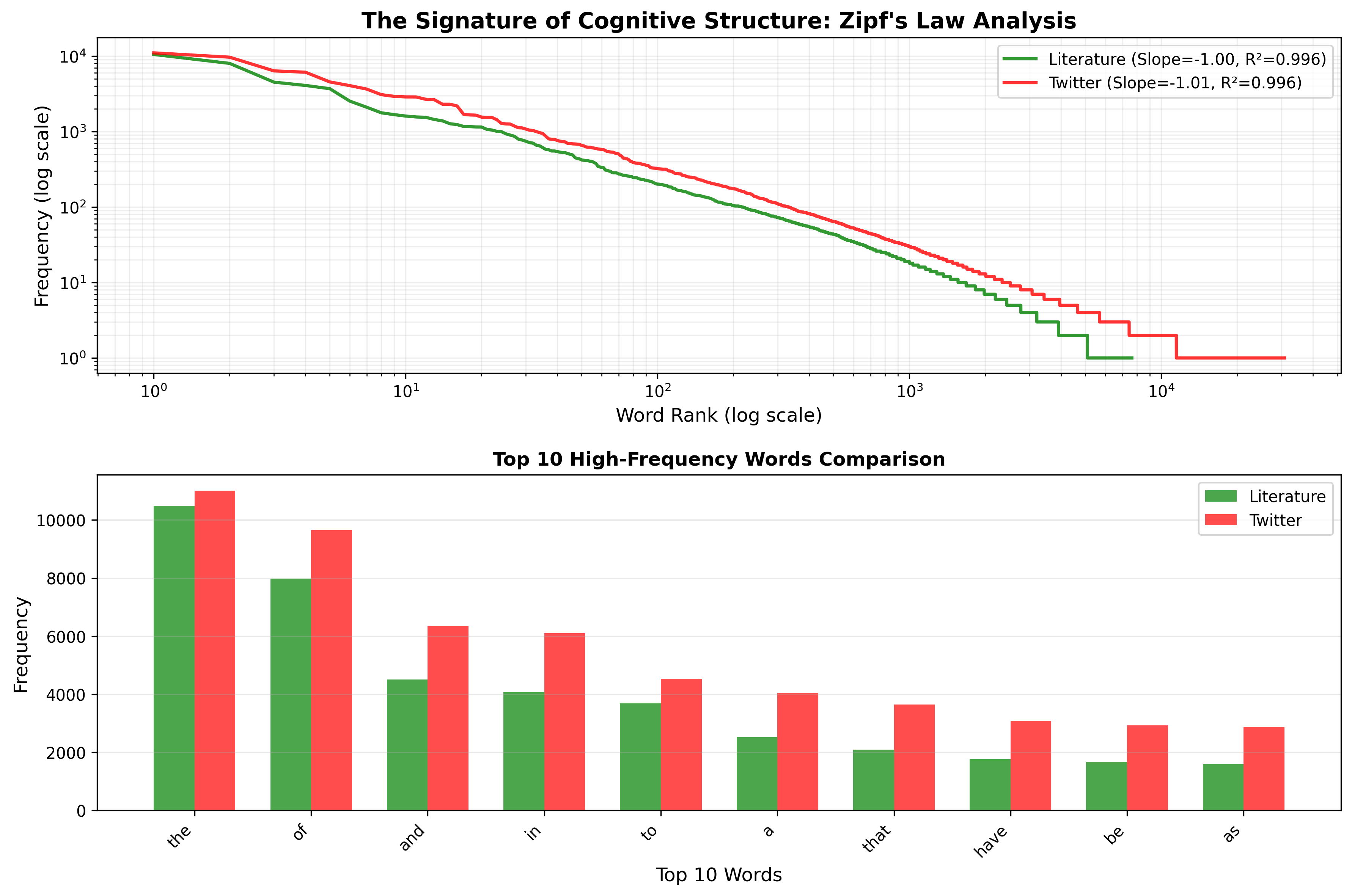 Word frequency distributions follow Zipf's law for both corpora, suggesting structural differences manifest at semantic/syntactic levels rather than word frequency.
Intervention Simulation
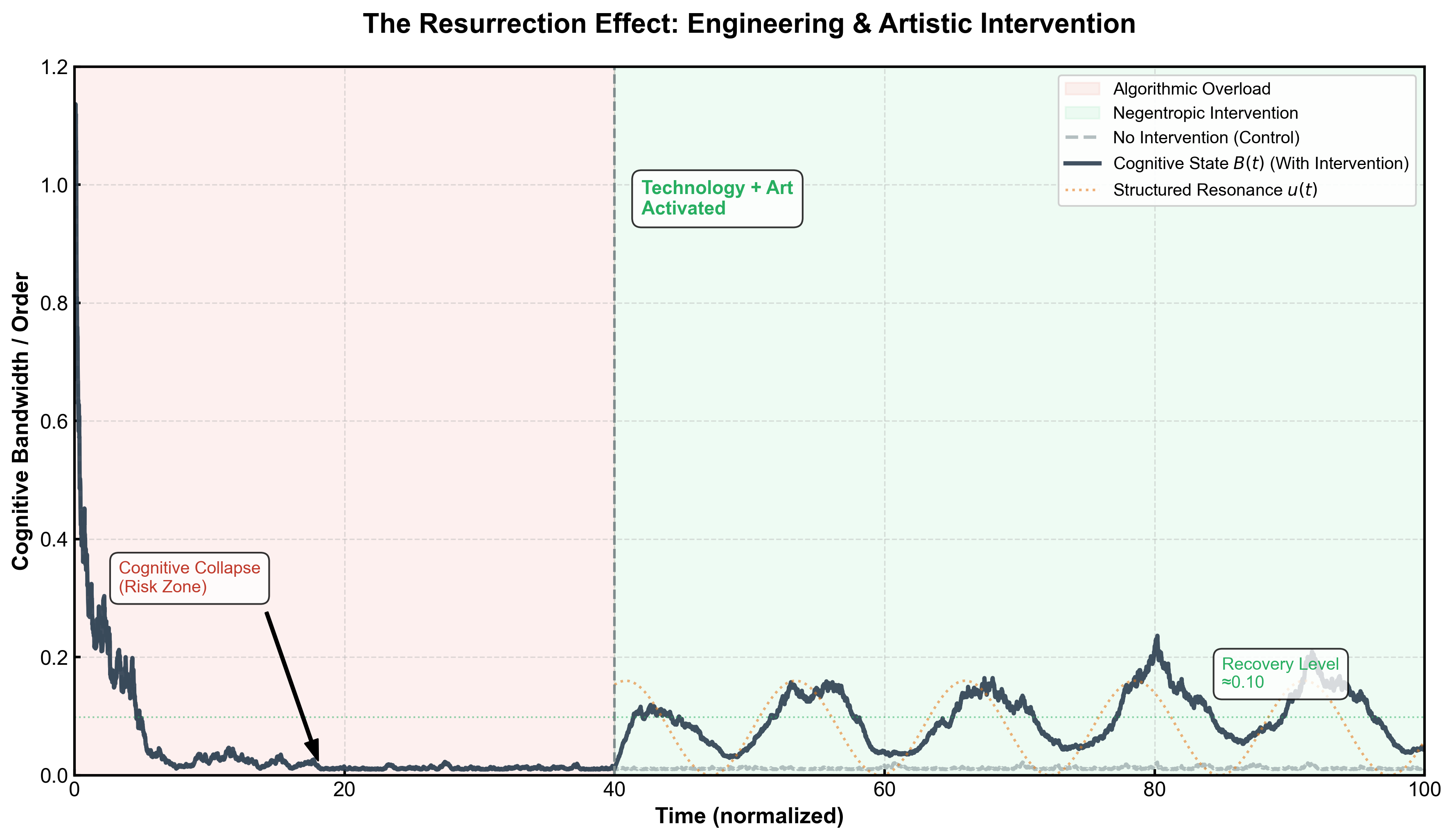 Demonstration of cognitive recovery through engineered intervention (noise reduction + periodic driving force) at t=40.
File Structure
Core Simulation
scipy.integrate.odeint.py: Main ODE solver implementing the neuro-entropic model with adaptive algorithm policystochastic_simulation.py: SDE solver using Euler-Maruyama method with hysteresis effectsstability_analysis.py: Potential landscape and Lyapunov exponent calculations
Data Analysis
data_calibration_v3.py: Entropy comparison between Twitter and Literature using Project Gutenberg textsstructural_analysis.py: Zipf's law analysis and high-frequency word comparison
Intervention Studies
intervention_simulation.py: Simulates the effect of noise reduction and structured resonance on cognitive recovery
Utilities
generate_all_figures.py: Batch script to generate all publication-quality figures
Dependencies
pip install numpy scipy matplotlib seaborn pandas nltkQuick Start
-
Run baseline simulation:
python scipy.integrate.odeint.py -
Generate all figures:
python generate_all_figures.py -
Run entropy analysis:
python data_calibration_v3.py
Research Context
This work bridges computational neuroscience, information theory, and critical algorithm studies. The model formalizes the hypothesis that recommendation algorithms create a "neuro-entropic extraction" process, where user attention is systematically converted into digital capital while degrading cognitive bandwidth.
Citation
If you use this code in your research, please cite:
Neuro-Entropic Extraction Simulator v0.1
Quantifying Cognitive Collapse: A Mathematical Model of Algorithmic Attention Extraction
License
Research code—use at your own discretion. This is academic exploration code, not production software.