three-fluid-fx
A drop-in 2D Stable-Fluids solver for three.js, tuned for real-time visual effects. Ships WebGL/GLSL and WebGPU/TSL pipelines.
Built to remove the pain of wiring a fluid sim into a three.js project. If you've ever needed one of these and ended up reading a SIGGRAPH paper to get there — this library is for you.
🌊 Live Demo & Documentation · 📖 Interactive Tutorials
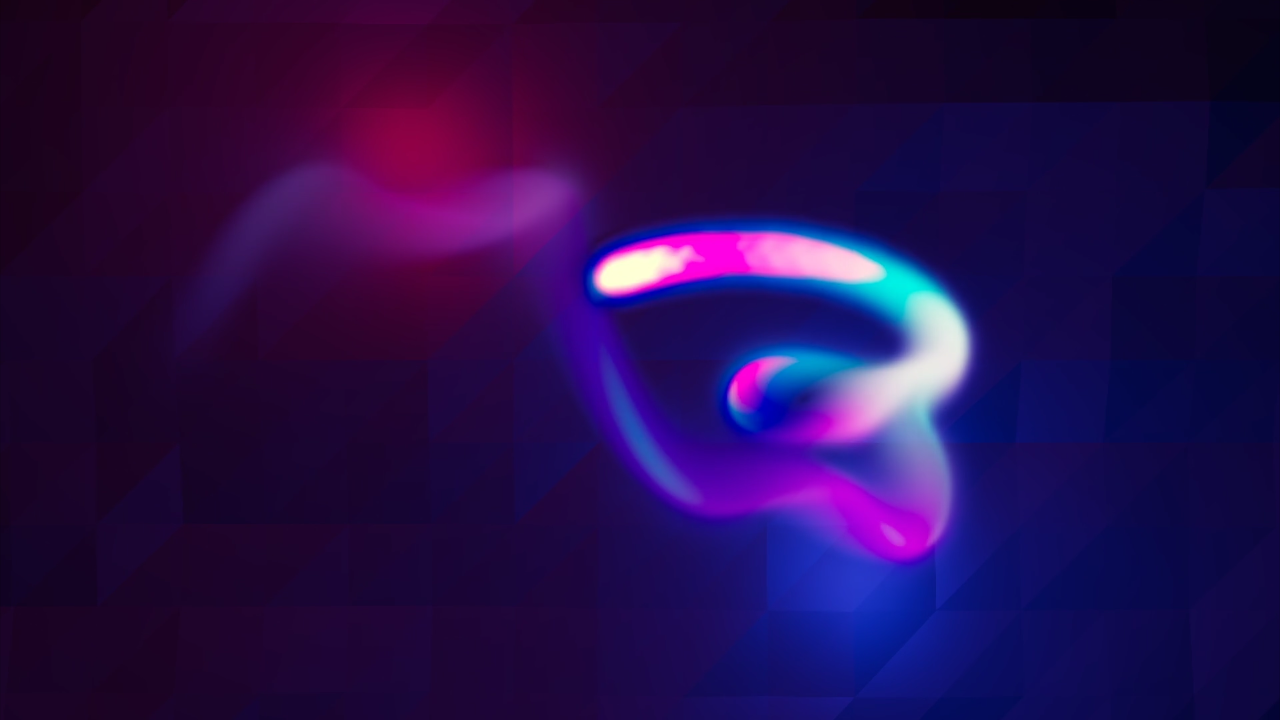
Fluid cursor overlay Coloured ink / trail that follows the pointer. live demo · source |
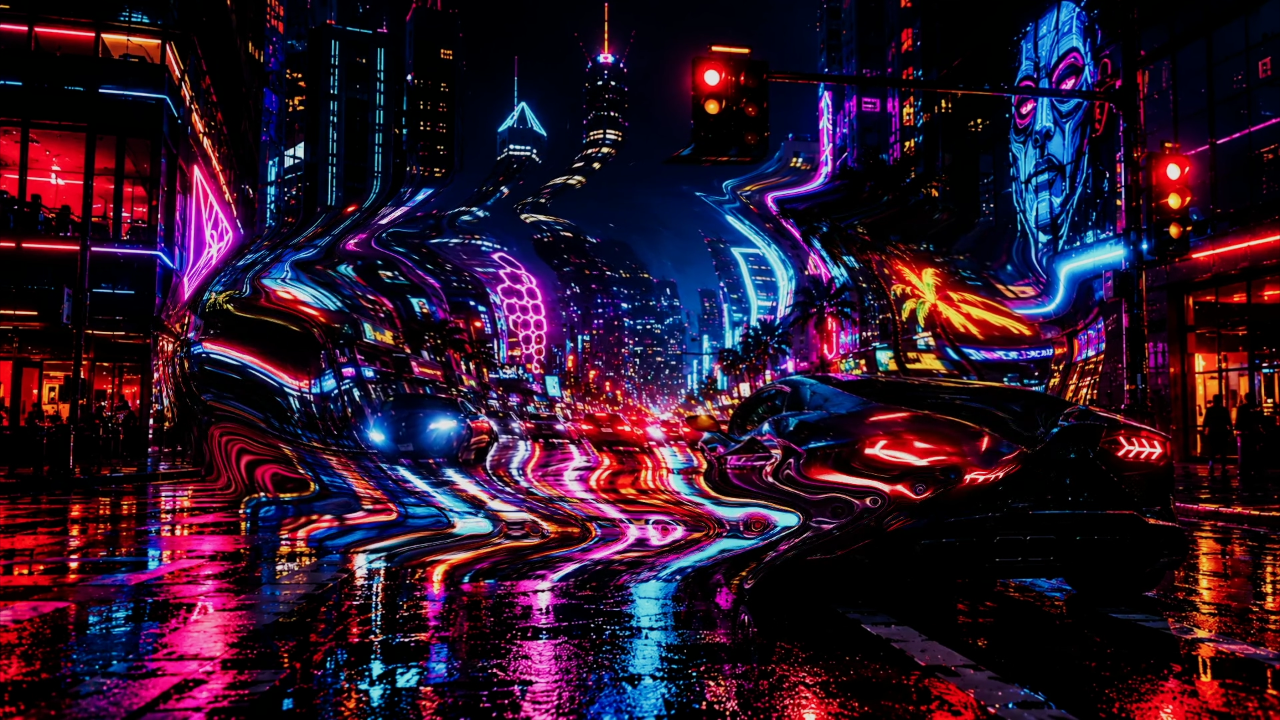
Fluid screen distortion (UV refraction) Smear / heat-haze / liquid-lens by sampling your scene with tFluid.rg.
live demo · source |
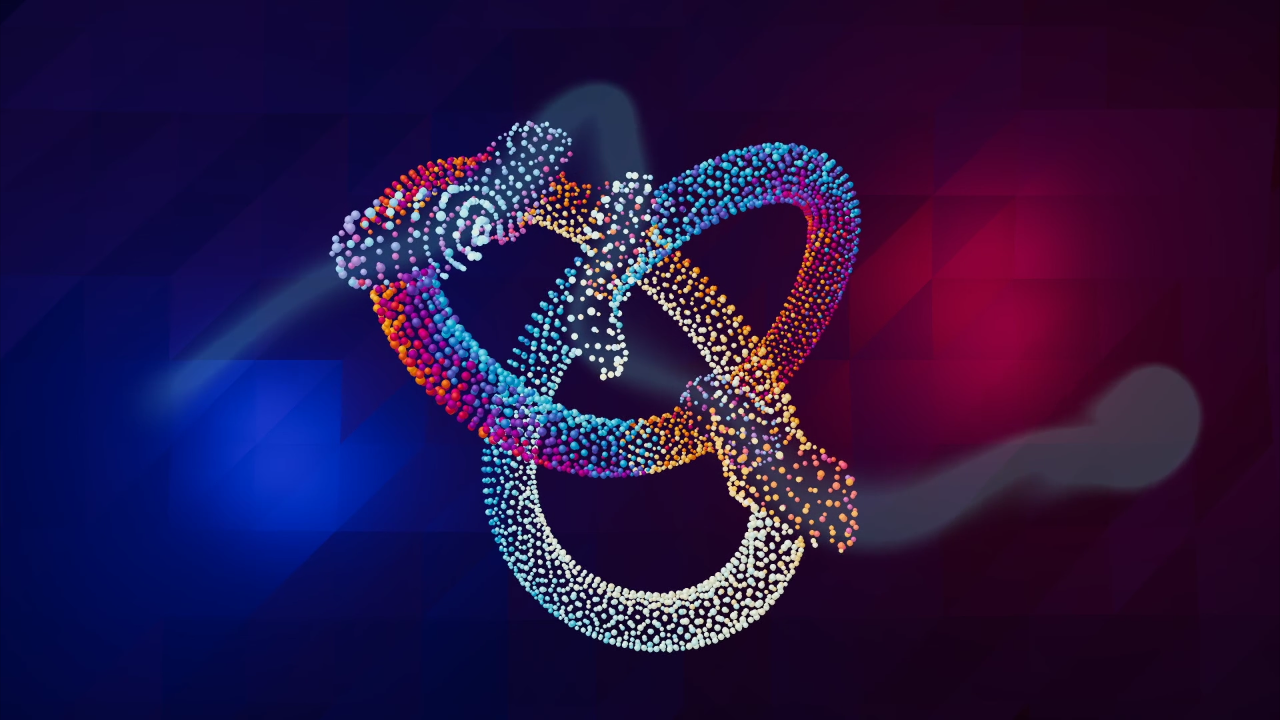
Particle displacement (vertex shader) Push procedural particle positions with the velocity field — no GPGPU required. live demo · source |

GPGPU particle displacement Full ping-pong particle system advected by the velocity texture (2D and 3D). live demo (3D) · 2D source · 3D source |
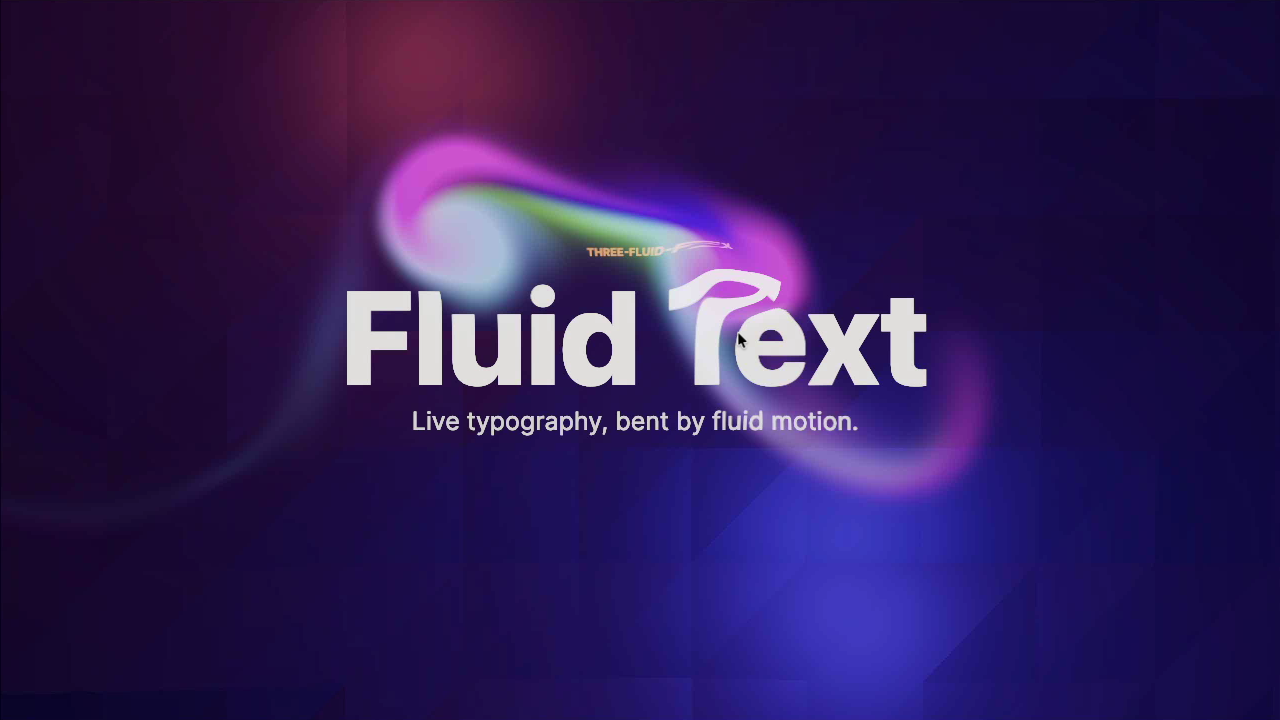
Fluid text (DOM typography → CanvasTexture) Mirror ordinary HTML text into a Three.js plane, then run it through fluid distortion and Art Ink overlay. live demo · tutorial · minimal source · full source |

Fluid reveal mask (WebGL + WebGPU) Use the fluid density as an organic mask to reveal a hidden layer under the pointer; the velocity field ripples the edge. live demo · tutorial · minimal source · full source |
You bring a three.js scene; the library hands you solver outputs and a
five-line API. In the WebGL/GLSL pipeline those outputs are textures
(velocityTexture, densityTexture). In the WebGPU/TSL pipeline they are
both raw textures and TextureNodes. Everything else — how to composite them,
what to distort, which particles to push — stays in your shaders, where it
belongs.
ℹ️ Not a new algorithm. This is a three.js-focused packaging of Jos Stam's Stable Fluids (SIGGRAPH 1999), with vorticity confinement (Fedkiw 2001) and optional BFECC advection. See Acknowledgements & scope for prior art and credits.
Don't use this if you need
- ❌ CFD-grade physical accuracy (this is not Navier-Stokes engineering)
- ❌ free-surface water with splashes (use FLIP / SPH)
- ❌ 3D volumetric fluid (smoke volumes, fire as a volume) — this is 2D only
- ❌ rigid-body collision coupling — the solver doesn't know about your scene
Why it's "easy"
- Plain-property API. No
configure()calls; writefluid.curlStrength = 0.7any time. - Profile presets. One option (
profile: 'balanced') sets resolution + iterations. - Drop-in helper for pointer splats; everything else is opt-in and tree-shakable.
- No DOM dependency in the solver itself — runs in OffscreenCanvas / Worker.
- Plain-JS friendly —
.d.tsis opt-in metadata, never required at runtime.
Tech facts
- Tree-shakable ESM + CJS bundles (~13 KB gzipped for the full GLSL pipeline
with all 20 passes, ~11 KB gzipped for the TSL pipeline).
threestays a peer dependency. - WebGL2 / HalfFloat FBOs in the default GLSL pipeline; WebGPU/WGSL compute in the TSL pipeline.
- GLSL pipeline: 20
Passsubclasses, compatible with three.jsEffectComposerand the standard post-processing pipeline (see below). - TSL pipeline:
RenderPipeline-ready node functions and WGSL-backed fluid simulation viathree-fluid-fx/tsl. - Drop-in across React-Three-Fiber, plain three.js, or
<script>-based pages.
WebGL post-processing passes
The default three-fluid-fx entry is compatible with three.js
EffectComposer and the standard post-processing pipeline. It ships 20 Pass
subclasses that chain alongside
RenderPass, OutputPass, BloomPass, etc. without configuration:
- 5 distortion passes —
SimpleDistortionPass,RGBShiftDistortionPass,ChromaticDistortionPass,WaterDistortionPass,WaterCausticsDistortionPass - 15 overlay passes —
DefaultOverlayPass,VolumeCursorOverlayPass,TrailOverlayPass,OilOverlayPass,VelocityOverlayPass,ColorfulOverlayPass,RainbowFishOverlayPass,GlazeOverlayPass,BurnOverlayPass,SmokeOverlayPass,ArtInkOverlayPass,RainbowInkOverlayPass,ColorWaterOverlayPass,LiquidLensOverlayPass,DensityTintOverlayPass
Each pass exposes plain properties (intensity, vibrance, cursorColor, …)
and reads from tDiffuse — the convention ShaderPass.textureID uses by
default — so chaining "just works":
import { EffectComposer } from 'three/addons/postprocessing/EffectComposer.js'
import { RenderPass } from 'three/addons/postprocessing/RenderPass.js'
import { OutputPass } from 'three/addons/postprocessing/OutputPass.js'
import { ChromaticDistortionPass } from 'three-fluid-fx'

const distortion = new ChromaticDistortionPass(fluid)
distortion.intensity = 0.5

const composer = new EffectComposer(renderer)
composer.addPass(new RenderPass(scene, camera))
composer.addPass(distortion)
composer.addPass(new OutputPass()) // canonical final pass: tone mapping + sRGB

// Loop:
fluid.step(dt)
composer.render(dt)
WebGPU / TSL nodes
The three-fluid-fx/tsl entry uses a WGSL compute solver and exposes TSL node
functions for composition. These are meant for WebGPURenderer and
RenderPipeline, not EffectComposer:
import { RenderPipeline, WebGPURenderer } from 'three/webgpu'
import { pass } from 'three/tsl'
import { attachPointerSplats, FluidSimulation, simpleDistortion } from 'three-fluid-fx/tsl'

const renderer = new WebGPURenderer()
await renderer.init()

const fluid = new FluidSimulation(renderer)
attachPointerSplats(renderer.domElement, fluid)

const scenePass = pass(scene, camera)
const pipeline = new RenderPipeline(renderer)
pipeline.outputNode = simpleDistortion(scenePass, fluid.densityNode, 1)

renderer.setAnimationLoop(() => {
  fluid.step(1 / 60)
  pipeline.render()
})
Install
npm install three-fluid-fx three
# or
pnpm add three-fluid-fx three
Requires three >= 0.183.0. The default subpath three-fluid-fx is the
WebGL/GLSL pipeline. Use three-fluid-fx/tsl for the WebGPU/TSL pipeline; it
requires a WebGPU-capable browser/runtime.
Quick start
import { WebGLRenderer, Timer } from 'three'
import { FluidSimulation, attachPointerSplats } from 'three-fluid-fx'

const renderer = new WebGLRenderer({ antialias: true })
const fluid = new FluidSimulation(renderer, {
  splatRadius: 0.001,
  splatForce: 6,
})

// live-tunable, just plain properties
fluid.curlStrength = 0.7
fluid.splatForce = 8 // change at any time, picked up next frame

// optional helper for mouse/touch — reads splatRadius/splatForce from fluid
attachPointerSplats(renderer.domElement, fluid)

const clock = new Timer()
renderer.setAnimationLoop(() => {
  clock.update()
  fluid.step(clock.getDelta())
  // sample fluid.velocityTexture / fluid.densityTexture in your own material
})
Plain JavaScript (no bundler, no TypeScript)
<div id="stage" style="width: 100vw; height: 100vh"></div>

<script type="importmap">
  {
    "imports": {
      "three": "https://esm.sh/three@0.183.0",
      "three-fluid-fx": "https://esm.sh/three-fluid-fx@0.1.0"
    }
  }
</script>

<script type="module">
  import { WebGLRenderer } from 'three'
  import { attachPointerSplats, FluidSimulation } from 'three-fluid-fx'

  const stage = document.getElementById('stage')
  const renderer = new WebGLRenderer({ antialias: true })
  stage.appendChild(renderer.domElement)

  const fluid = new FluidSimulation(renderer, {
    splatRadius: 0.001,
    splatForce: 6,
  })

  attachPointerSplats(renderer.domElement, fluid)

  function frame() {
    const width = stage.clientWidth
    const height = stage.clientHeight
    renderer.setSize(width, height, false)
    fluid.resize(width, height)
    fluid.step(1 / 60)
    requestAnimationFrame(frame)
  }
  requestAnimationFrame(frame)
</script>
API
class FluidSimulation
new FluidSimulation(renderer: WebGLRenderer, options?: FluidSimulationOptions)All tunables are plain properties — write to them at any time, the solver picks
the new value on the next step(). This makes Tweakpane / dat.gui / any UI integration
a one-liner: pane.addBinding(fluid, 'curlStrength', { min: 0, max: 2 }).
Quality profiles
Baseline resolution and Jacobi-iteration counts are picked at construction
time. resize(width, height) reshapes the internal targets to the viewport
aspect, but it does not change the selected profile's base resolution. Use a
profile preset:
import { FluidSimulation, FLUID_PROFILES } from 'three-fluid-fx'

new FluidSimulation(renderer, { profile: 'performance' }) // mobile / weak GPU
new FluidSimulation(renderer, { profile: 'balanced' }) // default — desktop
new FluidSimulation(renderer, { profile: 'quality' }) // presentation / high-end| sim FBO | dye FBO | pressure iters | relative cost | |
|---|---|---|---|---|
| performance | 128² | 256² | 6 | 1× |
| balanced | 256² | 512² | 12 | ~6× |
| quality | 384² | 1024² | 20 | ~25× |
Individual options always override profile values:
new FluidSimulation(renderer, {
  profile: 'balanced',
  pressureIterations: 8, // overrides balanced default of 12
})| Property | Default | What it does |
|---|---|---|
pressureIterations | 12 | Jacobi iterations for the balanced profile. |
curlStrength | 0.55 | Vorticity confinement strength. |
enableVorticity | false | Toggle the curl + vorticity passes (Fedkiw 2001). |
bfecc | true | BFECC advection (sharper, ~5× cost in advect). |
velocityDissipation | 0.985 | Per-second decay of velocity field. |
densityDissipation | 0.91 | Per-second decay of density field. |
dyeDissipation | 0.91 | Per-second decay of the optional dye field. |
pressureDissipation | 0.8 | Decay of residual pressure between frames. |
splatRadius | 0.00042 | Default radius for addSplat() (UV² units). |
splatForce | 6 | Default force for attachPointerSplats. |
reflectWalls | true | Reflect flow from the viewport edges. |
enableDye | false | Update the optional per-stroke dye texture. |
Read-only outputs:
fluid.velocityTexture // THREE.Texture, .xy is the post-advection flow field
fluid.velocityProjectedTexture // THREE.Texture, projected pre-advection flow snapshot
fluid.densityTexture // THREE.Texture, .rg is flow-like display data, .b is density
fluid.dyeTexture // THREE.Texture, .rgb is the optional colored dye field
TSL/WebGPU exposes the same simulation state as TextureNodes, which are the
inputs expected by the TSL effect factories:
fluid.velocityNode // TextureNode, .xy is the post-advection flow field
fluid.densityNode // TextureNode, .rg is flow-like display data, .b is density
fluid.dyeNode // TextureNode, .rgb is the optional colored dye field
fluid.pressureNode // TextureNode, advanced/debug pressure field
fluid.divergenceNode // TextureNode, advanced/debug divergence field
fluid.curlNode // TextureNode, advanced/debug curl field
GLSL passes and TSL factories are paired by effect family:
| GLSL pass class | TSL factory |
|---|---|
SimpleDistortionPass | simpleDistortion() |
RGBShiftDistortionPass | rgbShiftDistortion() |
ChromaticDistortionPass | chromaticDistortion() |
WaterDistortionPass | waterDistortion() |
WaterCausticsDistortionPass | waterCausticsDistortion() |
DefaultOverlayPass | defaultOverlay() |
VolumeCursorOverlayPass | volumeCursorOverlay() |
TrailOverlayPass | trailOverlay() |
OilOverlayPass | oilOverlay() |
VelocityOverlayPass | velocityOverlay() |
ColorfulOverlayPass | colorfulOverlay() |
RainbowFishOverlayPass | rainbowFishOverlay() |
GlazeOverlayPass | glazeOverlay() |
BurnOverlayPass | burnOverlay() |
SmokeOverlayPass | smokeOverlay() |
ArtInkOverlayPass | artInkOverlay() |
RainbowInkOverlayPass | rainbowInkOverlay() |
ColorWaterOverlayPass | colorWaterOverlay() |
LiquidLensOverlayPass | liquidLensOverlay() |
DensityTintOverlayPass | densityTintOverlay() |
Methods:
fluid.resize(width, height)
fluid.addSplat(x01, y01, dx, dy, { radius?, color?, dyeColor? })
fluid.step(deltaSeconds)
fluid.dispose()
attachPointerSplats(element, fluid)
Attaches pointer listeners and pushes splats into the solver. Splat radius and
force are read from fluid.splatRadius / fluid.splatForce on every event —
set them in the constructor or write them at runtime; live-tuning works
without re-attaching. Returns a teardown function.
Options:
attachPointerSplats(renderer.domElement, fluid, {
  coloredStrokes: true,
  colorUpdateSpeed: 10,
  colorize: (dx, dy, timeMs) => [Math.abs(dx) * 0.003, 0.08, Math.abs(dy) * 0.003],
})
FullscreenPass(material)
Tiny full-screen quad pass for compositing your shader on top of the solver's outputs.
Use FULLSCREEN_VERTEX as your vertex shader.
createSceneTarget(width, height)
Convenience factory for a WebGLRenderTarget configured for sRGB display sampling.
Tutorials
The site, tutorials, and live example pages now use one Astro engine. Source for
the hand-authored guides lives in src/content/tutorials/; reusable tutorial UI
lives in src/components/tutorials/; example route metadata lives in
src/data/examples.ts. The static site build writes to dist/.
pnpm dev           # Astro site + live examples at http://127.0.0.1:4321/
pnpm build         # typecheck + static site build -> dist/
pnpm docs:dev      # alias for pnpm dev
pnpm docs:build    # Astro site build -> dist/
The public tutorial surface is Astro-only. General guides live at /tutorials/,
and every runnable demo has a personal walkthrough at
/tutorials/<pipeline>/<level>/<slug>/. The runnable demos live at
/examples/<pipeline>/<level>/<slug>/ and are generated from the same Astro
manifest while importing examples/<pipeline>/<level>/<slug>/main.ts.
Core guides
These are source links. When pnpm dev is running, the same guides are served
under http://127.0.0.1:4321/tutorials/.
- Getting Started — solver lifecycle, pointer splats, resize handling, outputs, profiles, and parameters.
- Effects Guide — overlay and distortion families, what they read, and when to use each one.
- Particles Guide — procedural particles, GPGPU particles, camera data, and tuning without ambiguity.
- GLSL vs TSL — choosing the WebGL/GLSL or WebGPU/TSL pipeline.
Demo walkthroughs
Per-demo walkthrough content is generated from
src/data/exampleTutorials.ts, with route
metadata in src/data/examples.ts. When pnpm dev is
running, walkthroughs live at /tutorials/<pipeline>/<level>/<slug>/.
- Hello World source — smallest solver integration.
- Overlay source — scene compositing, dye-aware strokes, and style controls.
- Distortion source — UV refraction, chromatic styles, water, and caustics.
- Reveal Mask minimal source and full source — fluid density as an organic reveal mask between two image layers; works in WebGL and WebGPU.
- Simple Particles source — procedural particle displacement without GPGPU state.
- GPGPU Particles 2D source and GPGPU Particles 3D source — persistent particle state driven by the fluid field.
- TSL Combined Demo source — combined WebGPU composition surface.
- TSL Mega Demo source — hero-style morphing WebGPU particle composition.
- Fluid Text minimal source and Fluid Text full source — ordinary DOM typography mirrored into a
CanvasTexture, then distorted and inked by the TSL fluid pipeline.
Repo layout
src/
├── core/                                       ← published library (only three is required)
│   ├── shared/
│   │   └── pointerSplats.ts                    ← pipeline-agnostic
│   ├── glsl/                                   ← WebGL/GLSL entry: 'three-fluid-fx'
│   │   ├── simulation/
│   │   ├── effects/                            ← EffectComposer-ready Pass subclasses
│   │   │   ├── distortion/                     ←  5 distortion passes
│   │   │   └── overlay/                        ← 15 overlay passes
│   │   └── index.ts
│   └── tsl/                                    ← WebGPU/TSL entry: 'three-fluid-fx/tsl'
│       ├── simulation/                         ← WGSL compute solver
│       ├── effects/                            ← RenderPipeline/TSL node functions
│       └── index.ts
├── content/tutorials/                          ← Astro MDX tutorial source
├── data/examples.ts                            ← examples manifest / route metadata
├── components/
│   ├── examples/                               ← catalog cards and shared example UI
│   ├── site/                                   ← header/footer shared by site pages
│   └── tutorials/                              ← tutorial UI blocks
├── layouts/                                    ← site, tutorial, and fullscreen example shells
├── pages/
│   ├── examples/                               ← Astro-generated live example routes
│   └── tutorials/                              ← Astro-generated tutorial routes
└── scripts/example-pages.ts                    ← imports the selected example main.ts

examples/
├── extras/                                     ← demo helpers (not published)
│   ├── controls/                               ← Tweakpane wrapper, param ranges
│   ├── backgrounds/{glsl,tsl}/                 ← background implementations
│   ├── particles/{glsl,tsl}/                   ← example particle systems
│   ├── text/                                   ← DOM text to CanvasTexture helpers
│   └── resolveProfile.ts                       ← URL profile resolver (?profile=balanced)
├── glsl/{minimal,full}/<slug>/main.ts          ← WebGL runtime entrypoints
└── tsl/{minimal,full}/<slug>/main.ts           ← WebGPU runtime entrypoints

examples-js/                                   ← generated from examples/
├── glsl/{minimal,full}/<slug>/main.js
└── tsl/{minimal,full}/<slug>/main.js
Develop
pnpm install
pnpm dev               # Astro site + live examples at http://127.0.0.1:4321/
pnpm build             # typecheck + Astro static build -> dist/
pnpm build:js          # regenerate examples-js/
pnpm build:lib         # library build (both pipelines + .d.ts) → dist-lib/{glsl,tsl}/
pnpm build:lib:glsl    # GLSL bundle only → dist-lib/glsl/
pnpm build:lib:tsl     # TSL bundle only  → dist-lib/tsl/
pnpm docs:dev          # alias for pnpm dev
pnpm docs:build        # Astro site build -> dist/
Notes on design
- No
configure(...)method. Properties are public; the solver re-reads them each frame. This keeps GUI integration trivial. - No GUI in the library. Tweakpane is a dependency of the examples, not of the library. Tree-shakers will drop nothing extra; users who don't need a GUI never pay for one.
- GPGPU particles are not part of the library. They live in
examples/extras/particles/as an example of how to usefluid.velocityTextureto drive your own particle system.
Acknowledgements & scope
This library does not introduce new fluid-simulation algorithms. The mathematics is Jos Stam's Stable Fluids (SIGGRAPH 1999) with Fedkiw's vorticity confinement (2001) and optional BFECC advection — all 20+ years old and widely implemented. The WebGL adaptation patterns are well-trodden ground, popularised by PavelDoGreat's WebGL-Fluid-Simulation and walked through clearly by the mofu-dev tutorial.
What this package contributes is packaging and ergonomics for three.js
projects: tree-shakable npm entries with a plain-property API, profile
presets, three.js-native texture outputs, and small helpers
(attachPointerSplats, FullscreenPass). The solver is opinionated towards
real-time VFX — not CFD accuracy.
If you want to learn the algorithm, read Stam's paper and the mofu-dev tutorial. If you want to drop a velocity/density field into your three.js scene in five lines, use this.
Algorithms (not authored by this project)
- Jos Stam, Stable Fluids (SIGGRAPH 1999) — pressure projection method.
- Fedkiw, Stam, Jensen, Visual Simulation of Smoke (SIGGRAPH 2001) — vorticity confinement.
- Kim, Liu, Llamas, Rossignac, Advections with Significantly Reduced Dissipation and Diffusion (2007) — BFECC.
WebGL adaptations and tutorials this work studied
- PavelDoGreat/WebGL-Fluid-Simulation (MIT) — popularised the WebGL adaptation techniques used here.
- mofu-dev — Stable Fluids — clear walkthrough of the algorithm.
- mnmxmx/fluid-three — the implementation accompanying the mofu-dev post.
What this project authored
The public API (FluidSimulation, attachPointerSplats, profile presets),
the three.js integration layer, the example tutorials and the packaging.
The shaders are derivatives of the prior-art shader code listed above.
License
MIT © Artem Korenevych. See LICENSE and THIRD_PARTY_NOTICES.md.