Odysseus
───────────────────────────────────────────────
 ⊹ ࣪ ˖ ૮( ˶ᵔ ᵕ ᵔ˶ )っ  Odysseus vers. 1.0
───────────────────────────────────────────────
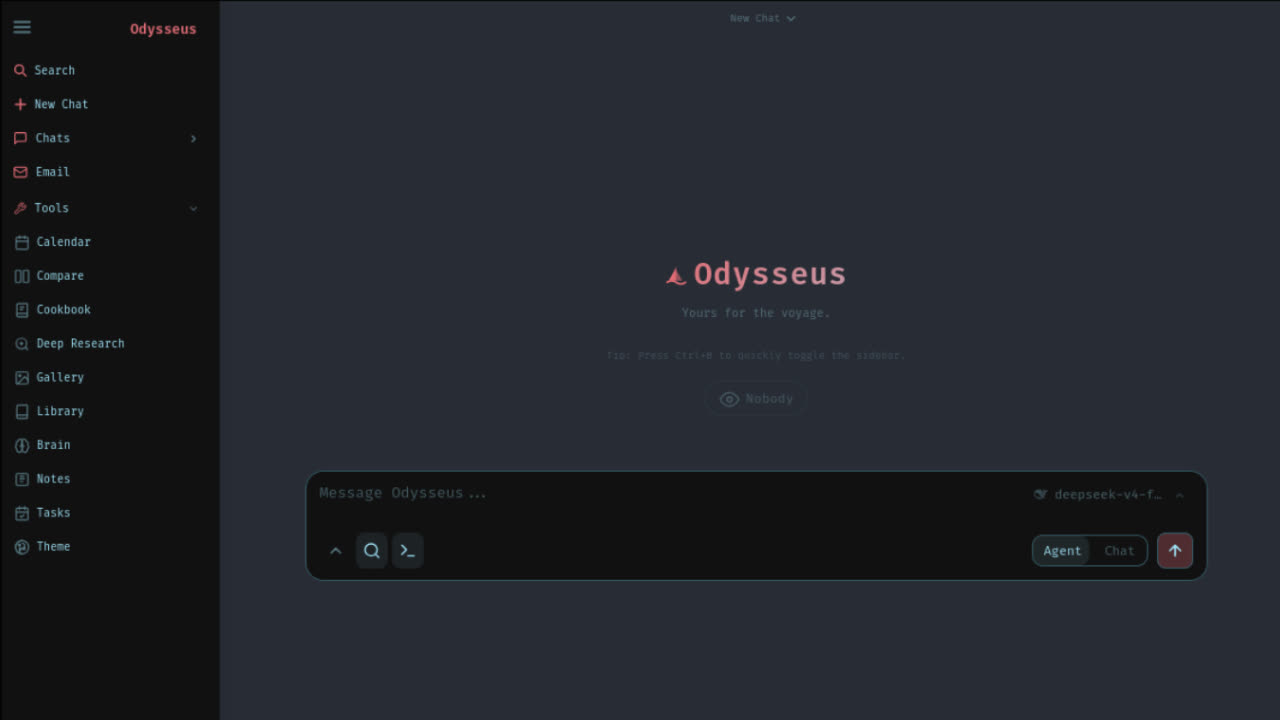
A self-hosted AI workspace -- meant to be the self-hosted version of the UI experience you get from ChatGPT and Claude. But with more jank and fun. Running on your own hardware, with your own data -- local-first, privacy-first, and no trojan.
Features
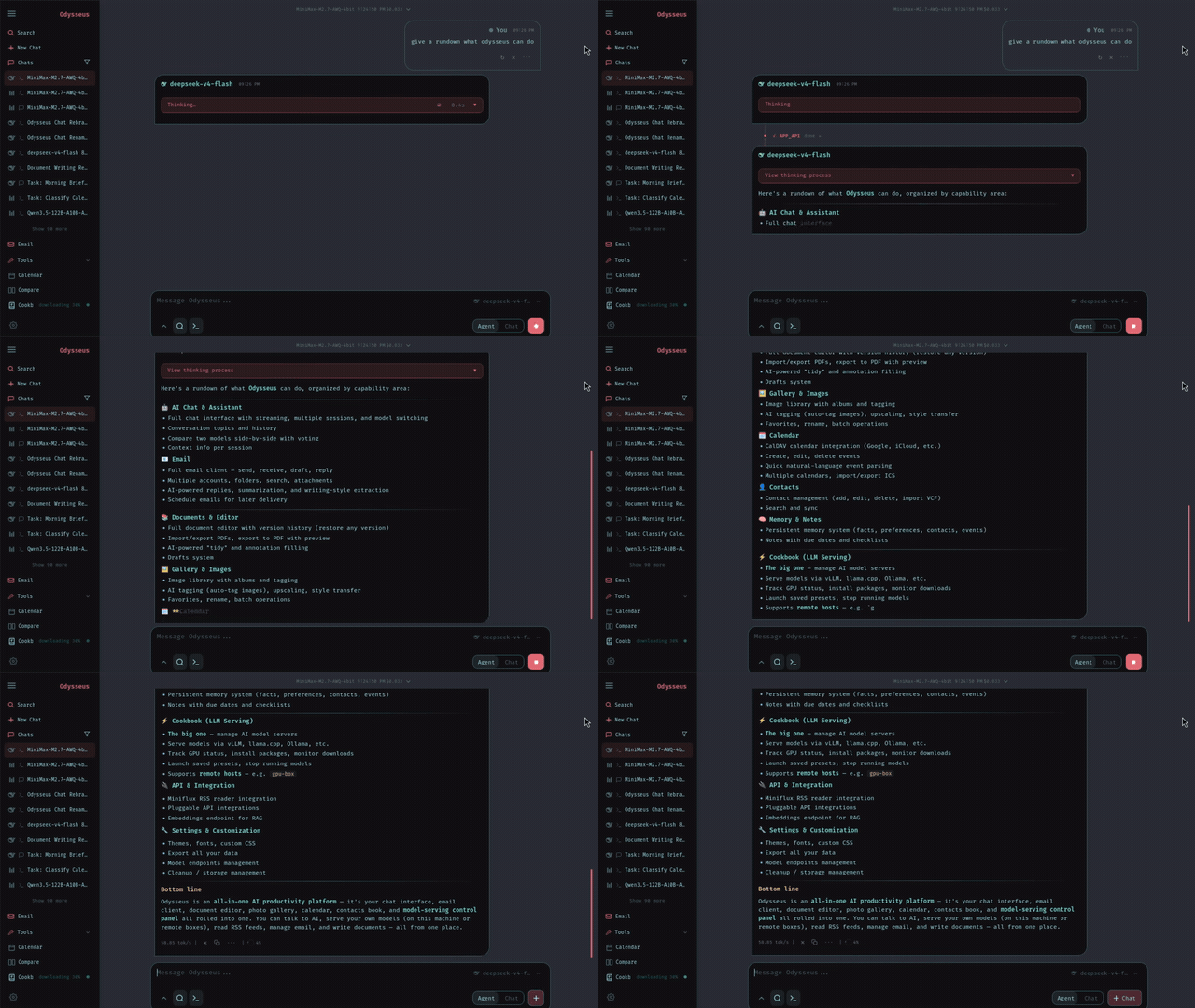
- Chat -- chat with any local model or API; adding them is super simple.
vLLM · llama.cpp · Ollama · OpenRouter · OpenAI - Agent -- hand it tools and let it run the whole task itself.
built on opencode · MCP · web · files · shell · skills · memory - Cookbook -- Scans your hardware, recommends models, click to download and serve.. easy!
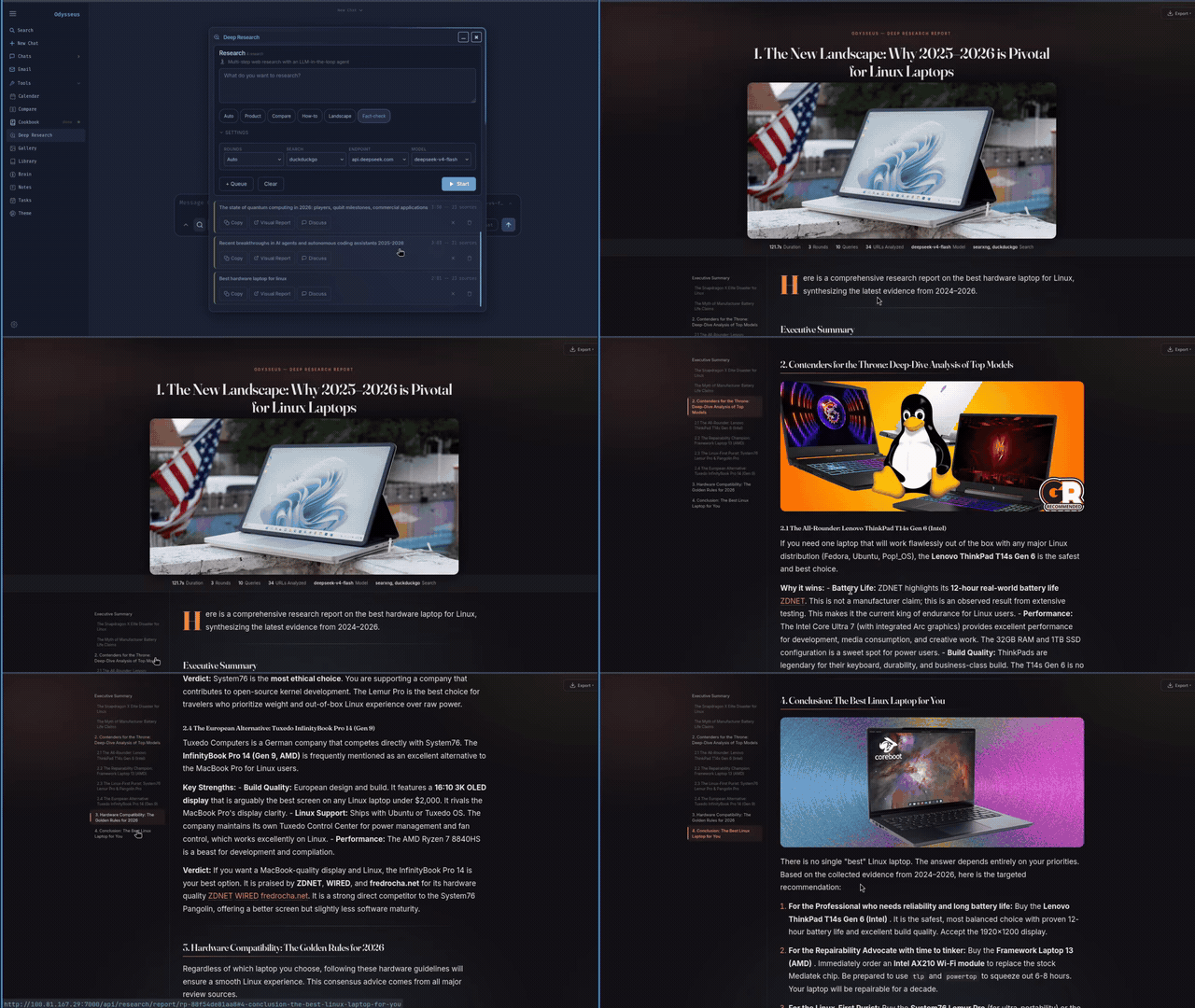
built on llmfit · VRAM-aware · GGUF / FP8 / AWQ · fit scoring · vLLM / llama.cpp serving - Deep Research -- multi-step runs that gather, read, and synthesize sources into a nice visual report.
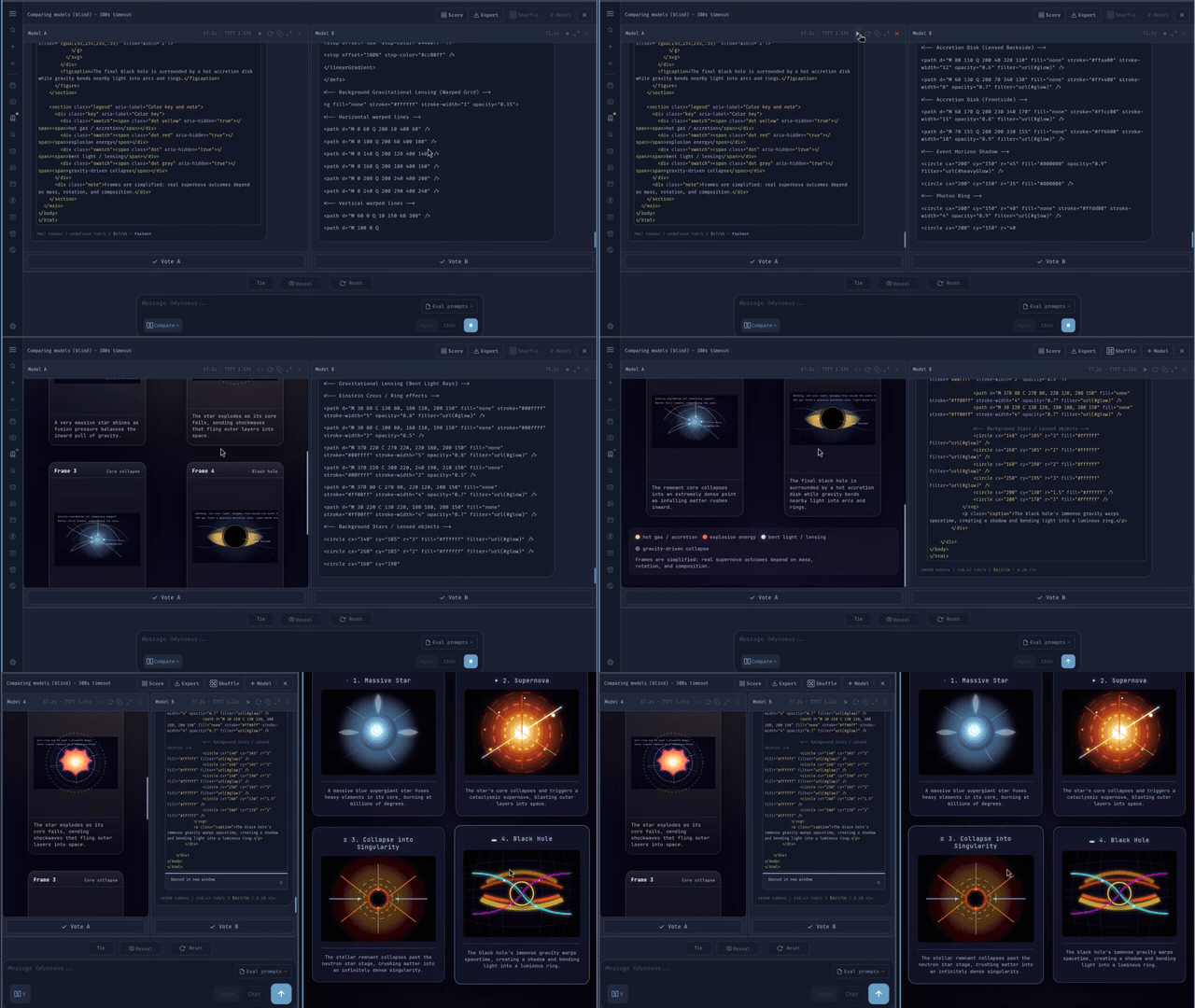
adapted from Tongyi DeepResearch - Compare -- a fun tool to compare models side by side. Test completely blind, no bias!
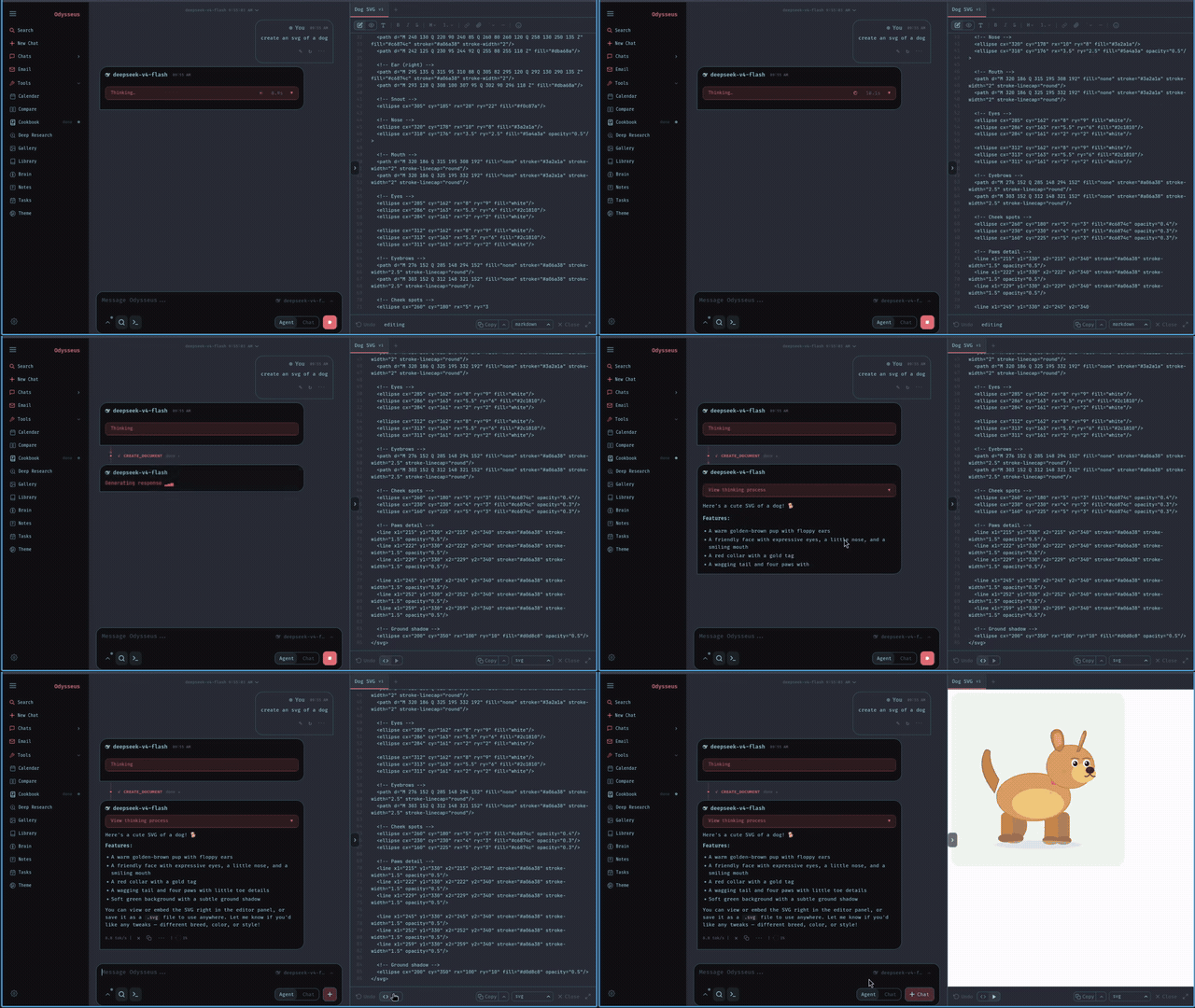
multi-model · blind test · synthesis - Documents -- YOU write the text, AI is there to assist, not the opposite.
multi-tab editor · markdown · HTML · CSV · syntax highlighting · AI edits · suggestions - Memory / Skills -- Persistent memory and skills, your agent evolves over time as it better understands you and your tasks!
ChromaDB · fastembed (ONNX) · vector + keyword retrieval · import/export - Email -- IMAP/SMTP inbox with AI triage built in: urgency reminders, auto-tag, auto-summary, auto-reply drafts, auto-spam.
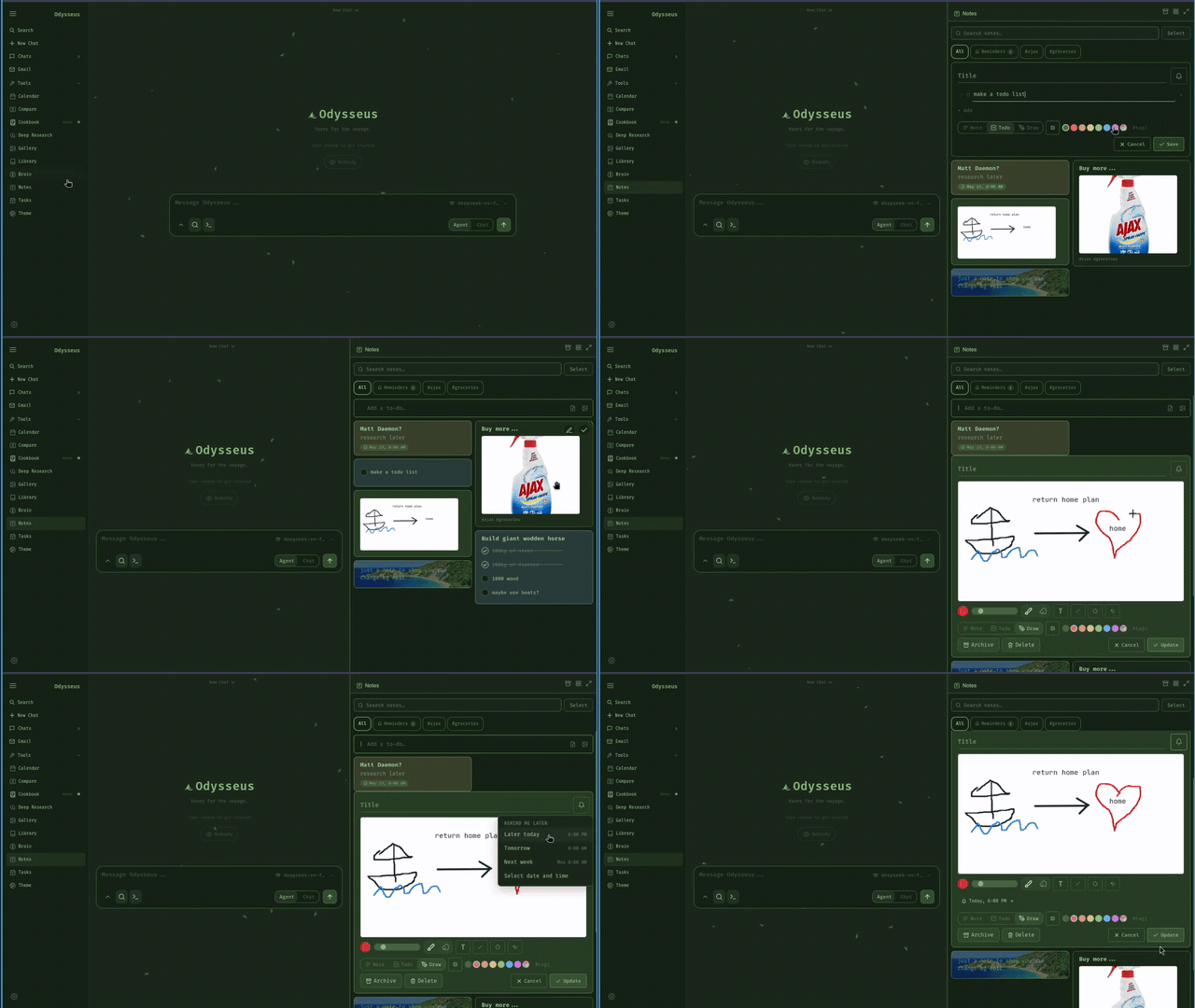
IMAP · SMTP · per-account routing · CalDAV-aware - Notes & Tasks -- Quick notes with reminders, a todo list, and scheduled tasks the agent can act on.
note pings · checklist · cron-style tasks · ntfy / browser / email channels - Calendar -- Local-first calendar with CalDAV sync to Radicale / Nextcloud / Apple / Fastmail.
CalDAV pull · .ics import/export · per-calendar colors · agent-aware - Works on mobile -- looks and runs great on your phone, not just desktop.
responsive · installable (PWA) · touch gestures - Extras -- more to explore, happy if you give it a go!
image editor · theme editor · file uploads (vision + PDF) · web search · presets · sessions · 2FA
Demo
A full, hover-to-play tour lives on the landing page (docs/index.html).
Screenshots / clips
Chat & Agents
Deep Research
Compare
Documents
Notes & Tasks
Quick Start
Defaults work out of the box: clone, run, then configure models/search/email
inside Settings. Only edit .env for deployment-level overrides like
APP_BIND, APP_PORT, AUTH_ENABLED, DATABASE_URL, or a pre-seeded admin password.
On first setup, Odysseus creates an admin account (admin unless
ODYSSEUS_ADMIN_USER is set) and prints a temporary password in the terminal.
For Docker installs, the same line is in docker compose logs odysseus.
Use that for the first login, then change it in Settings.
Contributing? See CONTRIBUTING.md for setup, testing, and pull request guidelines.
Docker (recommended)
git clone https://github.com/pewdiepie-archdaemon/odysseus.git
cd odysseus
cp .env.example .env       # optional, but recommended for explicit defaults
docker compose up -d --build
Open http://localhost:7000 when the containers are healthy. Docker Compose
binds the web UI to 127.0.0.1 by default. If the port is taken, set
APP_PORT=7001 in .env and recreate the container. Set APP_BIND=0.0.0.0
only when you intentionally want LAN/reverse-proxy access.
Native Linux / macOS
git clone https://github.com/pewdiepie-archdaemon/odysseus.git
cd odysseus
python3 -m venv venv
source venv/bin/activate
pip install -r requirements.txt
python setup.py
python -m uvicorn app:app --host 127.0.0.1 --port 7000
Requirements: Python 3.11+. Cookbook also needs tmux for background model
downloads and serves. The app itself is lightweight; local model serving is the
heavy part and depends on the model, runtime, GPU, and VRAM, so small hosts can
connect to API or remote model servers instead. Use --host 0.0.0.0 only when
you intentionally want LAN/reverse-proxy access.
Apple Silicon
Docker on macOS cannot use the Metal GPU. For GPU-accelerated Cookbook on an M-series Mac, run Odysseus natively:
git clone https://github.com/pewdiepie-archdaemon/odysseus.git
cd odysseus
./start-macos.sh
It launches at http://127.0.0.1:7860. To expose it to your phone over a trusted LAN/VPN such as Tailscale, bind all interfaces:
ODYSSEUS_HOST=0.0.0.0 ./start-macos.sh
# then open http://<tailscale-ip>:7860
The script also reads .env at startup, so APP_BIND=0.0.0.0 and APP_PORT
set there are picked up automatically without a command-line override each run.
Keep AUTH_ENABLED=true (the default) before binding outside loopback. Do not
expose this port directly to the public internet. To build a clickable app wrapper:
./build-macos-app.sh
Cookbook, GPU, Ollama, and troubleshooting notes
Docker bundled services. Compose starts Odysseus, ChromaDB, SearXNG, and
ntfy. Odysseus and the bundled service ports bind to 127.0.0.1 by default, so
they are reachable from the host but not exposed to your LAN/public internet
unless you opt in.
Cookbook storage in Docker. Downloads live in ./data/huggingface
(~/.cache/huggingface in the container). Cookbook-installed Python CLIs and
serve engines live in ./data/local (~/.local in the container), so they
survive container recreation.
Remote servers. In Cookbook -> Settings -> Servers, generate the
Odysseus SSH key and add the public key to the remote server's
~/.ssh/authorized_keys. From the host you can also run:
ssh-copy-id -i data/ssh/id_ed25519.pub user@server
Docker GPU overlays. CPU-only users can skip this section. Cookbook can only detect GPUs that Docker exposes to the container — if the host runtime or device passthrough is not configured, Cookbook sees the iGPU, another card, or CPU instead of your intended GPU.
For NVIDIA, scripts/check-docker-gpu.sh diagnoses GPU passthrough and can
optionally install the host runtime or update .env.
# Read-only diagnostic (default — installs nothing, never edits .env):
scripts/check-docker-gpu.sh

# Print OS-specific install commands without running them:
scripts/check-docker-gpu.sh --print-install-commands

# Install NVIDIA Container Toolkit on Ubuntu/Debian (requires sudo):
scripts/check-docker-gpu.sh --install-nvidia-toolkit

# Write COMPOSE_FILE to .env (only when GPU passthrough is confirmed working):
scripts/check-docker-gpu.sh --enable-nvidia-overlay

# Full assisted setup — install toolkit, then enable overlay if passthrough works:
scripts/check-docker-gpu.sh --install-nvidia-toolkit --enable-nvidia-overlay
Safety notes:
- The app never installs host GPU runtime automatically.
- The app never edits
.envautomatically. .envis only modified when--enable-nvidia-overlayis explicitly passed, and only after GPU passthrough succeeds.--yesskips prompts but does not bypass the passthrough gate..env.bak.*backups created by--enable-nvidia-overlayare ignored by Git and the Docker build context.
To enable manually without the script, add this to .env:
COMPOSE_FILE=docker-compose.yml:docker/gpu.nvidia.yml
AMD / ROCm. AMD setup is read-only diagnostic plus manual .env edit. Run:
scripts/check-docker-amd-gpu.sh
Then add the reported values to .env, replacing RENDER_GID with your host's
numeric render group id:
COMPOSE_FILE=docker-compose.yml:docker/gpu.amd.yml
RENDER_GID=989
For NVIDIA/AMD GPU support, also read the comments in the selected overlay file: docker/gpu.nvidia.yml or docker/gpu.amd.yml.
Verify after enabling either overlay:
docker compose exec odysseus nvidia-smi -L   # NVIDIA
docker compose exec odysseus sh -lc 'test -e /dev/kfd && test -d /dev/dri && ls -l /dev/kfd /dev/dri/renderD*'  # AMD
GPU passthrough ≠ llama.cpp CUDA.
nvidia-smipassing inside the container confirms Docker GPU access, but llama.cpp also needscudartand the CUDA Toolkit at runtime. If Cookbook logs showUnable to find cudart library,Could NOT find CUDAToolkit,CUDA Toolkit not found, or tensors/layers assigned to CPU, that is a Cookbook/llama.cpp build issue — not a Docker passthrough failure. Re-install the serve engine via Cookbook → Dependencies to get a CUDA-enabled build.The same split applies to AMD/ROCm: seeing
/dev/kfdand/dev/driinside the container confirms device passthrough, not ROCm userspace or a ROCm-enabled vLLM/llama.cpp build.rocm-smiandrocminfoare not expected inside the slim Odysseus image.
Ollama with Docker. If Ollama runs on the host, add this endpoint in Settings:
http://host.docker.internal:11434/v1
Ollama must listen outside its own loopback interface:
OLLAMA_HOST=0.0.0.0:11434 ollama serve
Useful checks.
docker compose ps
docker compose logs --tail=120 odysseus
docker compose logs odysseus | grep -E 'ChromaDB|MemoryVectorStore|DEGRADED'
macOS details. start-macos.sh installs Homebrew deps, creates the venv,
runs setup, and starts uvicorn on port 7860 because AirPlay often holds
7000. It uses llama.cpp/Ollama for Metal. vLLM/SGLang are CUDA/ROCm-only and
do not run on macOS. MLX-only models are not served by Odysseus.
Native Windows
One-command launcher (creates the venv, installs deps, runs setup, starts the server; safe to re-run):
git clone https://github.com/pewdiepie-archdaemon/odysseus.git
cd odysseus
powershell -ExecutionPolicy Bypass -File .\launch-windows.ps1
Or do it by hand:
git clone https://github.com/pewdiepie-archdaemon/odysseus.git
cd odysseus
py -3.11 -m venv venv
venv\Scripts\Activate.ps1
pip install -r requirements.txt
python setup.py
python -m uvicorn app:app --host 127.0.0.1 --port 7000
If python points at an older interpreter, use py -3.12 (or another installed
3.11+ version) for the venv step.
Requirements: Python 3.11+. The core app (chat, agent, memory, documents,
email, calendar, deep research) runs fully native. For full Cookbook background
model downloads and the agent shell tool, also install
Git for Windows (provides bash.exe).
Local GPU serving of vLLM/SGLang needs Linux/WSL2; for a local model on Windows,
Ollama is the easiest path — point Odysseus at
http://localhost:11434/v1 in Settings.
Open http://localhost:7000, log in with the generated admin password,
and configure everything else inside Settings.
Security Notes
Odysseus is a self-hosted workspace with powerful local tools: shell access, file uploads, model downloads, web research, email/calendar integrations, and API tokens. Treat it like an admin console.
- Keep
AUTH_ENABLED=truefor any network-accessible deployment. - Keep
LOCALHOST_BYPASS=falseoutside local development. - Use
SECURE_COOKIES=truewhen Odysseus is served through HTTPS by a trusted reverse proxy or private access gateway. - Do not expose it directly to the public internet without HTTPS and a trusted reverse proxy or private access layer.
- Keep
.env,data/,logs/, databases, uploads, generated media, backups, auth/session files, API keys, and model/provider tokens out of Git and private shares. They are ignored by default. - Review
data/auth.jsonafter first boot: disable open signup unless you intentionally want it, make only your own account admin, and keep demo/test accounts non-admin. - Non-admin users do not get shell/Python/file read/write by default, and admin-only routes/tools such as MCP management, API tokens, webhooks, model/cookbook serving, backup/vault, and app settings are admin-gated. Other features are controlled by per-user privileges, so review each user's privileges before exposing a deployment.
- Rotate any API keys or tokens that were ever pasted into a shared chat, demo, screenshot, or log.
- If you enable API tokens or webhooks, create separate tokens per integration and delete unused ones.
- Prefer binding manual development runs to
127.0.0.1; bind to0.0.0.0only when you intentionally want LAN/reverse-proxy access. - Keep ChromaDB, SearXNG, ntfy, Ollama, vLLM, llama.cpp, databases, and raw model/provider APIs internal-only. Expose only the authenticated Odysseus web/API entrypoint through your trusted proxy or private access layer.
- Before publishing a fork, run
git status --shortand confirm no private files from.env,data/,logs/, uploads, backups, or local databases are staged.
Private or proxied deployments
Odysseus serves plain HTTP on its app port. Docker Compose binds Odysseus and the bundled services to 127.0.0.1 by default, so a typical production/private setup is:
- Keep Odysseus on localhost, for example
127.0.0.1:7000. - Terminate HTTPS at a trusted reverse proxy or private access gateway.
- Put the authenticated Odysseus web/API entrypoint behind that layer.
- Keep raw service and model ports internal-only.
Cloudflare Access, Tailscale, Caddy, nginx, and Traefik can all fit this pattern; none are required by Odysseus. If your access layer reaches Odysseus on the same host, proxy to http://127.0.0.1:7000 and keep AUTH_ENABLED=true, LOCALHOST_BYPASS=false, and SECURE_COOKIES=true.
Common internal-only ports from the default docs/compose setup:
| Port | Service |
|---|---|
7000 | Odysseus raw app port |
8080 | SearXNG |
8091 | ntfy |
8100 | ChromaDB host port for manual/compose access |
11434 | Ollama |
8000-8020 | Common local model/provider APIs |
Contributing
Help is welcome. The best entry points are fresh-install testing, provider setup bugs, mobile/editor polish, docs, and small focused refactors. See ROADMAP.md for the current help-wanted list.
Configuration
Most setup is done inside the app with /setup or Settings. Use .env
for deployment-level defaults and secrets you want present before first boot.
Key settings:
| Variable | Default | Description |
|---|---|---|
LLM_HOST | localhost | Your LLM server (e.g. llm-host.local:8000) |
LLM_HOSTS | -- | Comma-separated list for model discovery |
OPENAI_API_KEY | -- | Optional OpenAI key. Prefer adding providers in the app unless pre-seeding. |
SEARXNG_INSTANCE | http://localhost:8080 | SearXNG URL. Docker overrides this to http://searxng:8080. |
SEARXNG_SECRET | generated on first Docker boot | Optional SearXNG cookie/CSRF secret. Leave blank unless you need to pin it. |
APP_BIND | 127.0.0.1 | Docker Compose host bind address for the web UI. Use 0.0.0.0 only for intentional LAN/reverse-proxy access. |
APP_PORT | 7000 | Docker Compose host port for the web UI. |
AUTH_ENABLED | true | Enable/disable login |
LOCALHOST_BYPASS | false | Development-only auth bypass for loopback requests. Keep false for shared/network deployments. |
SECURE_COOKIES | false | Set true when serving Odysseus through HTTPS at a trusted proxy or private access gateway. |
DATABASE_URL | sqlite:///./data/app.db | Database connection string |
CHROMADB_HOST | localhost | ChromaDB host for vector memory. Docker overrides this to chromadb. |
CHROMADB_PORT | 8100 | ChromaDB port for manual host runs. Docker overrides this to 8000. |
EMBEDDING_URL | -- | OpenAI-compatible embeddings endpoint |
Built-in MCP servers (optional setup)
Odysseus auto-registers a few built-in MCP servers at startup. The npx-based ones (currently the browser server, @playwright/mcp) only start when their npm package is already in the local npx cache. If a package isn't cached, that server is skipped with a startup log message explaining what to do, so a fresh install does not block on a multi-minute npm download or hang if Playwright system deps are missing.
To enable the browser MCP (page navigation, screenshots, vision), run once:
npx -y @playwright/mcp@latest --version
That installs @playwright/mcp plus Playwright (~300MB total). Restart Odysseus and the server will register at startup.
Architecture
app.py                   # FastAPI entry point
core/      auth, database, middleware, constants
src/       llm_core, agent_loop, agent_tools, chat_processor, search/
routes/    chat, session, document, memory, model … endpoints
services/  docs, memory, search, hwfit (Cookbook) …
static/    index.html + app.js + style.css + js/ (modular front-end)
docs/      landing page (index.html) + preview clips
Data
All user data lives in data/ (gitignored): app.db (sessions, messages, documents),
memory.json, presets.json, uploads/, personal_docs/, chroma/, settings.json.
Star History
License
MIT -- see LICENSE and ACKNOWLEDGMENTS.md.
                                  |
                                 |||
                                |||||
                  |    |    |   |||||||
                 )_)  )_)  )_)   ~|~
                )___))___))___)\  |
               )____)____)_____)\\|
             _____|____|____|_____\\\__
             \                       /
       ~^~^~~^~^~~^~^~~^~^~~^~^~~^~^~~^~^~~^~^~
               ~^~  all aboard!  ~^~
       ~^~^~~^~^~~^~^~~^~^~~^~^~~^~^~~^~^~~^~^~